




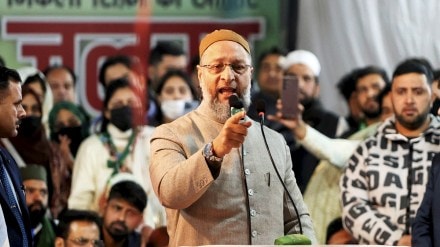
Ten opposition members were suspended from a parliamentary panel meeting on the Waqf Amendment Bill after a tense session marked by protests and accusations of bias against the panel’s chairman, Jagdambika Pal.
The suspended members, including leaders from the Trinamool Congress, Congress, DMK, AIMIM, and Shiv Sena-UBT, accused Pal of disregarding their concerns and pushing the proceedings through with undue haste. Trinamool Congress leader Kalyan Banerjee alleged that Pal had changed the meeting agenda at the last minute, and claimed that the chairman was acting at the government’s direction. Banerjee also criticised Pal for disregarding requests to reschedule the meeting, which was initially planned for late January.
The opposition members’ protests led to the suspension motion, moved by BJP member Nishikant Dubey, which was adopted by the committee. Those suspended include Banerjee, Nadeem-ul Haque (Trinamool Congress), Mohammad Jawed, Imran Masood, Syed Naseer Hussain (Congress), A Raja, Mohamed Abdullah (DMK), Asaduddin Owaisi (AIMIM), Mohibullah (SP), and Arvind Sawant (Shiv Sena-UBT).
The suspension tookl place on a day when Mirwaiz Umar Farooq, the religious leader of Kashmir, appeared before the Joint Committee on the Waqf Amendment Bill to voice concerns about the bill’s provisions. The meeting began with heated exchanges, as opposition members accused Pal of rushing through the agenda without proper consultation.
Banerjee voiced frustration over what he described as a lack of respect for opposition members, accusing the chairman of treating them as “domestic helps.” He also claimed the proceedings were being hastened with an eye on upcoming Delhi elections.
BJP’s Aparajita Sarangi, however, lashed ot at opposition members for their disruptive behavior, calling their conduct “disgusting” and accusing them of using unparliamentary language against Pal.
The Waqf Amendment Bill, which aims to address challenges in managing Waqf properties, was referred to the Joint Parliamentary Committee in August 2024 after being introduced by Union Minority Affairs Minister Kiren Rijiju. Official sources said the committee is expected to adopt its final report on January 29.
Ahead of his appearance before the committee, Mirwaiz Umar Farooq expressed strong opposition to the bill, emphasizing that the government should avoid interference in religious matters. He raised concerns over the potential impact on Muslims in Jammu and Kashmir, noting that many people in the region are uneasy about the bill and its possible effects on Waqf properties.
Mirwaiz, who heads the Hurriyat Conference, the now-defunct separatist group, also stressed the importance of maintaining harmony in Jammu and Kashmir, particularly regarding sensitive religious issues. This marks the first time since the abrogation of Article 370 that he has left the Kashmir Valley.


