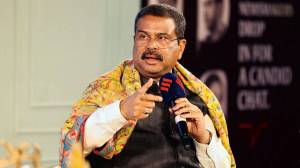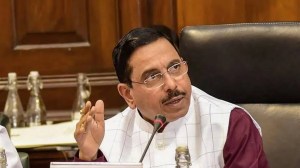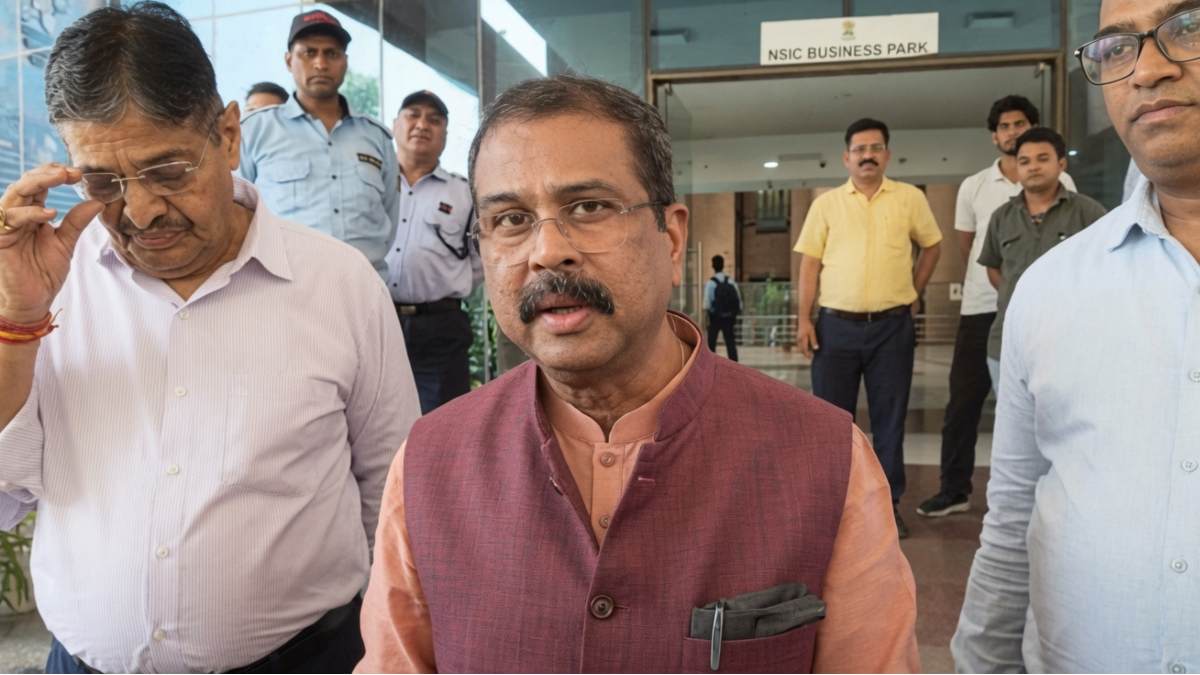
Pralhad Joshi took over as the Education Minister of India on Sunday following the abrupt resignation of Dharmendra Pradhan. The senior BJP leader had been the focus of a nationwide protest for much of the week — with thousands demanding his ouster over a series of exam paper leaks and alleged irregularities. But his acquiescence was somewhat unexpected. Source-based reports indicate that a resignation had not been on the government’s mind even 48 hours earlier.
According to an Indian Express report, there was no indication that the government was seriously considering the calls for Pradhan to resign. Most expected the protests would eventually lose steam — even as Sonam Wangchuk was removed from Jantar Mantar by Delhi Police and protesters clashed violently with the police on Monday — since NEET and other major entrance examinations were, after all, over.
Sources told the publication that senior Education Ministry officials had met with the offices of Prime Minister Narendra Modi and Home Minister Amit Shah on July 22 and 23 (Wednesday and Thursday) to assess the situation. Pradhan continued with his official engagements for much of the week, chairing meetings with states on school education on both days.
What changed in the hours leading up to the resignation?
Indian Express cited three separate factors as having influenced the decision to resign:
- The protest had continued to gain momentum despite police action in Delhi and even sparked corresponding agitations across the country.
- Vehement sloganeering and later, sit-in protests, had also derailed the Monsoon Session of Parliament throughout its first week. The government reportedly worried that a prolonged confrontation could wash out the entire Monsoon Session of Parliament — jeopardising political capital spent on building support for the contentious delimitation and the women’s reservation bills.
- Efforts to appease the protesters through various measures (fast track courts, shifting of higher education secretary, a Bill with harsh measures to prevent paper leaks, and sacking of 47 NTA officials) had also failed to deter their demand for Pradhan to resign.
“It seemed the sentiment with regard to the Education Minister was not turning positive even after the draft of the new proposed law was cleared by the Cabinet. There were not many choices,” a senior BJP source told Indian Express.
Changing tides and an impossible situation
The situation had turned rather unfavourable for Pradhan by Thursday evening as the crowd continued to swell. The turnout at each successive demonstration also grew larger in other cities. Mumbai, for example, defied prohibitory orders and FIRs naming nearly 300 protesters to demand his resignation.
Late-night video messages from Prime Minister Narendra Modi had also failed to make a dent. A senior BJP MP told The Indian Express that the PM had been in direct control, signalling his intent to address every concern of the youth, and his personal appeals were continuously gauged to see if they resonated among students.
A sit-in protest outside the Prime Minister’s residence led by Congress leader Rahul Gandhi also added to the concerns. Sources told Indian Express that this had further reinforced the perception within the ruling leadership it was losing control of the political narrative.
Pradhan’s own schedule suggests he was somewhat unprepared for the ouster by Saturday afternoon. The BJP leader even attended a briefing to prepare for Parliament questions relating to his ministry on Friday evening.
“If he knew he was no longer going to be the minister, would he have sat through a detailed briefing on answering questions? There was absolutely no indication at the time that a resignation was imminent,” sources told Indian Express.
Abrupt resignation
The Sambalpur MP had insisted in his resignation letter that he was stepping down in the larger interest of students — to ensure that the country’s youth do not become “trapped in a web of confusion.”
“The events of the past 10 days have saddened me. This is not a matter of personal prestige for me… It is my resolve that we will not allow the country’s youth power to become trapped in a web of confusion. The situation that has emerged at Jantar Mantar and elsewhere in the country should not be exploited by anti-national forces… Keeping these considerations in mind, I have sent my resignation to the Hon’ble Prime Minister,” he wrote.
Senior party leaders told the Indian Express that the government had concluded by this time that his continuation had become “untenable”. Matters could escalate completely out of hand if the Cockroach Janta Party acted on its threat of a larger national protest and the BJP “could not afford to antagonise the youth and women”.
“The central leadership of the BJP was keen to end the stalemate to get Parliament working. With important Bills on women, delimitation and education, they believed business in Parliament would help them recover the loss of face and consolidate themselves through their passage,” a highly placed source told Indian Express.