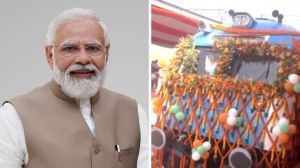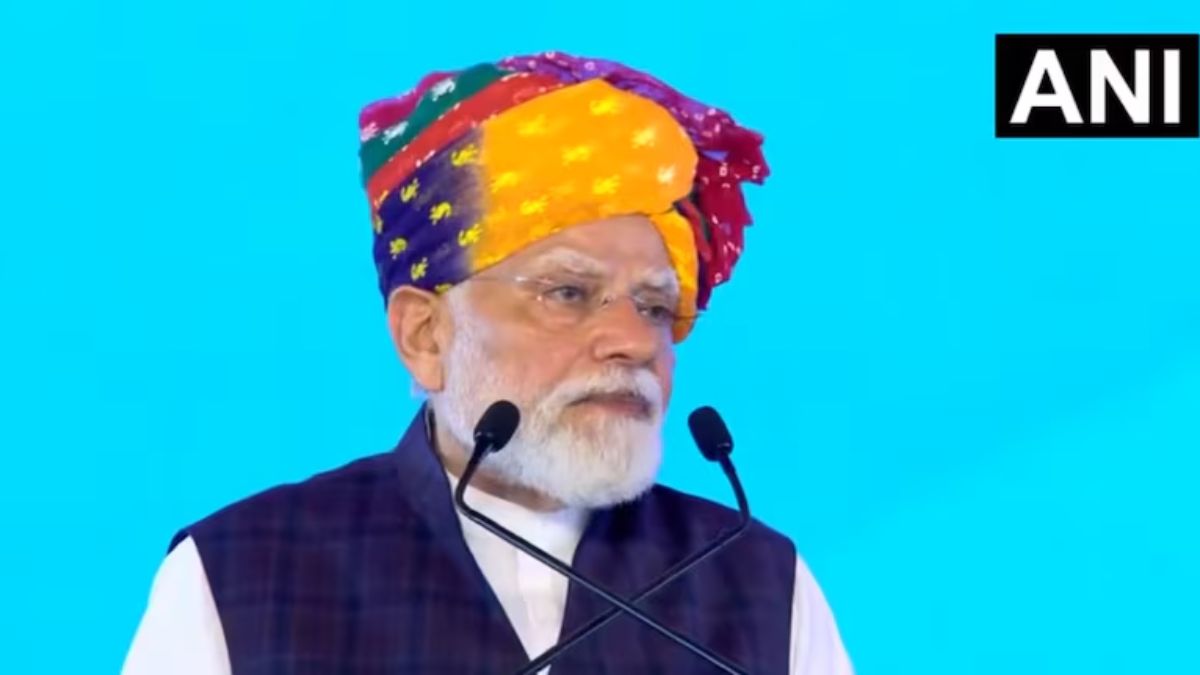
Prime Minister Narendra Modi on Friday flagged off India’s first hydrogen-powered train between Jind and Sonipat and inaugurated or laid the foundation stone for development projects worth around Rs 14,700 crore in Haryana. Besides unveiling major rail, road and healthcare projects, the Prime Minister used the occasion to underline the government’s infrastructure push and India’s transition towards cleaner transportation.
Here are the key takeaways from PM Modi’s visit to Haryana:
India enters the hydrogen rail era
The biggest announcement was the launch of India’s first hydrogen-powered passenger train on the 89-km Jind-Sonipat route. Developed using indigenous technology, the train places India among a select group of countries operating hydrogen-powered rail services. Equipped with a 3,200 HP propulsion system and a 10-coach configuration, it is among the longest and most powerful hydrogen-powered passenger trainsets globally.
‘Jind has created history’
While addressing the gathering, the Prime Minister said the launch had secured Jind’s place in India’s railway history.
“Today, the name of Jind and Haryana has been etched into the pages of history; from here, the country has received its first hydrogen train. You may remember, friends, that even today we read and hear that the first train in India ran between Bombay and Thane. Similarly, in the future, whenever the hydrogen train is mentioned, the name of Jind, Sonipat, and Haryana will inevitably be remembered,” he said.
‘Situation today is not what it was before 2014’
Drawing a connection between global geopolitical tensions and India’s railway modernisation, Modi said the country’s near-complete rail electrification has made it less vulnerable to disruptions in global fuel supplies.
“… India receives vast quantities of petrol, diesel, and LPG, as well as the fertilizers essential for our farmers through the Strait of Hormuz. However, for the last three or four months, this route has effectively become a war zone. Friends, had such a situation arisen prior to 2014, India’s railway operations would have come to a complete standstill. Back then, a vast portion of the country relied exclusively on diesel-powered trains. Just imagine, if diesel supplies had been cut off, how would those trains have run? The country would have faced a massive crisis. But friends, the situation today is not what it was before 2014. This is because of Modi. He plans well in advance and implements practical solutions to problems on the ground.”
The Prime Minister said nearly 99 per cent of India’s Broad Gauge railway network has been electrified over the past 12 years, reducing dependence on imported diesel and insulating railway operations from global energy supply disruptions. He presented the hydrogen-powered train as the next phase of Indian Railways’ transition towards cleaner and more self-reliant transportation.
This integrates the quote naturally and gives it context, rather than leaving it as a standalone political statement.
Rs 12,470 crore highway projects dedicated
A major focus of the visit was highway infrastructure. Modi dedicated and laid the foundation stone for National Highway projects worth over Rs 12,470 crore, including Packages 1 to 5 of the Delhi-Amritsar-Katra Expressway. The projects are expected to reduce travel time, improve freight movement, decongest NH-44 and strengthen connectivity across Haryana and neighbouring states.
New roads to improve regional connectivity
The Prime Minister also dedicated the Ambala-Kala Amb Highway and the Jind-Gohana Greenfield Highway, besides laying the foundation stone for the Hansi-Barwala Brownfield Highway project. Together, these projects are expected to improve access to industrial corridors, tourist destinations and agricultural regions while reducing logistics costs.
Rail, healthcare and cultural projects also unveiled
Beyond highways, Modi dedicated the elevated railway track at Kurukshetra to ease traffic congestion at railway crossings. He also inaugurated major medical institutions in Bhiwani and Narnaul to strengthen healthcare and medical education, besides laying the foundation stone for a Sikh Museum at Kurukshetra showcasing Sikh history and heritage through modern technology.
‘Jind is becoming a picture of the BJP-NDA’s model’
The Prime Minister described Jind as an example of the BJP-NDA government’s development model and reflected on his long association with the region.
“Today, Jind is becoming a picture of the BJP-NDA’s model of good governance. Over the past few years, the entire state of Haryana has embarked on a new path of development. Today’s programme is infusing new energy into this mission of the BJP’s ‘double engine’ government,” Modi said.
Recalling his early political journey, he added, “For me, coming to Jind is like opening a window to old memories. Several decades ago, I first came to Jind for organisational work, and the affection and love you all gave me then is something I have not forgotten to this day,” the Prime Minister said.