As the US’ Section 122 tariff deadline ended on Friday, Washington has moved to replace the expiring 10% global tariff with a new duty under Section 301 of the Trade Act.
The new move targets countries, including India, over allegations that they have failed to stop imports of goods made using forced labour. Under the new tariffs, India will face a fresh 10% duty. China and around three dozen other countries will face a 12.5% tariff.
The development comes amidst the ongoing India-US trade negotiations for almost five months.
Speaking to Financial Express, Ajay Srivastava, founder of the Global Trade Research Initiative (GTRI), says the US concession that was at the centre of the original trade bargain no longer exists in the same legal form. He spoke to us a day before the new tariffs were announced.
Srivastava said India would therefore be right to wait before signing the agreement unless Washington puts a new and commercially meaningful offer on the table.
Now, with the new Section 301 tariffs on forced labour in place, Washington has effectively replaced one tariff tool with another instead of giving up its tariff pressure.
Srivastava believes that unless Washington comes up with a fresh and commercially meaningful offer, it could be difficult to finalise a trade agreement that can genuinely be called balanced.
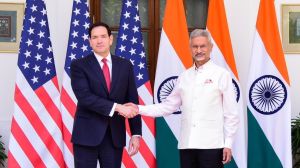
External Affairs Minister S Jaishankar met US Secretary of State Marco Rubio on the sidelines of the ASEAN Foreign Ministers’ meeting in Manila on Wednesday.
The US State Department said the interim trade deal was nearly complete. It also said both sides agreed that there was an urgent need to finish the agreement. Rubio said the two countries were “on the verge” of reaching a deal. He also said Washington hoped that US Trade Representative Jamieson Greer would soon travel to New Delhi.
How US Supreme Court ruling is shaping India-US talks
According to Srivastava, the bigger question is not only when the agreement will be signed. It is also whether any deal whether the deal makes commercial sense for India.
“The timing remains uncertain. The broad framework for the proposed bilateral trade agreement was outlined in the India–U.S. Joint Statement of February 6, 2026, under which the United States indicated it would reduce reciprocal tariffs on Indian exports from 50% to 18% as part of the package.”
However, the US Supreme Court’s February 20 ruling removed the legal basis for that tariff structure.
This means the main US tariff concession that India was expected to receive in exchange for its commitments no longer exists in the same form in which it was originally promised.
The 10% baseline tariff came into effect on February 24. The 150-day period ends on July 24, and Congress did not take any step to extend it. However, the end of the deadline did not mean that countries such as India would get relief.Instead, Washington changed the legal route and introduced new tariffs under Section 301.
The new Section 301 tariffs cover 99.4% of US imports. Some products, including oil and gas, fertiliser and certain food items, have been exempted.
A 10% duty will now apply to goods from countries including Argentina, Bangladesh, Britain, Cambodia, Canada, Ecuador, El Salvador, Guatemala, Honduras, India, Indonesia, Jordan, Malaysia, Mexico, Pakistan, Sri Lanka and Trinidad and Tobago.
The remaining 38 countries, including China, will face a 12.5% tariff. Goods that were already in transit will remain exempt from the new tariffs until July 28.
US Trade Representative Jamieson Greer said the move was aimed at tackling human rights abuses and unfair trade practices linked to forced labour. He also said countries that already have trade agreements limiting US tariff rates will not see those agreed tariff limits exceeded by the new duties.
Two US investigations were linked to the new tariffs
Two Section 301 investigations were underway in the US. One investigation examined how around 60 countries, including India, were enforcing rules against forced labour.
The second investigation focused on excess manufacturing capacity. After the investigations were completed, the US Trade Representative had proposed additional duties of 12.5% on dozens of countries, including India.
Generic drug tariffs could be another major problem for India
Separately, Trump said generic drugs imported into the US will remain free from tariffs for two years starting August 1. After that period, they could face a 100% tariff for one year and then 200% tariffs.
The move could have a major impact on India’s pharmaceutical industry. India is particularly exposed because the US is one of its biggest markets for medicines.
In 2025, the US accounted for $9.7 billion, or nearly 38%, of India’s total pharmaceutical exports worth $25.8 billion.
India remains hopeful about the trade agreement
The Indian government, however, remains hopeful that the deal can be completed. Commerce Secretary Rajesh Agrawal said earlier this month that India does not see any major hurdles in finalising the agreement. He said both sides were ready to sign the deal when the timing was right.
Indian and US negotiating teams have held several rounds of talks in recent months. Officials from both countries travelled between Washington and New Delhi during May and June as negotiations continued.
Commerce Minister Piyush Goyal has also repeatedly said that India will announce the deal only when it is satisfied that the agreement is fair, equitable and balanced. He has made it clear that India is not looking to sign a deal simply because of a fixed deadline.
For now, the latest signals from Manila suggest that the paperwork for the agreement is close to being completed. But Washington’s decision to replace its tariff pressure rather than remove it has brought the focus back to the main issue.
The key question now is whether the US will put forward a fresh concession that can replace the one at the heart of the original bargain, and give India enough reason to believe that the final agreement is truly fair and balanced.