




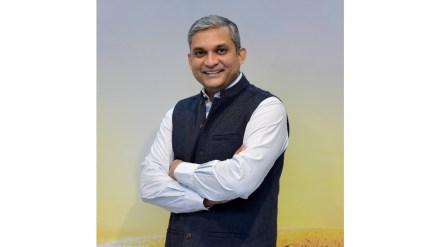
Agritech startup Arya.ag expects its next leg of growth to come from increased utilisation of its 12,000-warehouse network, expansion and deeper integration of its smart farm centres, scaling its fintech business, which grew disbursements by 50% in H1, continued investment in automation, straight-through processing and digital documentation and strengthening of marketplace linkages. “This sits on top of a strong FY25 foundation, where PAT (profit after tax) rose 79% and net revenue grew 28%,” Prasanna Rao, co-founder and CEO, Arya.ag tells S Shanthi during a recent interaction.
You operate a technology-enabled, asset-light model. Tell us more.
We use technology at every point of the post-harvest chain. Producers get their grain assessed digitally, store it in a nearby warehouse, receive working capital against a warehouse receipt, and sell through our marketplace when prices suit them. The model earns through warehouse services, financing income and marketplace commerce facilitation. Our public financial disclosures highlight the model’s scale and efficiency. We posted a gross revenue of Rs 2,806 crore in H1 FY26.
What edge do computer vision and AI-enabled solutions give you?
Our proprietary platform, Arjun, digitises key processes such as procurement, warehouse operations, trade documentation, and inventory visibility. This digitisation significantly reduces paper trails and enhances traceability. Computer vision and AI-enabled quality solutions standardise grading by analysing grain size, breakage and defects. Satellite imagery and IoT sensors support crop monitoring, yield estimation, and warehouse risk management. Blockchain-led traceability ensures tamper-proof movement of commodities across the supply chain. The smart farm centres serve as local tech hubs, bringing soil testing, drone imagery and weather-linked advisory into the pre-harvest layer, which then feeds into storage and financing decisions.
You had last raised funding in January this year. How was it deployed? When do you plan to raise the next round?
It was a $30 million debt funding round from HSBC India and GuarantCo. We deployed it across technology upgrades, expansion of post-harvest liquidity solutions, strengthening the warehouse footprint and scaling Smart Farm Centres. Detailed internal allocations are not part of public reporting. We plan to raise our next equity round in the next 2-3 quarters.
What are your growth plans for the next 12 months?
The company has publicly guided for 30–40% growth in FY26, supported by strong H1 momentum. Next leg of growth will come from increased utilisation of the 12,000-warehouse network, expansion and deeper integration of Smart Farm Centres, scaling the fintech business, which already grew disbursements by 50% in H1, continued investment in automation, straight-through processing and digital documentation and strengthening marketplace linkages for predictable, quality-assured supply. This sits on top of a strong FY25 foundation, where PAT rose 79% and net revenue grew 28%.
How many new cities do you plan to expand to in 2026?
The near-term focus is on deeper penetration within existing states, not entering new geographies. We already operate across 21 states, 60% of India’s districts, and maintain a network of 12,000 warehouses.
What new verticals do you plan to launch in the near future?
Future expansion will introduce adjacent services that improve quality, predictability and efficiency. Logistics-as-a-service is a natural next step, improving the movement of commodities from warehouses to buyers with greater transparency and route optimisation. Smart Farm Centres will expand to provide deeper soil intelligence, weather-linked advisory and drone-based monitoring.
India’s startup ecosystem is evolving. Profitability, unit economics and governance are now top priorities. How has your approach changed?
The shift in the ecosystem aligns closely with Arya.ag’s long-standing operating philosophy. The company has been PAT-positive since FY23 and strengthened this position in FY25 with Rs 34 crore in profit. In the last six months, this discipline has translated into sharper prioritisation of business lines with clear unit economics, deeper presence in existing geographies, a balanced capital structure using a mix of equity and debt, technology-led operating leverage through automation and enhanced governance as part of IPO preparedness. With H1 FY26 PBT of Rs 32 crore, already matching full-year FY25 PAT, the company’s integrated model continues to deliver strong operating performance.
What’s your revenue target for FY26?
We expect 30% to 40% year-on-year growth for the full fiscal year. We are also working on being IPO-ready in the next 18-24 months.


