




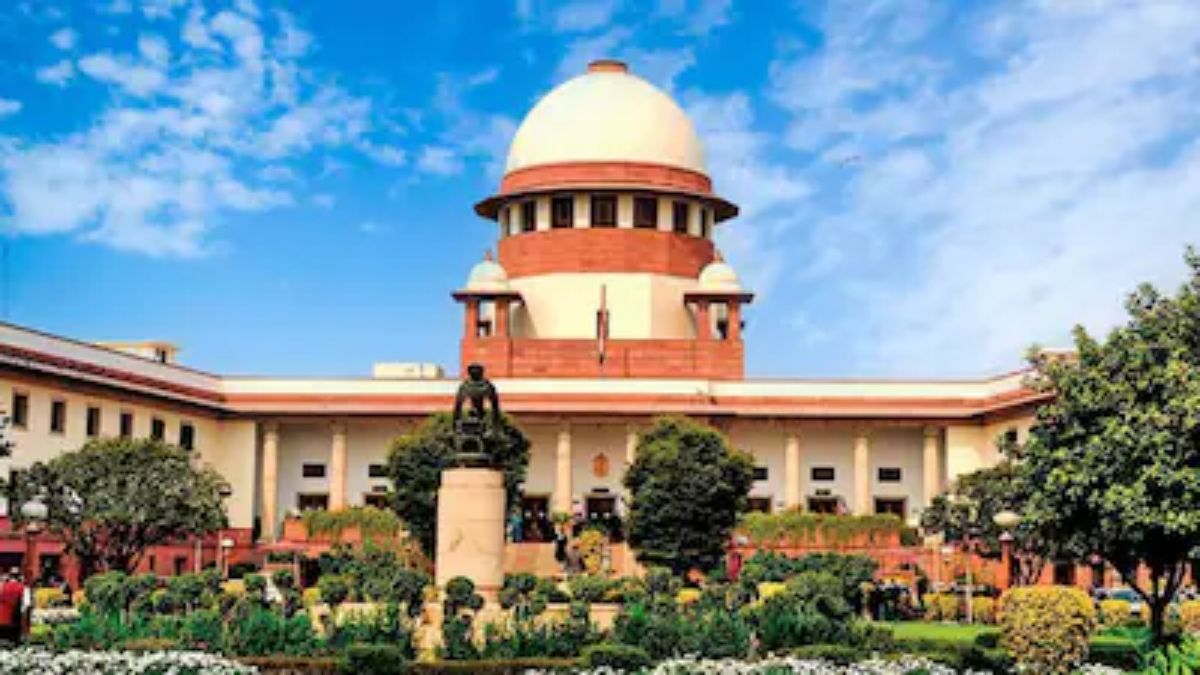
In a significant bid to end one of India’s largest and longest-running family business disputes, the Supreme Court on Monday referred the bitter legal battle among Kalyani Group patriarch Baba Kalyani and his siblings to mediation, staying all related proceedings to facilitate an amicable settlement.
A three-judge Bench headed by Chief Justice of India Justice Surya Kant, and comprising Justices Joymalya Bagchi and V Mohan, appointed former Supreme Court judge Justice L Nageswara Rao as mediator and directed the parties to begin the process without delay. The matter has been posted for further hearing after two weeks.
The dispute, involving ancestral assets estimated to be worth over ₹1 lakh crore, has spawned multiple litigations over more than a decade, including civil suits for partition of joint family properties and probate proceedings.
The assets comprise extensive real estate holdings and stakes in several listed Kalyani Group companies, including Bharat Forge and Kalyani Steels, which remain under the management of Baba Kalyani. There is no indication that the litigation has affected the operations of the group’s listed companies.
The Supreme Court’s intervention comes after Sugandha Hiremath challenged a Bombay High Court order of May 4, 2026, which had declined to refer the matter to mediation after Baba Kalyani opposed the move. The High Court had held that mediation could not be forced upon an unwilling party.
Appearing before the Supreme Court, counsel for Baba Kalyani argued that earlier mediation attempts had failed and that the latest request had been made at a crucial stage of the litigation. The Bench, however, strongly encouraged all sides to attempt a negotiated settlement.
At the outset, the court remarked that persuading the parties to mediate was akin to “taking an unwilling horse to the pond”. Yet it maintained that the effort was worthwhile.
Chief Justice Surya Kant’s observation
Chief Justice Surya Kant observed that mediation often succeeds when senior counsel help clients move beyond litigation and focus on preserving family relationships. The Bench also remarked that all sides were financially well placed and should devote their energies to more constructive pursuits.
To emphasise the value of mediation, the Bench referred to an earlier business-family dispute in which reconciliation was achieved after the elder sibling sought respect rather than wealth. “Such is the miracle and magic of mediation,” the court observed.
Baba Kalyani’s counsel requested that mediation be conducted within a fixed timeframe while allowing proceedings before the Bombay High Court to continue. The Supreme Court, however, stayed all related proceedings for the duration of the mediation and directed the parties to approach Justice Rao immediately, observing that there remained a genuine possibility of settlement.
The hearing featured some of the country’s most prominent lawyers. Sugandha Hiremath was represented by Senior Advocate Shyam Divan, along with Karanjawala & Co and RJD & Partners. Baba Kalyani’s side was represented by Senior Advocates Abhishek Manu Singhvi, Kapil Sibal and Aryama Sundaram.
The Kalyani family, which controls the Pune-based Kalyani Group, has been locked in litigation for years over the division of ancestral assets and family wealth. The dispute is among the largest family inheritance battles in India, involving interests in listed and unlisted businesses as well as substantial immovable property.
The Supreme Court’s order marks the first concerted attempt to bring all parties into a structured mediation process under the supervision of a former apex court judge. If successful, it could pave the way for a negotiated settlement in a dispute that has remained unresolved despite years of litigation across multiple judicial forums.


