




India’s ambition to increase the use of natural gas will depend less on building additional LNG import terminals and more on fixing the infrastructure and market bottlenecks that prevent imported gas from reaching consumers at competitive prices, the International Gas Union (IGU) has said.
In its 2026 Wholesale Gas Price Survey, the industry body called for greater investment in transmission and distribution pipelines, gas-intensive industries and reforms to pricing, transport tariffs and terminal access.
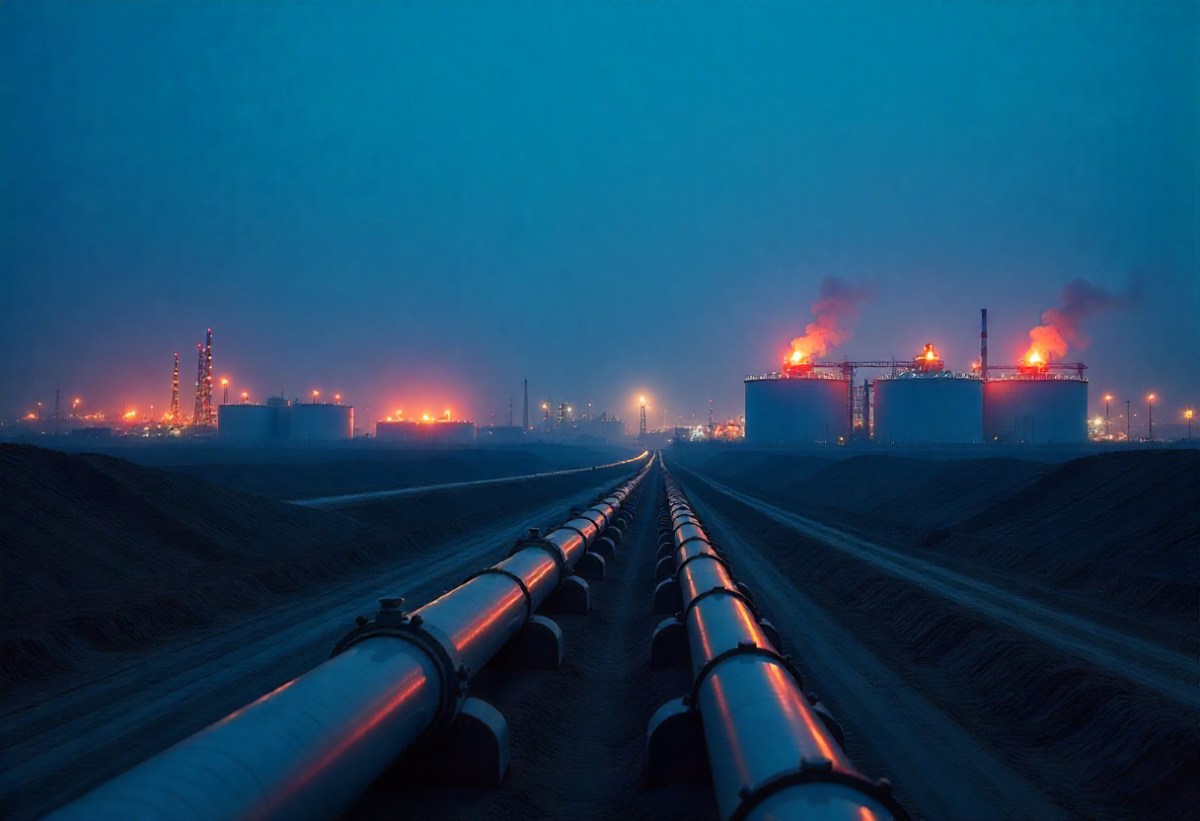
India has significantly expanded its LNG regasification capacity, but investment in the pipeline network has not kept pace. This has left several terminals underutilised and limited gas consumption in regions where connectivity remains sparse.
Hormuz crisis exposes import risks
The recent disruption around the Strait of Hormuz has highlighted India’s dependence on imported LNG and liquefied petroleum gas (LPG), particularly supplies originating in the Gulf.
Domestic production meets only around half of India’s natural gas requirement, with the remainder met through LNG imports. The dependence is higher for LPG, with imports accounting for around 60 per cent of consumption.
A large share of these supplies normally passes through the Strait of Hormuz, making India vulnerable to shipping disruptions and sharp price increases.
The disruption affected gas supplies and forced the government to introduce temporary allocation measures to protect household piped gas, compressed natural gas and other priority consumers.
IGU said the episode had brought into question India’s historical reliance on geographically close suppliers whose shipments remain vulnerable to disruptions along a concentrated maritime route.
As per the union, the price shock also weakened the economics of imported gas for power generators, industries and household consumers, at least in the near term.
Cheaper LNG may create an opportunity
As per IGU, the longer-term outlook could become more favourable as additional LNG export capacity enters the global market over the remainder of the decade.
Global LNG trade rose 6.3 per cent to a record 437 million tonnes in 2025, while new supply was led by countries including the US and Qatar, according to IGU’s separate 2026 World LNG Report.
According to researchers at IGU, a well-supplied global market could put downward pressure on LNG prices once shipping disruptions ease. Weaker demand in other parts of Asia following the recent price spike may further soften Asian benchmark prices, improving the economics of gas consumption in India.
However, the union said India must make its domestic gas market flexible enough to take advantage of short-term declines in international LNG prices. IGU called for further liberalisation of LNG terminal capacity bookings and system-entry charges to improve access and raise terminal utilisation.
Pricing framework needs reform
Lower international LNG prices alone will not be sufficient to raise consumption, IGU said. It argues that meaningful investment is unlikely without fundamental reform of wholesale gas pricing.
India’s pricing framework has undergone multiple changes over the past decade, shifting from a heavily regulated system to hub-linked pricing in 2015 before being revised again in 2022 to link domestic prices to oil.
While the mechanism protected consumers from extreme global price volatility, the report said pricing rules must also support competition and provide sufficient certainty for producers and infrastructure investors.
IGU said India’s next phase of gas demand growth will ultimately depend on whether it can combine cheaper global LNG with stronger domestic infrastructure, competitive transport tariffs and easier market access.
Infrastructure, not terminals alone
India has long sought to raise the share of natural gas in its energy mix because the fuel produces fewer local pollutants and lower carbon emissions than coal when burnt. But IGU said the sector’s growth would depend on a broader ecosystem rather than simply the availability of imported LNG.
As per the union, investment will be needed in trunk pipelines, city gas networks, industrial connections, storage, gas-fired facilities and commercial arrangements that allow consumers to procure fuel competitively.
Greater diversification of LNG and LPG suppliers could reduce some of the risks exposed by the Hormuz disruption. But without domestic pipeline connectivity, competitive transport tariffs and easier access to import terminals, India may struggle to convert a future period of cheaper LNG into sustained demand growth, the report said.


