




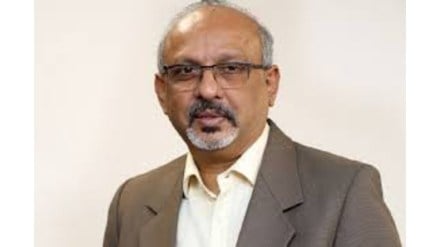
Improving liquidity, income-tax relief and GST rationalisation are expected to lift discretionary spending in 2026.Sectors such as banking, defence, power and cement are likely to offer investing opportunities. Kailash Kulkarni, chief executive officer, HSBC Mutual Fund tells Saikat Neogi income-plus-arbitrage fund of funds can be a tax efficient way for fixed income investors with a two-year horizon to earn regular income. Edited excerpts:
How do you expect the equity markets to perform this year?
This year calls for a focus on domestic growth and selective cyclicals. Discretionary consumption stands out as a key theme, supported by a clear policy push to revive demand. The RBI’s shift towards easier monetary conditions is improving liquidity and credit availability, while government initiatives such as income-tax relief and GST rationalisation have supported consumption. Together, these measures are expected to gradually lift discretionary spending.
At the same time, private capex is likely to start picking up after several years of government-led investment. Stronger corporate balance sheets, improved utilisation levels, and favourable financing conditions should support this shift. Financials remain structurally attractive, driven by financialisation of savings, steady credit penetration, and operating leverage. Platform and asset-light businesses also offer long-term earnings potential as scale benefits and efficiency gains continue to play out.
Which are the sectors investors should capitalise on?
From a portfolio perspective, investors should focus on sectors where earnings visibility is improving as cyclical pressures ease and operating leverage returns. The banking sector remains a key driver of earnings recovery, supported by stabilising net interest margins, resilient credit growth, and controlled asset quality in a more benign interest-rate environment guided by the RBI. This positions banks for steady and predictable earnings growth.
Defence continues to offer structural earnings visibility, backed by sustained government spending, a robust order pipeline, and increasing indigenisation. Improvements in execution and scale should support consistent earnings growth with relatively lower cyclicality. Sectors such as power and cement present cyclical recovery opportunities. While demand growth in both sectors remained muted in 2025, we expect a rebound as economic activity normalises. In cement, this recovery could be complemented by selective pricing improvements and easing cost pressures, leading to meaningful operating leverage and earnings recovery.
What is your outlook on debt in 2026 and what factors will influence its direction?
The year 2025 was characterised by fiscal boost to growth, accompanied by easing of monetary policy and a weakening currency bias. Markets remained volatile with sharp movements on both sides. After such an eventful year and with so much done on the fiscal and the monetary policy fronts, the most immediate question is: what more? Our top-down analysis indicates that the macroeconomic environment remains conducive for rates to remain steady and lower for longer, with risks emanating from the external sector and global developments.
\The RBI’s open market operations (OMO) purchases become a significant factor in deciding the trajectory of Indian rates. Additionally, if Indian bonds get included in the Bloomberg Global Aggregate Index in Q1 2026, it would create a very positive technical backdrop for G-Secs, resulting in significant FPI inflows – potentially $15-20 billion. Accordingly, we expect the fixed income markets to consolidate, with wider trading ranges and higher volatility, as the easing cycle ends, and the markets shift focus to the timing of the reversal of the current loose monetary policy.
What kind of debt portfolio would you recommend for 2026?
Given this backdrop, it would be prudent to have an accrual strategy in portfolio positioning in 2026 along with some tactical calls on the long-end of the curve. In terms of the investment in fixed income portfolios for investors having a short-term horizon, products like ultra short duration, money market fund or low duration funds may offer attractive pick-up over liquid funds. For investors with a medium-term horizon, short duration funds, banking & PSU debt funds and corporate bond funds can be a good investment opportunity as they provide accrual plus opportunities to create alpha through capital gains.
For investors with a two-year horizon, income plus arbitrage fund of funds (FOF) can be a tax efficient way to combine different debt funds like Short Duration Fund, Banking and PSU Debt Fund and Corporate Bond Fund to earn regular income and also take tactical calls in duration products to generate alpha depending on market opportunities. Overall, it’s about staying flexible, focusing on accrual, and being ready to adjust as the market narrative evolves.
Why should gold and silver be part of an investor’s portfolio?
Gold and silver play an important role in portfolio diversification and risk management. Gold benefits from expectations of global rate cuts and continued central bank buying, making it an effective hedge against currency volatility and equity market stress. It also offers diversification relative to equities and bonds. Silver adds a different dimension due to its strong industrial demand and tight supply, while still providing protection during periods of uncertainty. Ongoing geopolitical risks, trade disruptions, and global conflicts have increased market unpredictability, strengthening the case for precious metals. Together, gold and silver help reduce volatility and improve portfolio stability over market cycles.


