




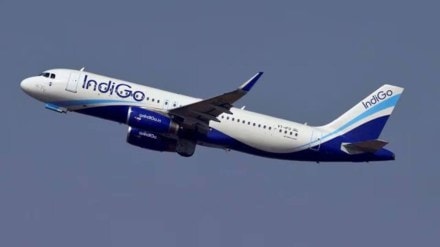
IndiGo is battling one of its toughest operational crises this year. More than 300 flights were cancelled on Wednesday, following two days of large-scale disruptions that began earlier this week.
The airline, which operates around 2,300 flights daily, is expected to face instability for at least another 48 hours as it cancels and reschedules more flights to regain control of its network.
IndiGo: What fuelled the disruption?
On Tuesday, IndiGo’s on-time performance (OTP) fell to 35% across six major airports, according to a report by Emkay. Airports in Delhi, Bengaluru and Mumbai were among the worst hit, with passengers reporting long waits, frequent gate changes and scarce ground staff support.
The disruption has been fuelled by an acute shortage of cockpit and cabin crew, aggravated by the second phase of revised Flight Duty Time Limitation (FDTL) rules that took effect on 1 November.
These norms dictate working hours and rest periods for crew and now allow only two night landings instead of six, making night operations significantly harder to staff. With a fleet of 416 aircraft, around 50 are currently grounded, amplifying the pressure.
Impact on airline operations
Speaking on the structural flaw, “It highlights IndiGo’s thin pilot buffers and high dependence on night-heavy, banked schedules. Under new FDTL norms, IndiGo will likely need more pilots per aircraft, reducing near-term utilisation and increasing manpower cost intensity. So, airfares would spike, given that other carriers are not adding fleet aggressively (except Spicejet),” Gagan Dixit, Senior Vice President at Elara Capital, told financialexpress.com.
Dixit said the new FDTL norms will affect all airlines. “Carriers with lean staffing and heavy night operations will feel the pressure more sharply.” He added that rising pilot hiring and training costs could be “passed on via airfares.” Full-service carriers like Air India may gain a “temporary competitive edge through better on-time performance.”
In an exchange filing, IndiGo attributed the ongoing cancellations and delays to a combination of technical system issues, airport congestion, winter-related scheduling adjustments, adverse weather, and updated rostering rules. The carrier said it is “calibrating” schedules and offering refunds or alternate travel options while it works to restore punctuality.
IndiGo moved to contain market speculation on Thursday, issuing a formal clarification that no investigation has been initiated by the Directorate General of Civil Aviation (DGCA) into its recent wave of mass flight cancellations. In a filing to the Bombay Stock Exchange, InterGlobe Aviation, the airline’s parent, stated that it had “not been informed of any probe” by the regulator, countering media reports that linked a regulatory inquiry to a 3% slide in its stock price.
The company acknowledged that the DGCA had sought operational details related to the disruptions and said it was furnishing the information, but stressed that it had already disclosed all material developments impacting its operations and trading activity.
Operations and growth plans
Despite the immediate crisis, the airline has logged notable operational milestones recently. IndiGo faced major snags on 2 and 3 December, with disruptions leading to over 200 cancellations and OTP collapse.
However, the airline said earlier that technical upgrades ordered by the regulator for Airbus A320 engines were completed within two days, with no cancellations related to that directive. “Flight rationalisation and re-rostering will take the next few days. IndiGo has already guided to 48 hours for stabilisation, but OTP may remain choppy for 1–2 weeks till network resets,” Dixit noted.
The company is also expanding its engineering and maintenance capabilities. IndiGo has signed an agreement with the Bengaluru International Airport to build a Rs 1,100-crore MRO (maintenance, repair and overhaul) facility spread across 31 acres.
It will house four hangars capable of handling four wide-body or eight narrow-body aircraft at once, plus a paint hangar. The project is expected to create over 750 direct jobs and support the airline’s growing fleet, including the upcoming A350 wide-body aircraft.
According to Pieter Elbers, CEO, IndiGo, as elaborated during the Q2 earnings call, “we have kind of doubled our international footprint from a little over 20 destinations 3 years back to 43 today, and we continue to build on that. The growth is even larger when we look at the number of routes, and the number of routes today is exceeding the number of hundreds. So, we’re kind of building on these numbers. And we’ll continue to do that quarter-over-quarter. We’ve given earlier guidance of having in the range of 30% of our ASKs in terms of international. We have achieved that. And with the wide bodies coming in, that percentage will grow to 40%.”
Market share and passenger growth
“Higher passenger compensation, crew repositioning, and lower fleet utilisation will create short-term cost pressure. Margins for the December first fortnight could see a temporary hit,” Dixit added.
In October 2025, IndiGo hit a record domestic market share of 65.6%, up 130 basis points (bps) from the previous month, as per the Emkay report. Passenger load factors, an industry metric indicating how full flights are, rose 90 bps to 82.4%. Through the year to date, IndiGo has maintained a 65% market share, improving by 270 bps year-on-year, the report added.
International expansion continues to play a central role in growth. In Q2 FY26, the airline posted 23% growth in international passengers, even as domestic passenger numbers increased just 1% year-on-year.
Revenue Passenger Kilometres (RPK), which measures total distance travelled by paying passengers, grew 8%, with international RPK up 26%.
IndiGo Q2 performance
IndiGo reported Rs 18,555 crore in revenue from operations in Q2 FY26 (July–September 2025), averaging Rs 6,185 crore per month. The company also reported a net loss of Rs 2,582 for the same quarter. Full-year FY25 operating revenue was Rs 80,803 crore.
Dixit further added that passengers should be prepared for some short-term route adjustments as IndiGo works through the operational fallout of the revised Flight Duty Time Limitations (FDTL). He noted that the airline may “temporarily trim frequencies or rationalise schedules” until crew availability aligns with the new duty-hour framework. The carrier is expected to accelerate pilot recruitment over the coming quarters and reconfigure night-duty rosters to ease pressure on existing staff. The revised norms are also likely to invite closer oversight from the regulator, with more frequent fatigue-reporting and compliance checks anticipated under tighter DGCA monitoring.


