India is keeping a close watch on a proposed US law that could impose tariffs of up to 100% on countries buying large amounts of Russian oil, the Ministry of External Affairs (MEA) said on Friday.
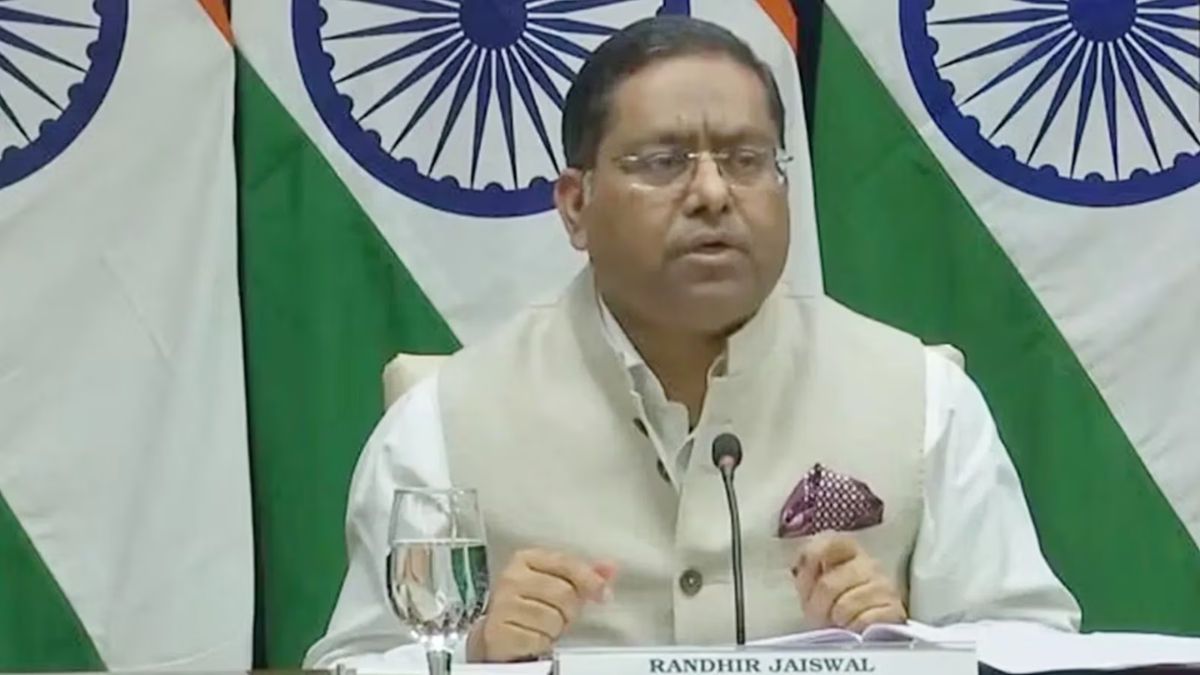
Speaking at the weekly media briefing, MEA spokesperson Randhir Jaiswal said the government is aware of the proposed legislation and is monitoring developments. “We are closely following these developments, and we are aware of the proposed legislation,” Jaiswal said.
The MEA’s remarks came after a bipartisan group of more than 60 US Senators introduced a revised sanctions bill targeting Russia and the biggest buyers of its energy.
The proposed law, titled the “Senator Lindsey O. Graham Sanctioning Russia Act of 2026,” was introduced after the death of Senator Lindsey Graham. It is aimed at putting more pressure on countries that continue to buy Russian oil and gas, which the US says helps fund Russia’s war in Ukraine.
Unlike an earlier version of the bill that proposed a blanket 500% tariff, the revised legislation narrows its focus. The maximum tariff was reduced from 500% to 100%.
India says oil purchases are based on energy needs
Jaiswal said India’s oil imports are guided by its energy security needs and not by any one country. He stressed that India buys crude oil from several suppliers across the world as part of its broader sourcing strategy.
“As far as buying oil, we buy oil from various countries in the world. It is based on our approach towards energy sourcing,” he added.
As the world’s third-largest consumer of energy, India imports nearly 85% of the crude oil it uses. To meet this demand, India sources crude from a wide range of countries. Its traditional suppliers include Iraq, Saudi Arabia and the UAE, but it has also expanded imports from non-OPEC producers in Africa and Latin America, including recently resuming purchases from Venezuela.
Russian oil has become an important part of this strategy. India has sharply increased its purchases of Russian crude, with Russian oil now making up more than half of the country’s total crude imports. Imports recently climbed to a record 2.6 million barrels per day (mbpd) amid West Asia ongoing conflict.
What is the new US bill?
Under the latest proposal, the US could impose tariffs of up to 100% on the world’s top five buyers of Russian crude oil and natural gas. Countries importing less than 15% of Russia’s natural gas exports may be exempt if they are taking significant steps to reduce those imports.
The bill also gives the US government the power to impose tariffs of up to 100% on the top five countries that help Russia bypass oil sanctions.
The original version of the legislation was first introduced by Senators Lindsey Graham and Richard Blumenthal in April 2025. It sought to weaken Russian President Vladimir Putin‘s ability to finance the war by imposing sanctions on Russia’s political leadership, financial institutions and energy sector.
The proposal also requires the US Trade Representative to review the list of the top five buyers every 180 days, meaning countries could be added or removed if global buying patterns change.
The bill does not ban every type of trade with Russia. It allows the US to continue importing Russian uranium used in American nuclear power plants and medical isotopes, while also permitting cooperation with Russia in the nuclear and space sectors.
Besides tariffs, the legislation proposes sanctions on Russia’s political leadership, financial institutions, energy companies, wealthy businessmen accused of supporting the Kremlin, and individuals or organisations helping Russia evade sanctions. Russian President Vladimir Putin is also specifically named under the proposed sanctions.
Why is India in the spotlight?
Since the Ukraine war began, India has become the second-largest buyer of Russian crude oil after China. Russia has been selling crude at discounted prices, allowing India to lower its import costs and help keep domestic fuel prices under control.
According to recent trade data, India’s imports of Russian crude rose by around 34% in June 2026 compared with the previous month. This is also not the first time Washington has taken action over India’s Russian oil purchases.
In August 2025, the US imposed a 25% secondary tariff on Indian goods, saying the move was linked to India’s continued imports of Russian crude.
India has consistently defended its position, saying it has not violated any international sanctions and that buying discounted Russian oil is essential for the country’s energy security while helping protect consumers from higher fuel prices.
The legislation currently has the support of more than 60 senators, including 39 Republicans and 22 Democrats, enough to clear the Senate’s filibuster threshold.
MEA on reports of strikes near Chabahar port
Jaiswal also responded to reports that the US had carried out military strikes near Iran’s Chabahar port. He said India had seen those reports but confirmed that the Chabahar terminal itself was not damaged.
Jaiswal also noted that the US waiver related to Chabahar had expired some time ago and that India has since been discussing the matter with relevant stakeholders.
“If you have been following the issue, there was a waiver which was given by America; that waiver got over some time back. Post that, we have been in discussion with relevant stakeholders as to how to take this particular issue forward. On the question of it being attacked, yes, we have seen some reports in that regard, but we can also tell you that the terminal itself did not face any damage,” he said.
Seven Indian ships currently in the Persian Gulf
Replying to a question on maritime traffic in the region, Jaiswal said shipping between India and the Persian Gulf continues as usual.
He said there are currently seven Indian-flagged ships operating in the Persian Gulf. “There is regular traffic between India and the Persian Gulf region; we have seven Indian ships which are there in the Persian Gulf, Indian flagships which are there in the Persian Gulf,” he said.