




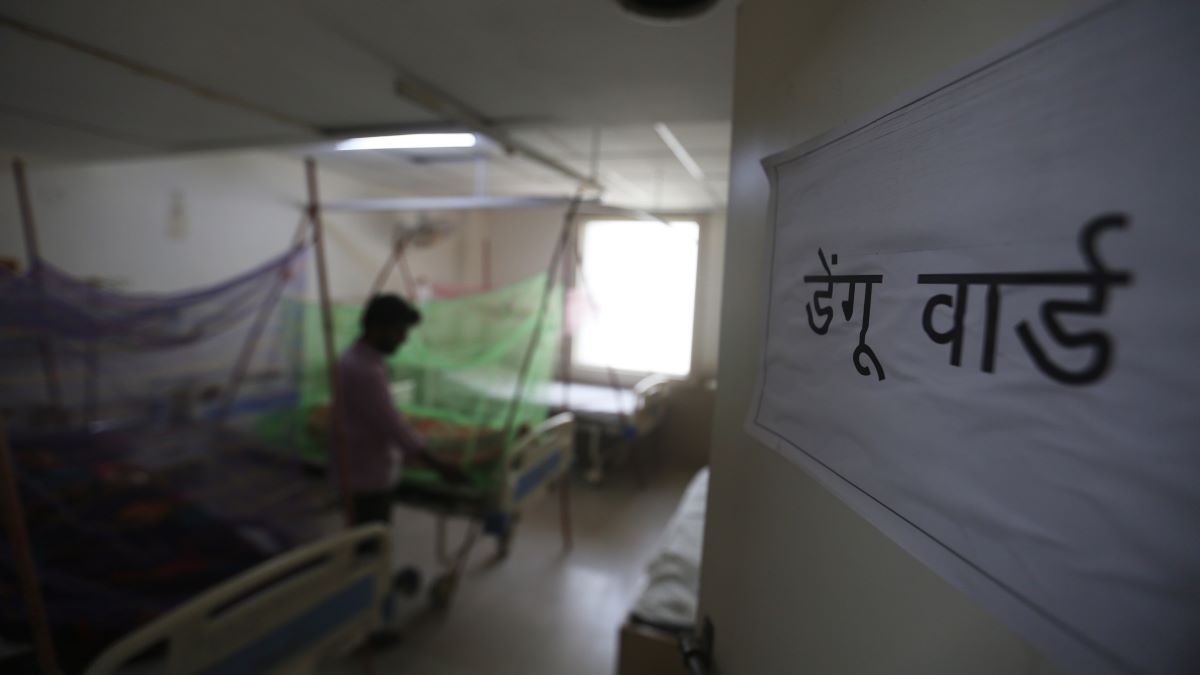
India has approved its first-ever dengue vaccine, with the Drug Controller General of India (DCGI) clearing Japanese pharmaceutical major Takeda Biopharmaceuticals’ Qdenga for use in the country. The decision arrives as dengue infections continue to climb sharply across India.
Qdenga is built to guard against all four circulating dengue virus strains namely, DENV-1, DENV-2, DENV-3 and DENV-4 and, unlike some earlier dengue vaccine candidates, it can be given to people irrespective of whether they have been infected with dengue before. The company said no pre-vaccination screening is required, a factor that could simplify rollout considerably.
Administering dengue vaccine, pricing
The shot will be given subcutaneously in two 0.5 mL doses spaced three months apart. It has been cleared for use in individuals aged four to 60. Takeda has not yet announced pricing. Its manufacturing tie-up with Hyderabad-based Biological E is expected to produce up to 50 million doses a year. Whether the vaccine gets folded into a government immunisation programme will also shape its final price.
Reported dengue cases in the country have risen 11-fold over the last twenty years and India alone accounts for close to a third of the world’s dengue burden.
Takeda’s Dr Mahender Nayak, who heads the company’s Intercontinental Markets business, called dengue “a growing public health challenge” and said India “needs sustained, evidence-based prevention”, Indian Express reported. He pointed to seven years of follow-up data on Qdenga showing the vaccine continues to protect against infection and hospitalisation across all four strains, describing it as “an important milestone for communities and health systems”. Qdenga has now been cleared in 43 countries since its 2022 debut, with over 32 million doses administered worldwide.
19 clinical trials and 28,000+ participants
Behind the approval lies a substantial evidence base from 19 clinical trials spanning three phases and more than 28,000 participants across dengue-endemic and non-endemic countries.
According to the IE report, the centrepiece was the Phase III TIDES trial, which tracked over 20,000 people across eight countries. A year after the second dose, the vaccine showed 80.2% efficacy against confirmed dengue; by 18 months, efficacy against dengue hospitalisation stood at 90.4%. Even after four and a half years, protection against severe, hospitalisation-requiring cases remained above 84%, the report added.
A separate India-specific trial, DEN-302, tested the vaccine’s safety and immune response in local participants across the approved age range and found it well tolerated. Qdenga has also secured WHO prequalification, opening the door to procurement through global bodies like UNICEF and PAHO.


