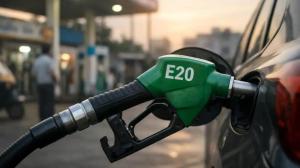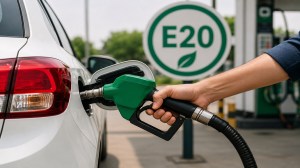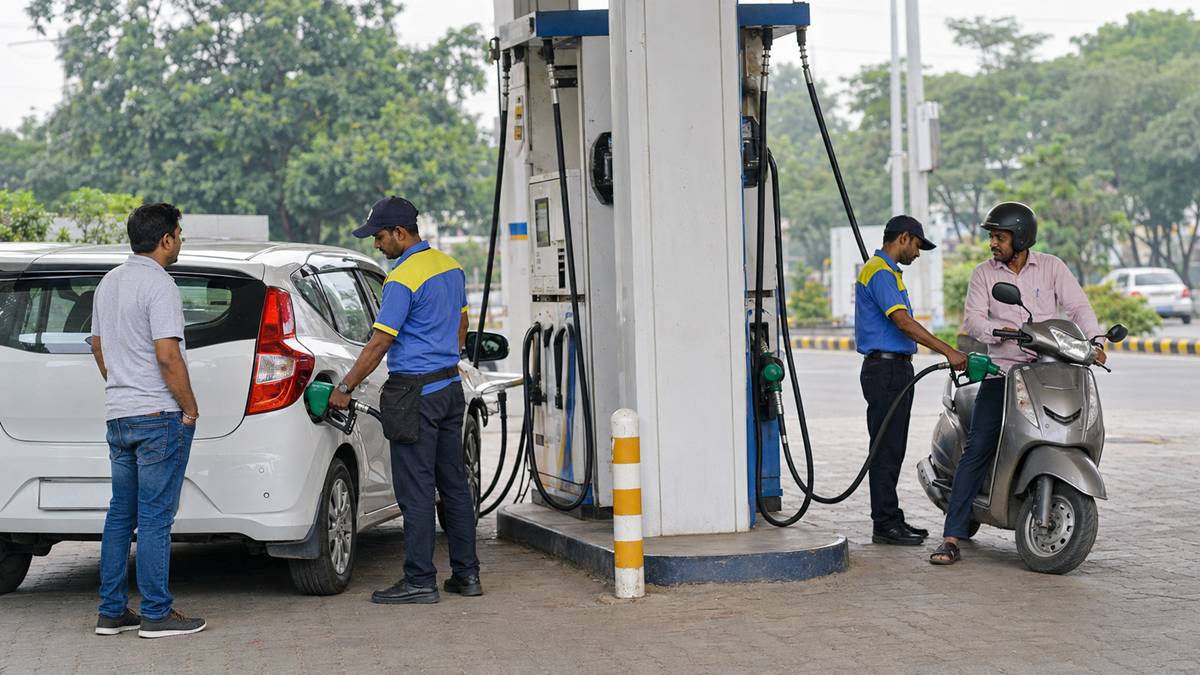
The government has clarified that premium grades of petrol sold by public sector oil companies such as Indian Oil’s XP100, Hindustan Petroleum’s Power100, and Bharat Petroleum’s Speed100, will continue to be supplied without any ethanol blending. It has also ruled out increasing the ethanol blending percentage in petrol beyond the current 20% level and stated there are no plans to reintroduce E0 (pure petrol) or E10 grades in the market.
Minister of State for Petroleum and Natural Gas Suresh Gopi told the Lok Sabha in a written reply that these high-performance fuels, which contain specialised additives for enhanced engine performance, represent only about 0.5% of overall petrol sales in the country. They are priced significantly higher at around Rs 160 per litre, compared to the regular ethanol-blended petrol (E20) that currently sells at Rs 102.12 per litre.
Can consumers buy E0 or E10 petrol?
Public-sector OMCs informed the government that regular petrol currently sold at their outlets contains 20% ethanol by volume. However, E0 (which contains no ethanol) and E10 (which has 10% ethanol) are not currently being sold at retail outlets. “Having been scientifically validated and accepted by the automobile industry after extensive testing, there is no proposal to revert to E0/E10 petrol,” the reply stated. It added that maintaining separate supply chains for E0, E10 and E20 across more than one lakh retail outlets would increase logistics, inventory and handling costs.
Rules for ethanol blending in petrol
Under the government’s Ethanol Blended Petrol (EBP) programme, both public and private oil marketing companies have been mandated to supply motor spirit blended with up to 20% ethanol across all states and Union Territories. The blended fuel must meet the quality standards set by the Bureau of Indian Standards (BIS). Additionally, from April 1, 2026, ethanol-blended petrol must have a minimum Research Octane Number (RON) of 95, as per the newly notified statutory requirements.
Will fuel nozzles display the ethanol percentage?
The government did not announce any plan to require every dispensing unit to display the exact ethanol content. It said E0 and E10 labels have not been placed on dispensing units because these fuels are not sold at retail outlets. However, E85 must be prominently identified wherever it is available because the fuel, containing 85 per cent ethanol, is meant exclusively for Flex Fuel Vehicles.
What did the government say about older vehicles?
The government said E20 was introduced after tests and consultations involving automobile manufacturers, component suppliers, ARAI, SIAM, testing agencies and oil marketing companies. According to the reply, more than 20 crore two-wheelers and over three crore petrol cars have operated on higher ethanol blends without any verified evidence of widespread engine failure or vehicle breakdown caused by ethanol blending.
The government also cited data from an unidentified automobile manufacturer that serviced 2.84 crore vehicles in 2025-26, including around 1.5 crore vehicles not originally certified as E20-compatible. According to the reply, the manufacturer reported no E20-linked corrosion, abnormal wear or reduction in component life.
Is the government planning E25 or E27 petrol?
The reply to LS stated that no decision has been taken to increase ethanol blending beyond 20%, adding that any future decision on higher blends would be taken only after scientific and technical studies and consultations with automobile manufacturers, oil marketing companies and research institutions.