




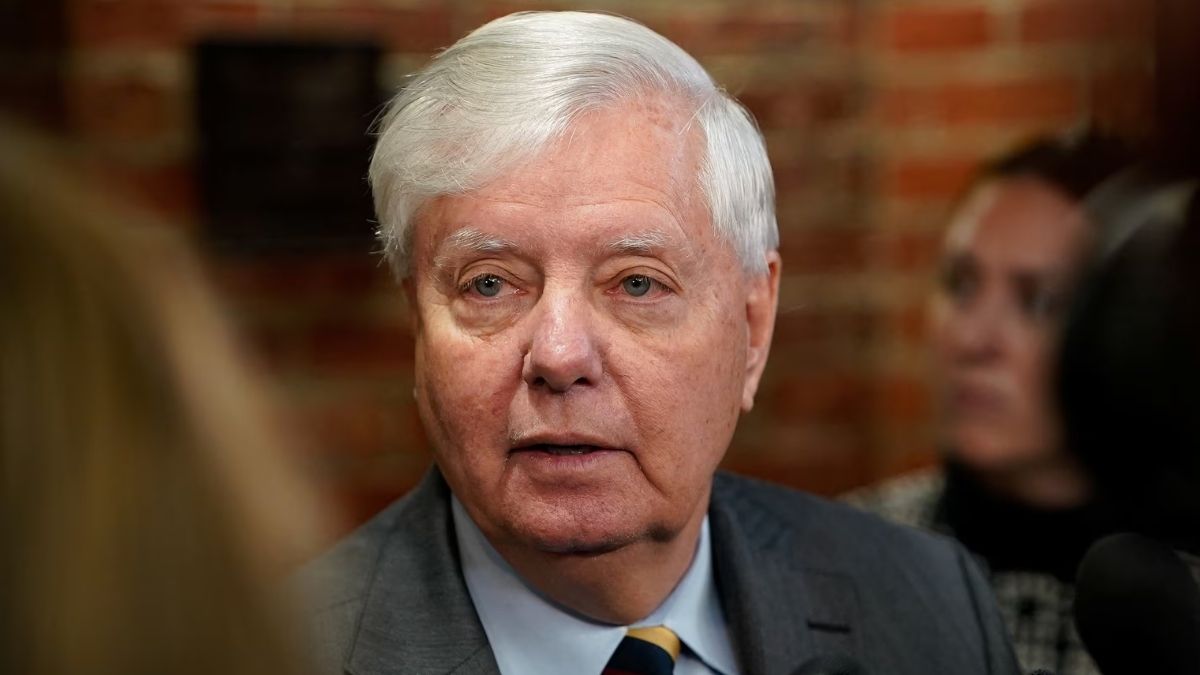
US Senator Lindsey Graham made waves on Friday as he announced significant progress towards the Russia sanctions bill — paving the way for up to 500% sanctions against India. The statement was soon overshadowed by a far more shocking update: his sudden demise mere hours after returning from a visit to Ukraine. Legislators have rallied together in the aftermath, calling for the Act he championed for over a year to be passed in “tribute” to Graham.
“There can be no more fitting memorial to Lindsey, his legacy, or the causes he fought for, than to pass this legislation and realize his long-held dream of an independent and secure Ukraine,” Democratic Senator Jeanne Shaheen wrote on X.
“When we last spoke, he was as enthusiastic and exuberant as I’ve ever seen him. Passing the sanctions bill right away would be a fitting tribute,” added fellow Democrat Richard Richard Blumenthal.
The two Democrats had worked with Graham and Republican Senator Roger Wicker to secure approval for the Sanctions bill in recent weeks. They issued a joint statement on Friday (July 10) announcing that an ‘agreement’ had been reached with the Trump administration. The Senators said the US government would move forward with updated legislation “very soon”.
Russia sanctions bill gains momentum
The original bill was unveiled about a year ago and has languished in the Senate as the sponsors worked to win full backing from the White House. It called for a 500% tariff on goods imported from countries that continue to buy Russian oil, gas, uranium and other exports — targeting nations such as China and India.
“We’ve reached an agreement with the White House on a version of the Russian sanctions bill that they will support. It means it’s going to become law,” Graham told reporters.
The comments came even as he wrapped up a visit with Ukrainian President Volodymyr Zelensky on Friday. A joint statement released by the four Senators also called for the US to “exact a heavy price on those who buy Russian oil and natural gas, fueling the Putin war machine”.
Details have remained scarce and it was not immediately clear if major changes were made to the Sanctioning Russia Act of 2025. The original bill floated by Graham had proposed 500% tariffs and secured 85 co-sponsors in the Senate.
Where does India get its oil and natural gas?
According to data released by Kpler, India imported a record 4.93 million barrels per day (bpd) of crude oil in June despite geopolitical tensions in West Asia. Russian crude imports rose to around 2.6 million bpd during the month after a significant dip in May — reinforcing its position as India’s largest oil supplier for India. Refiners in India had stepped up purchase of discounted barrels as European demand slowed amid the Ukraine war.
The energy intelligence firm said Russian supplies made up for more than half of the country’s overall imports in June. Kpler analyst Sumit Ritolia told PTI that Indian refiners have largely secured crude supplies through the first half of August, as cargoes are typically booked one to two months in advance. That leaves refiners with limited immediate need for additional purchases even if geopolitical risks persist.
“India imported 4.93 million bpd of crude in June, the highest June volume on record, despite heightened geopolitical tensions in the Middle East. At the same time, Russian crude imports climbed to around 2.6 million bpd, reaffirming Russia’s position as India’s largest and most important crude supplier,” PTI quoted him as saying.
How will the Russia sanctions bill affect India?
A fresh change in policy could affect India as it negotiates the “final one percent” of a bilateral trade agreement with the United States. Efforts to diversify its energy basket have collided headfirst with the Iran war in recent months — with Moscow remaining as the top supplier in June. The Trump administration had briefly waived sanctions to allow restricted purchase of Iranian and Russian oil as its war with Iran escalated.
Trump had imposed a hefty 25% tariff on India last year for its continued purchase of Russian oil. According to US officials, this was removed in February after India agreed to halt all purchases of Russian oil and buy “over $500 billion of US energy, information and communication technology, coal, and other products”. The agreement was tied to the 18% reciprocal tariff announced in the India-US interim trade agreement. Matters have changed significantly in the subsequent months — with the US Supreme Court deeming the sweeping “reciprocal tariffs” imposed by Trump illegal.
The bulk of goods from most countries including India currently face a 10% tariff following the verdict. The Trump administration is expected to introduce steeper tariffs this month through probes into excess industrial capacity. Washington has already proposed new tariffs of up to 12.5% for India over allegations they failed to curb trade in goods made with forced labour.
Senator Graham had repeatedly named India, China and Brazil as countries that could face penalties if they continued buying Russian oil during his final months.
“Here’s what I would tell China, India and Brazil: If you keep buying cheap Russian oil to allow this war to continue, we’re going to tear the hell out of you, and we’re going to crush your economy, because what you’re doing is blood money,” he told Fox News in 2025.
The updated legislature will likely include a significant tariff percentage to discourage purchase of Russian energy — although no details have been released so far. India may also find itself engaged in a fresh bout of negotiations with the United States in case the Bill is passed.


