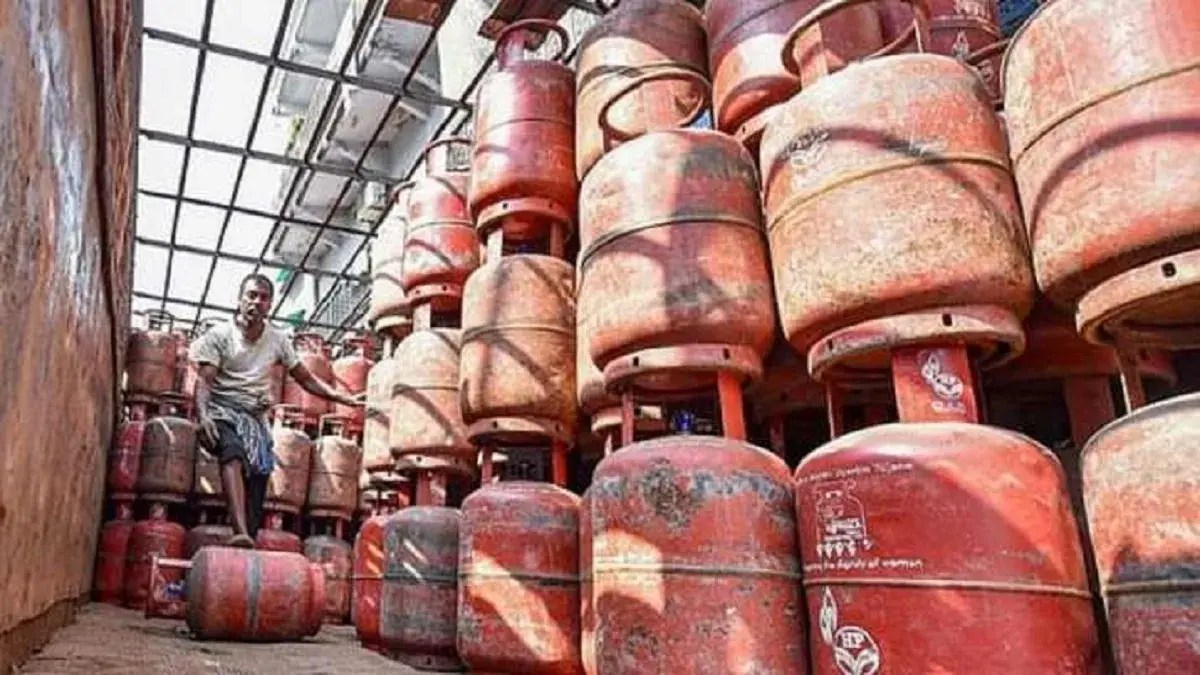
The Ministry of Petroleum and Natural Gas on Sunday (June 7) defended the government’s handling of domestic cooking-gas prices, saying Indian households continue to pay among the lowest liquefied petroleum gas (LPG) rates in the world even after a recent increase of Rs 29 per 14.2 kg cylinder. The ministry reiterated that while international benchmark costs have surged following disruption in West Asia, the government has absorbed a large portion of that increase, protecting consumers through targeted support and market interventions.
“Almost all Indian consumers have received LPG at prices far below international market levels through the last several years,” the ministry said, pointing to the combined effect of price modulation and the Pradhan Mantri Ujjwala Yojana (PMUY) subsidy. The ministry noted that a typical PMUY beneficiary pays an effective Rs 642 for a 14.2 kg cylinder on the first four refills each year, after a direct benefit transfer (DBT) of Rs 300 per cylinder, while the general household consumer in Delhi now pays Rs 942 per cylinder following the latest revision.
The price of a 14.2-kg domestic LPG cylinder has been increased by Rs 29. In Delhi, 14.2-Kg Domestic LPG Cylinder prices increased from Rs 913 to Rs 942. New rate will be effective from June 7.
— ANI (@ANI) June 6, 2026
The Congress party and Trinamool Congress (TMC), however, criticised the hike as burdensome for ordinary families and questioned the government’s pricing decisions amid broader concerns about rising household costs.
₹29 more for a domestic LPG cylinder.
This is the @BJP4India model: when global crises emerge, the poor keep worrying while the rich keep thriving.
A government that boasts of being a “Vishwaguru” cannot shield its own citizens from repeated price shocks. Instead of planning… https://t.co/CoJAozwgsG
— All India Trinamool Congress (@AITCofficial) June 7, 2026
The ministry explained that retail prices in India are linked to international markets, but the government continues to modulate the effective price to the consumer for domestic LPG. It said the cost of supplying a 14.2 kg cylinder, if fully linked to import prices, has risen to over Rs 1,600 amid heightened benchmarks. The Saudi Contract Price (CP) for a 50:50 propane-butane blend used in India, the ministry noted, rose from about USD 543 a tonne in February to around USD 790 a tonne in June- an increase of roughly 46 per cent that has pushed up landed import costs.
Price comparisons and under‑recovery
The ministry released cross-country comparisons to underscore its argument: the effective Ujjwala price of Rs 642 for the first four cylinders represents roughly a 60% discount to the international-market-linked cost of a cylinder, while the non‑PMUY price of Rs 942 is about 45% below the import-linked price. It said domestic households still pay considerably less than consumers in neighbouring countries and advanced economies- listing current 14.2 kg cylinder prices as approximately Rs 1,046 in Pakistan, Rs 1,207 in Nepal, Rs 1,225 in Bangladesh, Rs 1,241 in Sri Lanka, and much higher rates in the United States (about Rs 1,755), Australia (about Rs 1,765) and Canada (about Rs 2,411).
Every time there is a small revision in LPG prices, the Opposition cries foul. What they conveniently ignore is that Indian households continue to get cooking gas at among the lowest prices in the world.
Today, a PM Ujjwala Yojana beneficiary pays an effective ₹642 for a 14.2… pic.twitter.com/e7zIwfoiR2
— Amit Malviya (@amitmalviya) June 7, 2026
“But what the household does not bear the brunt of is the several hundred rupees a cylinder which the Government is bearing,” the ministry said, adding that the “under‑recovery” — the gap between international cost and regulated retail price- is being absorbed by public sector marketing companies (OMCs) and compensated partially by the exchequer. The ministry said the cumulative under‑recovery on domestic LPG reached about Rs 60,000 crore in the last financial year, up from Rs 41,338 crore the year before, and that the Union Cabinet has approved Rs 30,000 crore in compensation to marketing companies to help bridge the shortfall.
🔹 Indian household continues to buy cooking gas much cheaper than the household in any neighbouring country
🔹 #Ujjwala households will receive ₹300 a cylinder on the first four refills each year — ₹1,200 per beneficiary a year; and even a non-#PMUY household will still be…
— PIB India (@PIB_India) June 7, 2026
The ministry contrasted the domestic cylinder with the commercial 19 kg cylinder- which is revised monthly as a direct pass‑through of international benchmarks- noting that commercial users now face prices of around Rs 3,113.50 in Delhi (about Rs 164 per kg) following multiple increases, while the household cylinder equates to roughly Rs 66 per kg after the most recent revision.
Supply measures and demand management
Detailing steps taken to secure supplies during the West Asia disruption, the ministry said India raised domestic LPG production by more than 60%- from about 32 thousand metric tonnes (TMT) to about 52 TMT- to offset constrained imports. It also broadened sourcing to countries that do not route through the Strait of Hormuz, including the United States, Canada and Algeria and prioritised household supply along with essential institutions such as hospitals and schools.
“Through sustained coordination, Indian‑flagged tankers continued to transit the Strait and discharge at Indian ports, carrying crude oil and successive consignments of LPG,” the ministry said, adding that there has been no shortage of any petroleum product and bottling and distribution have continued normally. It urged consumers to adopt energy‑efficient cooking practices and shift to piped natural gas (PNG) where available to ease cylinder demand.
To prevent diversion of subsidised cylinders to the commercial market, the ministry said delivery authentication measures were strengthened- OTP‑based delivery verification reached about 90%, curbing leakage into the commercial supply chain.
Congress party lashes out at LPG price hike
The Congress party slammed the latest Rs 29 increase in domestic LPG prices with a blistering post on X, accusing Prime Minister Narendra Modi of once again targeting ordinary families to “fill the coffers of rich friends.” Branding the move “Inflation Man Modi has cracked the whip again,” the party alleged the government’s pricing decisions amount to extortion of the public while benefiting well‑connected interests, and demanded accountability for recurring hikes that squeeze household budgets.
'महंगाई मैन मोदी' का चाबुक फिर चला है।
• अब घरेलू गैस सिलेंडर 29 रुपए महंगा कर दिया गया।
• मोदी का फंडा साफ है- जनता से वसूली करो, अमीर दोस्त की तिजोरी भरो। pic.twitter.com/Z3zUg6ofNE
— Congress (@INCIndia) June 6, 2026
Opposition criticism: “People are being crushed”
The ministry’s defence drew swift criticism from the opposition, with Congress MP Manish Tewari questioning the timing and frequency of price hikes even as state‑run OMCs reported large profits. “WHY THE REPEATED LPG PRICE HIKE’S WHEN OIL MARKETING COMPANIES ARE MAKING WHOPPING PROFITS?” Tewari wrote on X, noting that the three OMCs registered a cumulative profit of Rs 77,280.65 crore in FY 2025–26 — a 130% increase over FY 2024–25.
WHY THE REPEATED LPG PRICE HIKE ‘s WHEN OIL MARKETING COMPANIES ARE MAKING WHOPPING PROFITS?
State Run Oil Marketing Companies ( OMC’s) made whopping profits in FY 2025 -26 .
The Three OMC’s made a cumulative profit of Rs . 77,280.65 crores a 130% jump over FY 2024-25.
Even…
— Manish Tewari (@ManishTewari) June 7, 2026
Tewari highlighted that the three companies reportedly made Rs 19,470 crore in profit during the fourth quarter of FY 2025–26, a rise of about 40% compared with the same period a year earlier. “While the OMC’s are making hay, people are being crushed under a repressive pricing regime. Is this governance?” he asked, criticising repeated incremental increases- including the recent Rs 29 hike and an earlier Rs 60 rise on March 7, 2026.
The opposition argued that such profit figures call into question the need for recurring increases at the consumer level and asked the government to justify the balance between company margins, government support, and consumer burden. Critics also pointed to the Rs 300 per cylinder PMUY DBT as insufficient relief in the face of ongoing global volatility.
Government officials respond
Responding to media queries at an inter‑ministerial briefing, Sujata Sharma, Joint Secretary in the Ministry of Petroleum and Natural Gas, reiterated the government’s position on supply management and under‑recovery. “As far as the under recovery on LPG domestic cooking cylinder is concerned, it is still in the range of almost 700 rupees,” Sujata Sharma said, underlining that the gap remains and that the government has taken both supply‑side and demand‑side measures to protect consumers.
Sharma attributed a recent moderation in LPG demand to factors such as reduced commercial and industrial usage, improved booking cycles and technology‑led delivery authentication. “There has been a reduction because our commercial and industrial LPG and the other reason is the booking period that we managed, I mean 25 days and 45 days. And the third reason is the DAC (Delivery Authentication Code) linked deliveries,” she added.
What this means for households?
Following the latest revision, the retail price of a 14.2‑kg domestic cylinder in Delhi rose to Rs 942 from Rs 913. Under the PMUY DBT mechanism, Ujjwala beneficiaries continue to receive Rs 300 per cylinder on the first four refills each year- a volume the ministry says broadly matches a typical Ujjwala household’s annual consumption- yielding an effective price of about Rs 642 for those subsidised refills.
The ministry said this DBT support reaches more than 10.58 crore Ujjwala connections. Looking ahead, the ministry highlighted that global benchmark volatility and continued geopolitical risks could keep import costs elevated. It clearly mentioned that the government will continue to balance market‑linked pricing realities with targeted consumer support and measures to secure supply.