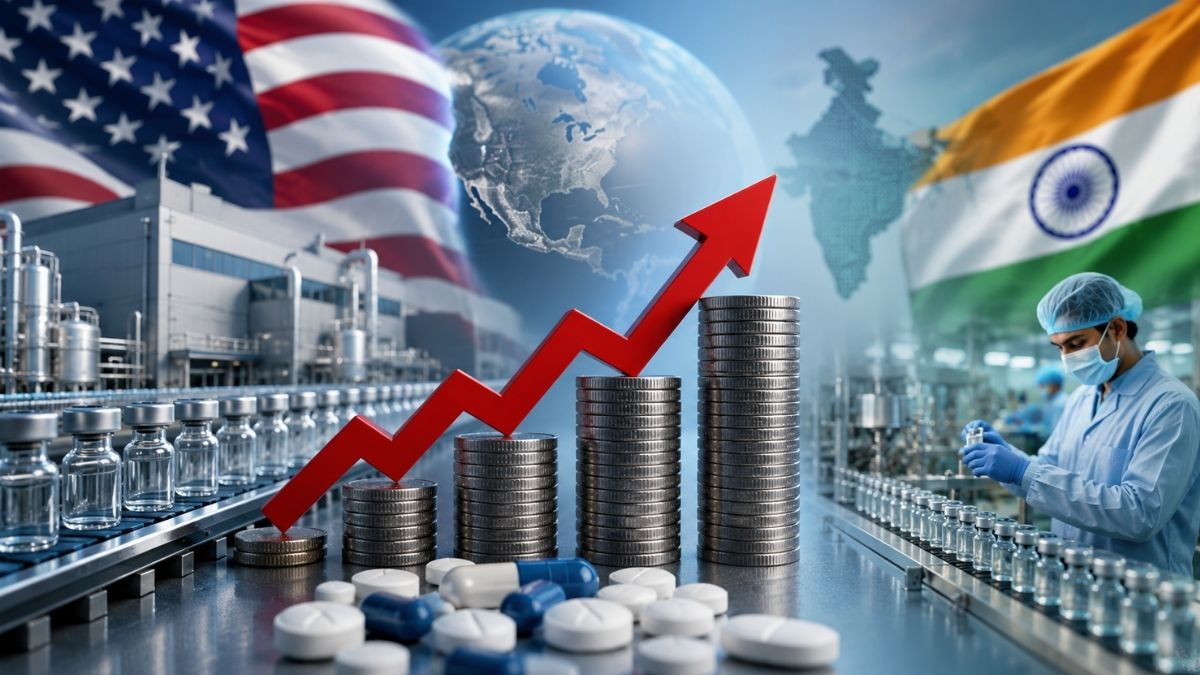
Will the talk of a tidal wave of tariff facing Indian pharma companies see policy reversals? Will there be pullbacks or compromises considered? Will a new deal emerge? Or will it all just fizzle out? These are some of the questions that precede any discussion on how life and business could change for Indian pharmaceuticals companies if the US were to stick to it’s latest stance to start imposing stiff tariffs on imported generic medicines two years from now. But then, two years is a long period in an era where things could change in a matter of days.
Nonetheless, at the moment, the focus within India is largely around the end outcome. What can be the possible implications of high tariffs on imported generic drugs into the US two years from now unless the Indian companies begin to make these in the US and sell it there. As things stand, the US government is to retain the zero tariff on generics drugs exported to the US but will raise the tariff to 100 per cent subsequently for one year and to 200 per cent thereafter.
“The proposed 200 per cent tariff is clearly intended to accelerate near-shoring of pharmaceutical manufacturing. However, rebuilding manufacturing capacity in the US is a multi-year exercise,” says Utkarsh Palnitkar,
Independent Consultant and Former Head of Advisory & Lifesciences at EY & KPMG. He does feel “automation and robotics can improve productivity, but they cannot by themselves bridge the structural cost, regulatory and supply-chain advantages that Indian manufacturers have built over decades.” To top it all, “ in the near term, Indian pharmaceutical companies remain deeply embedded in the US healthcare ecosystem.”
Higher cost of operations is a major deterrent, Indian pharma companies see the likely implications in higher prices for the end consumer in the US since most companies may end up passing on the higher cost to the end consumer. Also, the evolving scenario could heighten the risk of smaller players finding it unviable and possibly exiting the market & potentially triggering drug shortages.
At the moment, it is a wait-and-watch stance that most are adopting and are unwilling to be named on where they stand in the ongoing debate. Speaking off-the-record, many are not sure if the plans to impose tariff on imported generic drugs will actually fructify since the government in the US would be more concerned about the net impact for the American consumer. Also, many a time, there has been a rollback on tariffs.
While there are cost implications of setting up a fresh USFDA approved facility in the US, the CAPEX per se does not seem a major deterrent, most already have some physical presence in the US and the question really is around manufacturing there. The huge concern is the high cost of operations in the US. Back-of-the-envelop calculations estimate costs to be three times higher than what is currently in India.
In a carefully-worded statement by Indian Pharmaceutical Alliance on the US Tariff Announcement, Sudarshan Jain, Secretary General, Indian Pharmaceutical Alliance, confines himself to saying: “India has been a trusted partner in ensuring the supply of affordable and quality-assured medicines for American patients. Leading Indian pharmaceutical companies have US presence (over 40 facilities), supporting American jobs, investing in manufacturing, research and resilient supply chain.”
The IPA, he adds: “will continue to engage with the US Administration to build a stronger partnership and further strengthen health and medicine security for both countries.” The catch phrase apparently being “continue to engage”. While the association of leading Indian pharma companies plans to remain involved, the debate and discussions will continue and so would be the wait & watch on how things pan out in the days & months ahead.