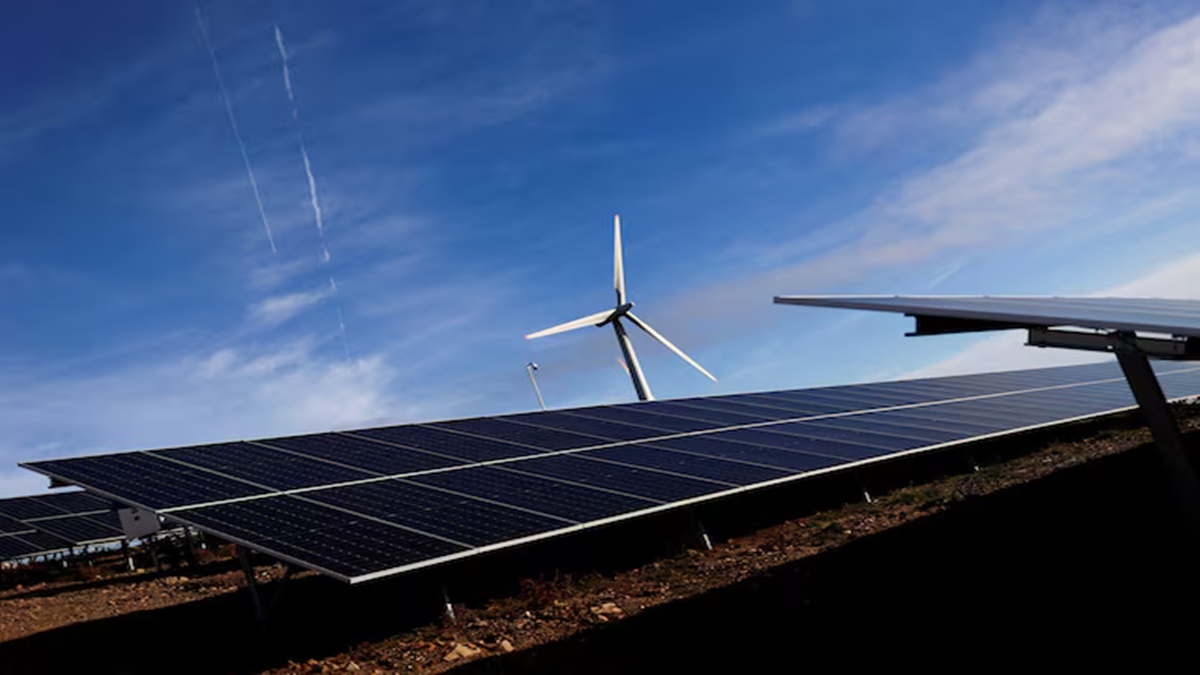
India’s next phase of the renewable-energy transition will focus on hybrid projects, battery storage, floating solar, agrivoltaics and green hydrogen, as the government prepares a global platform to attract investment, technology and partnerships across the clean-energy value chain.
The Bharat Renewable Energy Summit & Expo 2026 will be held at Bharat Mandapam from November 2-5 and inaugurated by Prime Minister Narendra Modi. For the first time, the event will combine BRESE, the ninth International Solar Alliance Assembly and the fourth International Conference on Green Hydrogen.
“The next phase of the energy transition will focus on strengthening system capabilities through hybrid renewable-energy projects, battery energy-storage systems, floating solar, agrivoltaics and the National Green Hydrogen Mission,” Union Minister for New and Renewable Energy Pralhad Joshi said.
The four-day summit would bring governments, developers, manufacturers, storage companies, green-hydrogen firms, financial institutions, investors and international organisations together.
Expanding Non-Fossil Capacity
India is also set to cross 300 GW of installed non-fossil capacity in the coming days, while PM Surya Ghar is expected to cover 5 million households within weeks. Non-fossil capacity has risen to 297 GW from 81 GW, solar to 162 GW from 2.8 GW, wind to 57.4 GW from 21 GW and bioenergy to 12 GW from 8.1 GW.
Solar-module manufacturing capacity has expanded to 200 GW from 2 GW, with solar-cell capacity at 30 GW and wafer capacity at 2.2 GW. Wind-turbine manufacturing capacity has increased to 24 GW from 10 GW.
Solar tariffs have fallen to ₹2.15 per unit from ₹10.95. Around 4.8 million rooftop systems have been installed under PM Surya Ghar and 2.8 million pumps solarised under PM-KUSUM.
Joshi said the summit would turn partnerships into investments and projects while strengthening international cooperation in renewable energy. Invitations have been extended to 34 countries for BRESE, while the ISA has invited 128 countries.