




Artificial intelligence is increasingly reshaping the creative economy as filmmakers, animators and content creators turn to prompt-driven production. Conversations with senior executives on the sidelines of the CII Big Picture Summit in Mumbai on Monday indicate that India’s entertainment industry has begun embracing AI in a significant way, shifting tasks such as storyboarding, scriptwriting and VFX production to AI tools. Last month also saw the re-release of the Nagarjuna-starrer Shiva—first released in 1989 in Telugu and remade in Hindi in 1990—after being digitally restored using AI-based tools and modern sound technology.
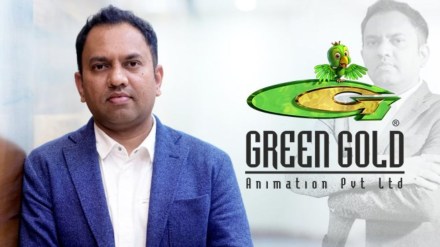
Executives estimate that studios and film production companies could end up saving as much as 30–40% of content costs over the next two years through the use of AI. For animation companies, the cost reduction is even higher—around 50%—with AI adoption, Rajiv Chilaka, founder and MD of Green Gold Animation, best known for the animated series Chhota Bheem, told FE.
What did Chilaka say?
“We are encouraging our staff to quickly upskill as AI will disrupt the market. Competition in this AI age is also coming from new-age startups and upcoming studios. All of this is keeping us on our toes to ensure we are quick to adapt to the evolving scenario,” Chikala, who founded Green Gold Animation over two decades ago, said.
For instance, studios dedicated entirely to AI filmmaking are emerging across the country. Telugu film producer and distributor Dil Raju recently launched Larven AI Studio in Hyderabad. Bollywood actor-producer Ajay Devgn has unveiled Prismix, an AI-driven production company, in Mumbai. Chandigarh-based Intelliflicks Studios is co-producing Maharaja in Denims, among the country’s first feature-length AI-generated films, while Mumbai-based Amazing Indian Stories is developing Naisha, also an AI-led Indian film.
What did Shibashish Sarkar say?
Shibashish Sarkar, Group CEO, Reliance Entertainment, says that AI can handle a lot of digital tasks at a fraction of the cost, prompting the switch. “Unlike in the west, where there has been some hesitation of late to the adoption of AI in film-making, the Indian film industry has been more open to it. Timelines are also getting significantly crunched, encouraging adoption by film-makers here,” he said.
Experts say that with entertainment consumption happening mostly online, data tariffs remaining cheap and smartphones getting smarter, film producers and content creators have little choice but to embrace tools such as AI to keep content costs in check. “Content costs in the traditional model of film-making tends to be ahead of its rate of return. The use of AI can help keep a tighter control on production budgets. Volumes, in terms of the ability to create more content faster, will also increase,” Karan Taurani, executive vice-president, Elara Capital, said.
But there are also voices calling for a more cautious approach to prompt-driven production in storytelling. “While AI has the potential to reshape workflows, improve efficiency, scale and speed, it will not define creativity. Human imagination will,” Gaurav Banerjee, MD & CEO, Sony Pictures Networks India, said during his keynote address at the CII Big Picture Summit.
The government is already taking note saying that there have to be “guardrails” as the sector undergoes a massive transformation.


