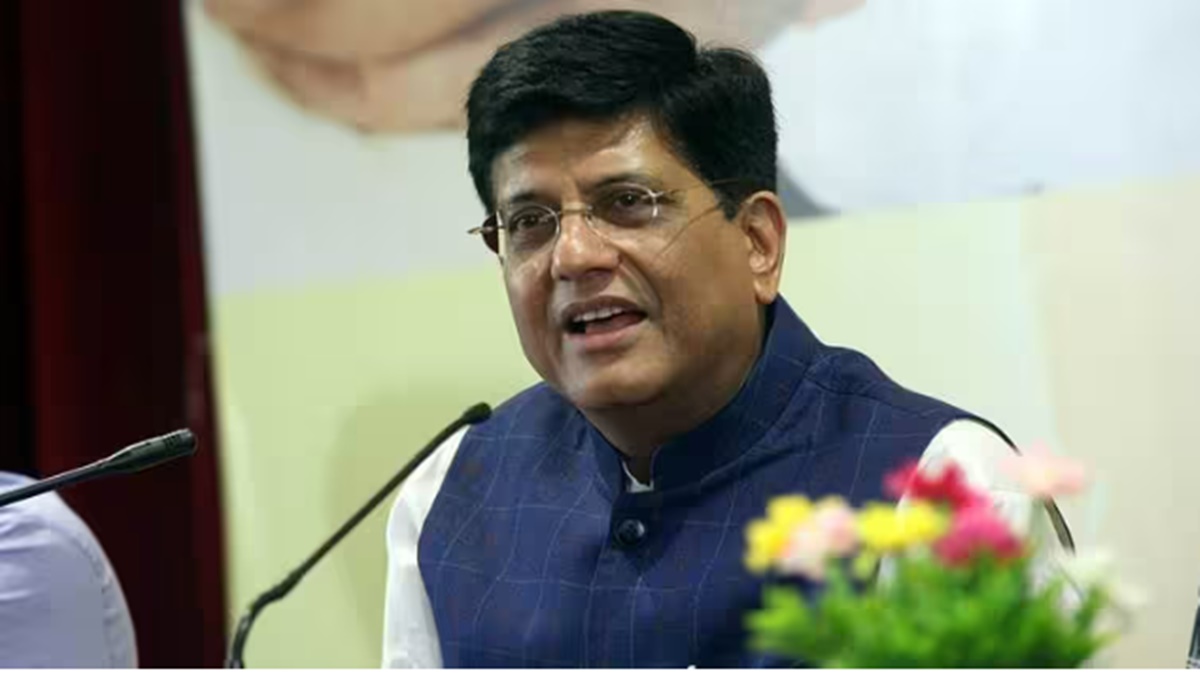
The government would ensure that the European Union’s Carbon Border Adjustment Mechanism (CBAM) or carbon tax would not hurt Indian industry and manufacturing while making efforts to turn the challenge posed by efforts to check greenhouse emissions through trade into an opportunity, Commerce and Industry Minister Piyush Goyal said Wednesday.
“Dialogue with the European Union is progressing well. They (EU) are working on it not as a technical barrier to trade but as their own effort to try to bring sustainability to the core of the world agenda,” he said at an industry event.
As part of its efforts to get to net zero carbon emissions by 2050 EU has legislated CBAM that seeks to impose additional duties on imports of products where carbon emissions at the production stage are higher than the prescribed limits.
This has been done to prevent carbon leakage – which means that companies that face stringent emission standards in the EU do not turn to imports to sidestep their obligations.
The CBAM will enter into force in its transitional phase as of 1 October this year.It will initially apply to imports of goods whose production is carbon intensive and at most significant risk of carbon leakage: cement, iron and steel, aluminium, fertilisers, electricity and hydrogen. The EU will start imposing the tax from January 2026.
“During this period we are already discussing the Free Trade Agreement with the EU. We will also find a smarter way to ensure that we are able to decarbonise our economy. We are committed to reduce our carbon intensity by 35% of 2005 levels by 2030 and we are well on our way,” Goyal said.
He said India is going down the green path rapidly and looking at fuels of the future.
“We are looking at green steel in the future.Industry and government can work together to create an ecosystem that will decarbonise our production.”
He said with the efforts being made in renewable energy and clean fuels coupled with some policy interventions to accommodate the demand of the world would give India a competitive edge over other countries.
The EU is not the only one that has come up with CBAM. The UK, US, Japan and Canada are also working on similar laws which would force exporters to switch to clean manufacturing if they want to continue to export.
“So I personally look at all these not as impediments but I am continuously examining to see how we can convert this so-called problem CBAM into an advantage for the Indian industry,” Goyal added.