




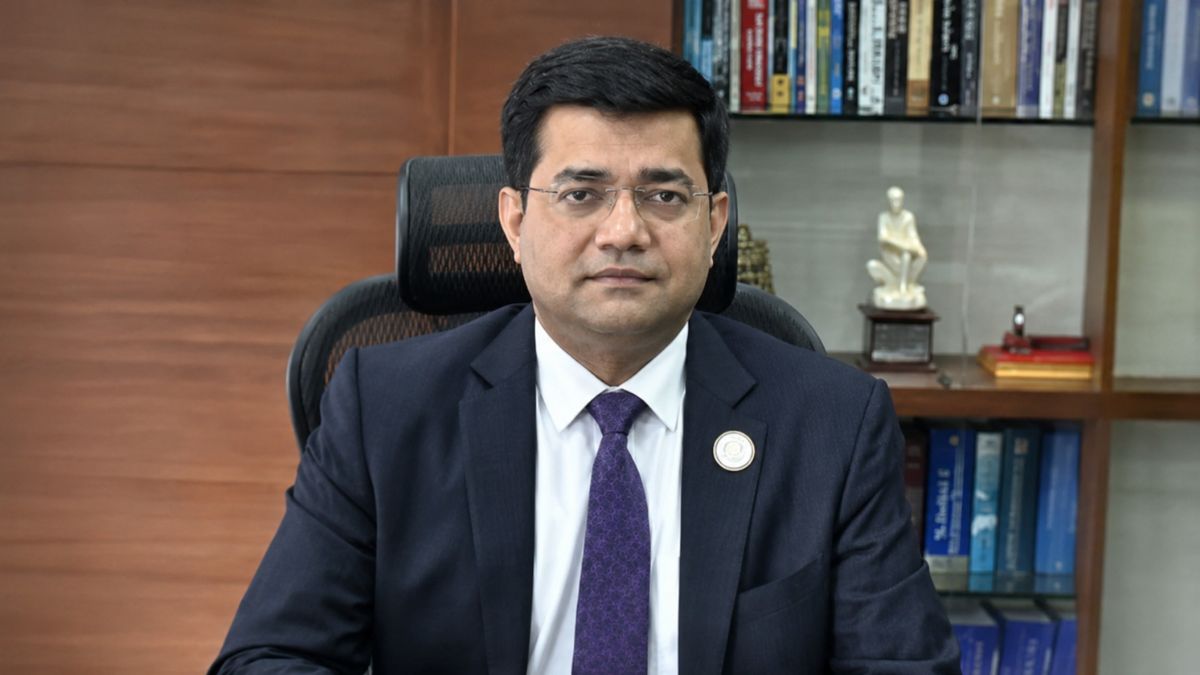
SBI Funds Management, India’s largest asset manager with over Rs 29.5 lakh crore in average assets under management and 16 million customers, plans to double its investor base over the next five years, Managing Director and Chief Executive Debasish Mishra says. He tells Prasanta Sahu that investors will overwhelmingly support its initial public offering given the trust brand SBI commands. Excerpts:
Where do you see SBI Mutual Fund in the next five years?
I want SBI Fund Management to become the fund manager of every Indian, much like SBI is known as the bank of every Indian.
Over the next five years, we would like to expand financial awareness across cities, towns, Panchayats and villages, add another 16 million customers, strengthen digital delivery through its AI-powered Invest app, and focus on investor excellence by ensuring value creation, seamless service and prudent risk management.
SBI Mutual Fund has retained its position as India’s top mutual fund house. Where will the next phase of growth come from?
The next phase of investors will not come mainly from metros or top cities. It will come from Tier-2 and Tier-3 towns, and from small rural and urban centres. Our priority is investor awareness — helping people understand mutual funds, market risks and the range of investment options available.
We are not asking people to abandon traditional savings such as fixed deposits, but to become aware of additional investment avenues. Over time, this will support both household wealth creation and the country’s broader financial growth.
Retail participation has surged in recent years. Can that momentum continue despite market volatility?
Yes, we believe that it will continue. The surge began after Covid when many people had more time to think about investments and study markets. Over the last five years, overall financial asset creation grew at about 11% CAGR, while mutual fund investments grew around 41% CAGR.
Investors recognise the benefits of professional fund management and the averaging effect of investing through market cycles. This financialisation of savings has brought a large number of new investors into mutual funds, and the trend should continue as the industry expands across customer segments.
SIPs have become the preferred investment vehicle for millions of Indians. What has driven this change?
SIPs are increasingly linked to financial goals. Earlier, many families would start a recurring deposit when a child was born. Today, SIPs often serve that purpose. Campaigns such as Mutual Fund Sahi Hai have helped create awareness. People now use SIPs for goals such as education, marriage, overseas travel and medical emergencies.
Our effort is to connect every SIP with a specific financial goal, because that makes the investment journey more meaningful and disciplined.
What is your vision for scaling SIPs during volatile markets?
SIPs are one of the best tools for balancing market volatility. When markets fall, investors receive more units; when markets rise, the value of existing units increases. Many long-term SIP investors have still earned internal rates of return of around 10–12% even during difficult periods, and much higher returns during strong market phases.
Investors increasingly understand this balancing effect, which is why SIPs continue to gain acceptance.
Why do you believe investors will overwhelmingly support your Rs 9,812-crore IPO?
The biggest reason is trust. SBI and SBI Funds Management have strong brand value and a long relationship with investors. We also believe that India’s long-term growth story remains intact despite short-term geopolitical or market disruptions.
Markets may be volatile, but trust is constant, and we want to reinforce that confidence among investors.


