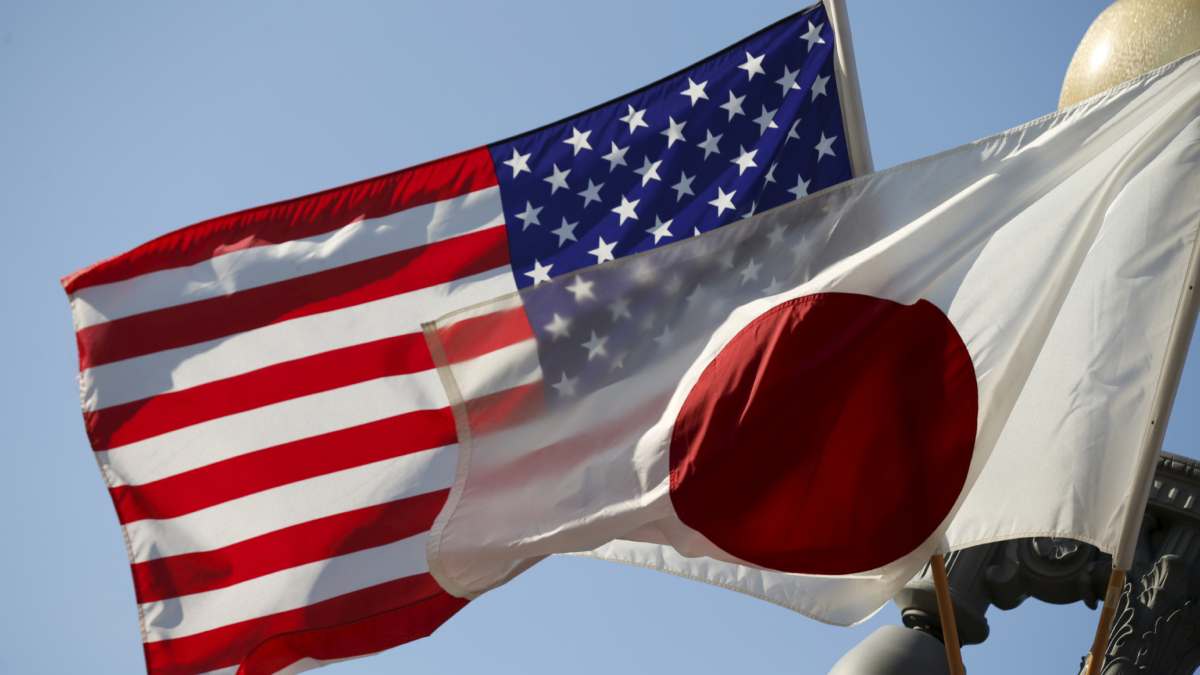
Japan and the United States are forging a robust partnership to counter the growing threat of hypersonic missiles, a development that could reshape defence strategies across the globe. In a move set to enhance their deterrence capabilities, Prime Minister Fumio Kishida and US President Joe Biden are poised to greenlight the joint development of an innovative missile interceptor during their bilateral discussions at the Camp David retreat near Washington.
This collaboration marks the second instance of missile co-development between these two nations, the first being the Standard Missile-3 Block 2A, a successor to the U.S.-developed SM-3 Block 1A. Hypersonic projectiles, attaining speeds exceeding Mach 5, pose an immense challenge due to their blistering velocity and evasive maneuvers. These missiles, frequently pursued by countries like North Korea, China, and Russia, have triggered concerns due to their potential to outmaneuver conventional countermeasures and radar tracking.
The primary objective of this joint endeavor is to create a formidable solution capable of intercepting hypersonic missiles prior to their intended impact. This is crucial since certain variants of hypersonic missiles can execute erratic flight paths just moments before striking, aiming to evade traditional interceptors. The upcoming interceptor will address this challenge, aiming to neutralize hypersonic threats during their gliding phas.
Initially, Japan had sought to bolster its defence against hypersonic weapons by augmenting its Ground Self-Defence Force’s Type-03 medium-range, surface-to-air guided missiles and leveraging the Maritime Self-Defence Force’s Standard Missile-6 interceptors. However, these systems primarily target missiles during their descent, necessitating a new approach to counter the elusive hypersonic trajectories. The United States has already initiated the development of Aegis destroyer-fired interceptors specifically designed for intercepting hypersonic weapons in their gliding phase. This ongoing American effort might dovetail with the envisioned bilateral initiative.
Highlighting the deepening cooperation, Defence Minister Yasukazu Hamada and his US counterpart Lloyd Austin pledged their commitment to joint interceptor development at a Tokyo meeting in June. This concerted effort is a direct response to the relentless pace of ballistic missile tests by North Korea and the swift advancements in missile technologies exhibited by Pyongyang. Additionally, the intensifying military maneuvers by Beijing in the Indo-Pacific region, including joint exercises with Moscow, have underscored the necessity for stronger deterrence capabilities.
Notably, Friday’s discussions won’t be limited to bilateral talks; they will culminate in a trilateral summit, where Prime Minister Kishida and President Biden will convene with South Korean President Yoon Suk-yeol. This extended engagement underscores the shared commitment of these nations to regional stability and security.
The envisioned missile interceptor project reflects a vital step toward enhancing global security in an era of evolving threats. By harnessing their combined expertise and resources, Japan and the United States are poised to recalibrate defence paradigms, setting a precedent for international collaboration against the backdrop of emerging challenges.