




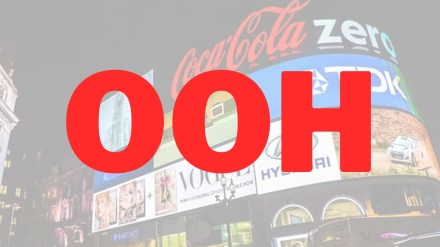
Nike 3D billboard promoting Air Sneaker is a recent example of how digital out-of-home (OOH) can give an edge to showcase creativity to brands. Created by Cekai, the 3D billboard for this year’s event was installed in Hangzhou, China, and was developed over two screens. The digital screen had aided to dramatise the evolution of the Nike Air sneaker. As for India, even as over the years, the number of digital billboards have increased, it seems creativity is yet to take off. “It is true that when it comes to creativity, the OOH industry is yet to see some good work. Perhaps one of the reasons behind this is that OOH accounts for very less part of the media spends, hence little or no attention is paid by leading creative directors. Agencies are yet to fit in a film on a digital OOH board, its mostly the print ad which gets featured,” Gour Gupta, chairman, Tribes, told BrandWagon Online.
OOH media grew 86% in 2022 and reached 94% of 2019 levels, according to the FICCI-EY report. Capacity utilisation improved in 2022, but rates remained challenged. Digital OOH screens increased to around one lakh and accounted for eight percent of the total revenue. When it comes to international markets there is no dearth of examples. New York-based cosmetics brand Maybelline’s recent activity for its mascara is yet another example of how the brand used London tube to create an impact of applying mascara. The company placed mascara wands vast in size, strung from billboards promoting Maybelline’s Sky High mascara. The company has also attached false eyelashes to buses and tubes. As the train or bus passed through these billboards, the strategically placed wands stroked the eyelash just in the manner of applying the mascara. “When it comes to OOH, technology has led to far more immersive experiences. A lot of interactivity has gone up, a lot of installations are happening, people are treating it more like art and an experience rather than just a one way communication medium. These things are beginning to happen in India as well but at a small scale,” Abhijit Awasthi, founder, Sideways Consulting, stated.
Mapping RoI
As per GroupM’s This Year, Next Year report, globally digital OOH is forecast to grow at a rate of 26.1% in 2023 to reach $13.3 billion mark. The expected CAGR between 2023-2028 is 9.4% on a global basis. Digital OOH will represent 37.2% of total OOH in 2023, with it growing to 43.0% in 2028. For Mandeep Malhotra,CEO, Srishti Media LLP, with the government easing lots of norms, it has been easy for the industry to invest in digital OOH. “This is a new kid on the block and it is only a matter of time before advertisers realise its potential and we would see innovations,” he explained.
Unlike print or TV, in the case of OOH, the cost of advertising is based on the cost of a billboard, add to that the time period for which the billboard is put to use. For example – a 40by40 billboard in a city like Mumbai in Bandra for a month typically costs around Rs 7-8 lakh. While a digital billboard in Mumbai in the airport route between Bandra to Andheri cost Rs 25 lakh a month. Compared to a static billboard, the CAPEX of a digital billboard is higher and it is estimated that it takes about a year from the time of installation to break-even. The cost of installation of a digital billboard is Rs 25,000-30,000 per sq feet, thereby amounting to Rs 1.5-2 crore. For Sanjeev Kotnala, brand and marketing consultant, Intradia World, OOH is yet to see its golden period and technology such as AI will play a big role. “Indian OOH is technically not behind. The lag, if any, is due to clients who have the old OOH mindset and are not willing to invest, experiment or innovate in OOH. People who say OOH has lost the sheen are the ones who have not really understood the media possibilities or refused to engage with it and technology,” he explained.
Interestingly, industry experts opine that the rise of short video platforms have also played a role in eating into advertisers’ spend. Add to that, social media platforms, which too have managed to get advertisers’ money. “The OOH industry in India has always been in a niche of its own making. After digital and social media came, the potential for the growth of outdoor advertising was killed in many ways. In-home mediums such as Facebook, Instagram, Tiktok have killed this potential even more,” Harish Bijoor, founder, Harish Bijoor Consults Inc. said.
For industry experts one of the key challenges is that industry still lacks measurement besides other regulations to control geo-location. But going forward with technology that is expected to change. “India is moving towards that scene, it is only a matter of time when the same starts to happen here. Globally, outdoor advertising is tech enabled now. AI will bring greater interactivity to the whole ecosystem. Location based ads will be AI enabled and the audience will see ads that are customised. The whole creativity around outdoors is changing and the ads will become acts with projection tech evolving,” Naresh Gupta, CSO and managing partner, Bang in the Middle, added.
Follow us on Twitter, Instagram, LinkedIn, Facebook


