




The age-old saying ‘the customer is always right’ remains a core principle in business strategy. However, the definition of ‘right’ has become increasingly personal. Gone are the days of one-size-fits-all marketing. Today’s consumers expect tailored experiences that cater to their individual needs and preferences.
This shift necessitates personalised targeting, a data-driven approach that identifies the unique ‘right’ for each customer. Understanding consumer behaviour forms the foundation. Through data analysis, businesses gain insights into customer preferences, purchase history, and online interactions. Technology empowers the collection, processing, and segmentation of this data into distinct customer cohorts. However, managing this process can be complex. CleverTap, a global B2B (Business-to-Bussiness) SaaS platform for customer engagement and retention, provides such technology to businesses. The company recorded a 46% increase in revenue from operations to Rs 405.1 crore in FY23 from Rs 276.93 crore in FY22. However, profit after tax (PAT) declined 42% to Rs 30.45 crore in FY23 from Rs 52.22 crore in FY22, as per the regulatory filings accessed by business intelligence platform Tofler.
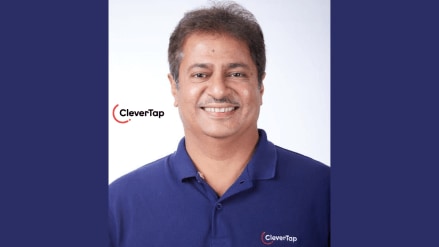
In a conversation with BrandWagon Online, Sunil Thomas, co-founder and executive chairman, CleverTap, talks about the company’s recent acquisition of Leanplum, its growth plans, and the impact of third-party cookie demise on brands, among others. (Edited Excerpts)
With the acquisition of Leanplum, what strategic benefits are anticipated, and how will it affect profitability amidst rising revenue but declining PAT? Additionally, are there specific strategies to enhance margins in the upcoming years?
We recently acquired Leanplum, and the migration effort is underway to consolidate all of its customers onto the CleverTap platform. We anticipate numerous strategic benefits from this acquisition, including a superior product and a broader geographical revenue spread. With this acquisition, we expect to return to profitability before the end of the year, as planned. Although there may be slight delays of three to four months in our migration process, it remains largely on track.
In terms of margins, it’s not very complicated. We’re essentially just paying two bills. Their customers are on the Leanplum platform, while ours are on the CleverTap software. We’ve integrated the two platforms into a single piece of software, which is faster and more efficient. Until all customers are migrated over, we must continue paying bills for both platforms.
Our margins at CleverTap are exceptionally good due to our core patented technology, including our proprietary database technology called TesseractDB. This technology allows us to store data much more efficiently and cost-effectively compared to commodity software. Once the migration is complete, which is expected to be this year, we should return to our regular profitable state. There’s not much strategy involved here, just the work of migrating customers over.
What is the breakdown of CleverTap’s market share between global and Indian markets?
I’d estimate it’s around 40% is from India. So, looking at our global revenue, approximately 40% come from the Western markets, while the remaining 60% are from the East. We have a presence in Southeast Asia, the Middle East, and other regions within the Eastern markets. Lastly, roughly 55-60% of our revenue comes from the East.
How does CleverTap deliver true personalisation that goes beyond basic demographics and transcends into a customer’s emotional triggers and intent?
One of the main unique selling points (USPs) of Clever Tap is that we offer an all-in-one engagement platform. Our customers can use Clever Tap not only for messaging across multiple channels including email, push notification, and WhatsApp but also for in-app personalisation. For instance, consider your homepage when you open Zomato or Swiggy – what’s displayed? It varies based on individual preferences such as food choices and quantities ordered. We enable in-app or in-context personalisation through multiple avenues.
Our most satisfied customers are those who integrate both aspects seamlessly. For instance, if an email or push notification contains personalised recommendations or offers, clicking on it brings you back to the app with the same personalised experience. We’re the only platform worldwide that offers this blend of in-app and out-of-app personalisation.
Another significant aspect is our data capabilities, facilitated by TesseractDB. We don’t just work with recent customer data; we have access to years’ worth of user behaviour data. For instance, if Zomato has known XYZ about a user for five years, we have access to that entire dataset. This wealth of data, coupled with advancements in data science and artificial intelligence (AI), allows for highly personalised experiences. Even if your last order was an outlier, we consider your overall ordering patterns to offer relevant recommendations.
While we provide the tools, we also emphasise customer success. Our dedicated customer success teams, including account managers for enterprise clients, conduct executive business reviews, share best practices, and discuss industry trends. Through both our tools and human support, we aim to guide our customers towards more effective strategies.
How does CleverTap plan to tackle the impact of the demise of third-party cookies and the introduction of regulations such as India’s DPDP Act on data collection and personalisation strategies?
Our approach with Clever Tap has always centred around first-party data. From the outset, we’ve focused solely on leveraging data generated within our customers’ applications. User behaviour such as adding items to a cart, making purchases, or watching content are all tracked as user events within the app. This means that all the data we work with is first-party data, which simplifies compliance with regulations like GDPR. As data processors rather than controllers, we ensure that all consent and data management practices are handled by our customers.
Our data is highly deterministic, meaning there’s no guesswork involved. Whether it’s ABC logging in or accessing the app on his mobile phone, it’s all tied to first-party data. Therefore, changes in regulations or industry trends haven’t significantly impacted our approach. However, our customers, particularly consumer companies, have felt the effects, particularly in terms of rising user acquisition costs.
The landscape of targeted advertising has shifted, making user acquisition more expensive and less precise. This broader trend affects our customers’ strategies and ROI on advertising spend. Despite these external challenges, Clever Tap’s core functionality remains unaffected, providing valuable insights and engagement tools based on first-party data.
How is CleverTap integrating with conversational AI tools like chatbots and virtual assistants to enhance personalised customer journeys?
For platforms such as WhatsApp, we’ve developed our inbox system where our customers can manage and respond to conversations. We’re among the select few Demand-side platforms (DSPs) globally for Meta, granting us access to specialised application programming interfaces (APIs) and capabilities. This enables us to provide enhanced features tailored to our users’ needs. However, the proliferation of chatbots, fueled by the AI wave, has expanded the landscape even further.
We integrate with various chatbot providers through APIs, allowing us to furnish them with user context and behaviour data. While we don’t directly engage in chatbot development, we facilitate the exchange of user information between our platform and the chatbot systems. This information can then be utilised by either automated chatbots or human agents interfacing with customers.
Even before the advent of chatbots, we empowered human agents by providing them with comprehensive customer records during support interactions. Our APIs surface relevant user data, such as purchase history or support ticket details, to assist agents in resolving queries efficiently. This contextual information aids in debugging and ensures that agents are well-informed when addressing customer concerns. Now, we’re extending similar capabilities to automated chatbots through our APIs.
How is CleverTap integrating AI into its offerings, particularly with the emergence of Generative AI, and how has this evolved from traditional methods?
Our history with Clever Tap, although it wasn’t termed as Gen AI back then, involved predictive segmentation. This meant forecasting user behaviour such as future purchases or potential churn instances. We’ve been doing this for over five years, preceding the widespread adoption of the term. Now, Gen AI has gained prominence, revolutionising productivity across industries.
As part of our adaptation, we introduced Scribe about six to eight months ago. This feature, heavily utilised by our customers, automates content generation for push notifications, emails, and other channels. Scribe doesn’t just generate text; it incorporates emotional elements. Users can specify emotions like joy, surprise, or fear of missing out (FOMO) to tailor the message accordingly. This feature has become quite popular.
Looking ahead, we have an extensive AI roadmap. Leveraging our vast repository of first-party user data, we’re exploring various initiatives. For instance, we’re developing prescriptive journeys and user segments to streamline growth marketing efforts. By automating tasks and leveraging data-driven insights, we aim to enhance efficiency and reduce experimentation costs for our users.
Overall, it’s an exciting phase for us as we continue to innovate and leverage AI to drive better outcomes for our customers.
What are CleverTap’s plans for the next five years, including global expansion and portfolio growth?
We’re in our 10th year of business, and we believe we have a solid foundation for sustainable growth. Our goal is to return to profitability and generate consistent cash flows, positioning us as a company that can thrive indefinitely. Expanding globally is a key focus for us, particularly in the West, namely the US and Europe, which represent enormous opportunities. Currently, only a portion of our revenue comes from these markets, so there’s significant room for growth.
Our recent acquisition of Leanplum demonstrates our active stance on mergers and acquisitions. We’re constantly looking for products that complement CleverTap’s offerings, either by enhancing our all-in-one engagement platform or by serving as entry points to attract new customers. With strong backing from top-tier investors like Tiger Global and Sequoia India, we have the financial resources to support these endeavours.
In the competitive landscape dominated by giants including Oracle, Salesforce, and Adobe, we see an opportunity to differentiate ourselves through innovation. While these incumbents may not innovate as swiftly as newer players, we’re confident in our ability to drive change and become a significant player in the industry.
Marketing automation and personalisation are crucial for consumer companies, yet many have yet to fully embrace them. With CleverTap, businesses have the tools they need to address these needs, but success ultimately hinges on organisational mindset and expertise. Looking ahead, we see a promising future for CleverTap, with opportunities for growth and innovation over the next five years and beyond.
Follow us on Twitter, Instagram, LinkedIn, Facebook


