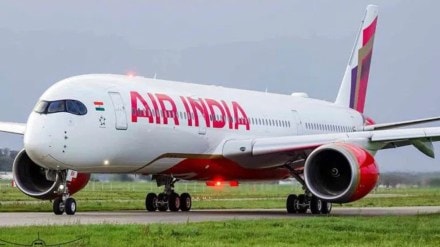
Exactly a year ago, Air India’s management had declared that its new First Class product, that debuted with its wide-body fleet, would offer high-net-worth individuals an alternative to private jets on long-haul routes, such as Delhi to London. “Even if you have a private jet, you can’t fly to the US from India in your private jet without a stop. With our first-class product, you can fly nonstop and reach faster,” Air India’s Chief Commercial & Transformation Officer Nipun Aggarwal had said in January 2025.
Since then the airline has worked overtime to refurbish the entire offering. To start with, it has invested `9,558 crore to spruce up its fleet. It welcomed its first new Boeing 787-9 on Christmas day, 2025, and is set to receive the first A350-1000 later this month. Both new aircraft feature updated interior design, modern in-flight entertainment systems, and seating in the airline’s new colour palette.
The facelift is done; consistency is the real test
Over 104 of the A320 family aircraft already sport new interiors, 26 of the B787-8 aircraft are in the refurbishment pipeline and another 570 new aircraft on firm order.
The Air India group expects to induct a total of 46 aircraft in 2026, which includes 40 narrow-body and six wide-body aircraft.
The Tata Group has committed not just capital but says it would leave no stone unturned to enhance customer experience. For one, it hasn’t skimped on the facelift. The new retrofitted planes sport new leather seats, USB charging ports, and updated cabin lighting. Passengers will also experience different onboard technology — complete with native in-flight Wi-Fi, 900+ hours of entertainment through Vista Stream service, and three-class cabin configurations on its Airbus A350 aircraft.
Will all this help Air India — the second-biggest airline in India with 3.9 million seats and a 25% market share — reclaim its lost sheen?
Reclaiming its glory will require more than new aircraft and upgraded cabins, it will need a deep reset of trust and perception, says experts. Already its Tata-led turnaround is facing issues such as fleet modernisation delay and increased safety and regulatory scrutiny following the June 2025 crash. Henry H Harteveldt, president of Atmosphere Research Group, says the Tata Group’s investments will help build the foundation for Air India to succeed, but these changes will not matter much if the airline is not seen as being reliable. “Above all else, Air India should strive to be seen as an on-time machine,” he says.
Agrees Yasin Hamidani, director, Media Care Brand Solutions. The recent investments in fleet modernisation and service standards are essential hygiene factors, they signal seriousness and intent. But glory will return only when consistency becomes visible across every touchpoint — on-time performance, crew behaviour, digital experience, and post-flight service. “Marketing’s role is to amplify real change, not mask gaps,” says Hamidani. “When product truth meets storytelling rooted in heritage and reliability, Air India can once again earn preference, not just attention.”
That apart, competition will intensify sooner than later. Three new airlines — Shankh Air, Al Hind Air and FlyExpress — are waiting to take off amid mounting calls to challenge the dominance of Air India and IndiGo. As things stand, the domestic aviation sector is largely controlled by IndiGo and the Air India Group that together hold more than 90% of the market, with IndiGo’s share exceeding 65%.
The challenge to sustain the momentum begins now after the first phase of change — new livery, retrofitted interiors, deployment of new aircraft — is over, say industry insiders.
Rise and shine
The airline’s operational performance in 2025 gives much hope. In November 2025, Air India reported on-time performance of 77.38%, a substantial improvement from the 63% recorded in January 2022.
In August 2025, the airline achieved a record net promoter core of 36, with improvements noted in both baggage handling and customer satisfaction metrics. By mid-2025, Air India had bridged the on-time performance gap with industry leader IndiGo, reporting 79.7% punctuality across six major Indian airports. Enhanced pre-flight safety checks and better crew rostering systems, enabled by digital transformation, contribute directly to this reliability.
Service offerings have also expanded: Air India introduced Premium Economy on select routes on narrow-body aircraft. The airline opened cityside check-in at Hyderabad airport and dedicated Family Assistance check-in counters at Delhi. It has opened a premium lounge in Bengaluru, with another scheduled to launch in Delhi Terminal 3 in 2026. Meal vouchers for flight delays exceeding two hours were expanded across European and North American operations.