




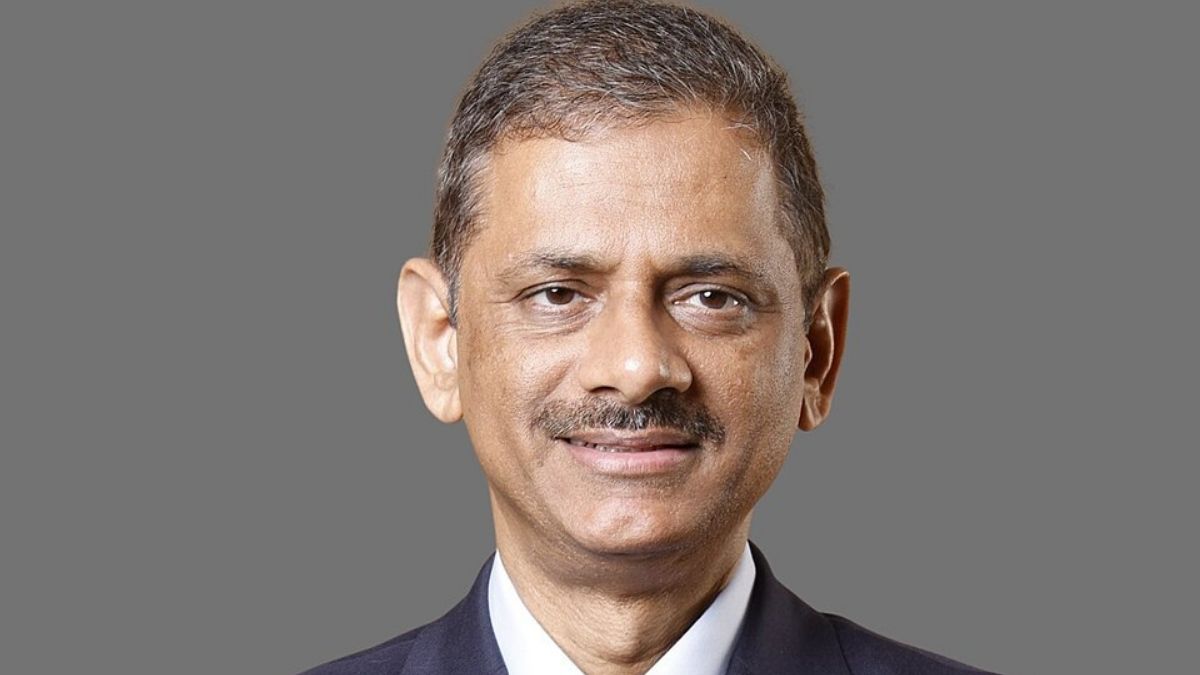
IDFC First Bank expects to garner at least 2.5% of the incremental FCNR (B) flows under the RBI’s special deposit window. The bank more than doubled its net profit in the June quarter on the back of strong growth in the net interest income and lower provisions and expects the return on assets to settle at 1% by the end of FY27. Managing Director and CEO, V. Vaidyanathan tells Kshipra Petkar a sustained loan growth of 20% should be possible in the coming quarters subject to market conditions. Excerpts:
Do you think the robust loan growth of 20% y-o-y and deposit growth of 18% y-o-y reported in Q1 can sustain?
The growth is coming from segments like mortgages, vehicle loans, corporate loans and MSME. We feel these are stable sectors, very core sectors. Around 20% growth should be achievable we feel from what we can see, but it will be subject to market conditions.
Which segments are driving the demand for corporate credit?
The demand is quite broad based. Off late we have done proposals in metals, renewables, data centers, warehousing, lease rental discounting for commercial real estate, chemicals, logistics etc. We will go where there are quality customers and proper risk adjusted returns.
How has the FCNR (B) deposit scheme progressed?
It’s early to share numbers, but we expect to garner about 2.5% of incremental FCNR (B) flows against our current 1.7% share of the NRI market. The flows will come through regular FCNR deposits, GIFT City and the SBLC model. On pricing, we are comfortable with our current pricing of 6.75%.
What has prompted the bank to upgrade its net interest margin guidance for FY27 to 5.8% from earlier 5.75%.
Our NIM expanded to 5.96% in the June quarter from 5.70% in Q1 FY26. Our cost of funds has declined by 45 basis points year-on-year, which directly supports margins. As things stand today, we believe margins should be around 5.8% this year, assuming there are no major changes in policy rates.
The bank’s cost-to-income ratio has also come down significantly to 70.7% in Q1FY27?
The increase in our income has been 500 basis points more than the rise in our expenses. That’s a huge differential. This is leading to operating leverage and is reducing our income cost ratio. We have made investments that are now paying off.
Which new businesses will drive growth beyond the core lending franchise?
We are building a universal bank so we are also expanding our wealth management business where our assets have grown to around Rs 60,000 crore from Rs 900 crore in 2018-19. We have also added about 2,300 customers in corporate cash management and 4.8 million credit card customers. This will diversify our revenue stream.
What is your view on the RBI’s proposed data governance framework and ECL norms?
Stronger data governance is a good thing. Compliance will rely more on technology and governance, than on hiring, so additional costs won’t be material. When the ECL kicks in, we will benefit from reduced RWA changes for operational and credit risk. Together, the impact on capital adequacy should be broadly neutral.
When do you expect to raise capital?
The approvals are enabling in nature. After that we have a full year available.


