




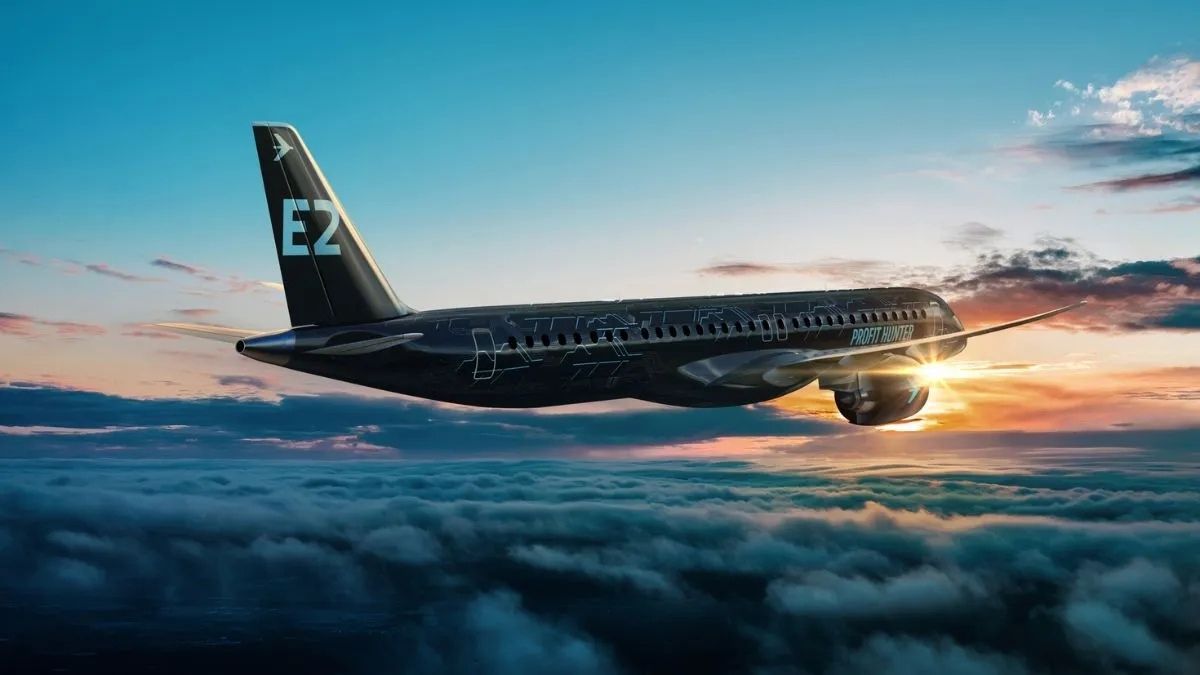
Brazilian aircraft maker Embraer is in talks with government-owned Alliance Air for a potential aircraft order as the regional carrier evaluates options to strengthen its fleet, sources told FE. Alliance Air currently operates around 18 ATR 72 turboprops, a majority of which are grounded due to various issues. While details of a potential order with Embraer are not yet available, the airline is evaluating aircraft from the E175 family as well as the larger E190-E2 for its operations, sources said, adding that discussions are at a nascent stage.
The Directorate General of Civil Aviation (DGCA) recently certified the Embraer E195-E2 for operations in India, allowing the company to formally pursue airline customers in one of the world’s fastest-growing aviation markets. This also helps regional airlines to start their operations with directly with a slightly larger Embraer aircraft rather than with a turboprop which was one of the only few options earlier.
Embraer estimates a potential market for 500 aircraft in India over the next decade as airlines expand beyond metros and improve connectivity to smaller cities. “The E-Jet family certification allows us to cater to future demand from both existing airlines and possible new entrants that may look at small narrowbodies to start operations. The E175 is already flying in India, and we are hopeful of securing further E-Jet orders soon,” the spokesperson said.
While declining to comment on discussions with specific customers, including Star Air, which has publicly expressed interest in acquiring up to 20 E2 aircraft, Embraer said it is engaging with major and regional airlines as well as potential new entrants.
Bridging the Gap
The manufacturer sees regional jets complementing existing narrowbody fleets by improving connectivity to second- and third-tier cities, particularly on routes where larger jets can only support low frequencies and turboprops lack the range.
Embraer said the E195-E2 also fits into the government’s UDAN regional connectivity framework. The aircraft’s cost per seat is comparable to larger narrowbodies, while its trip cost is 25% lower, making thinner routes and higher frequencies more commercially viable, the company said.
The discussions come as the Brazilian manufacturer bets on underserved regional markets to drive India’s next phase of aviation growth. “India is the largest untapped market in the world. With a predominant fleet of large narrowbodies and turboprops, airlines are missing significant opportunities that are too thin for narrowbodies and too long for turboprops,” an Embraer spokesperson said.
Local Manufacturing Hinges
Beyond aircraft sales, Embraer is exploring a Final Assembly Line in India through its partnership with Adani Defence & Aerospace. However, any investment will depend on securing a sufficiently large aircraft order book and developing a broader domestic aerospace ecosystem.


