




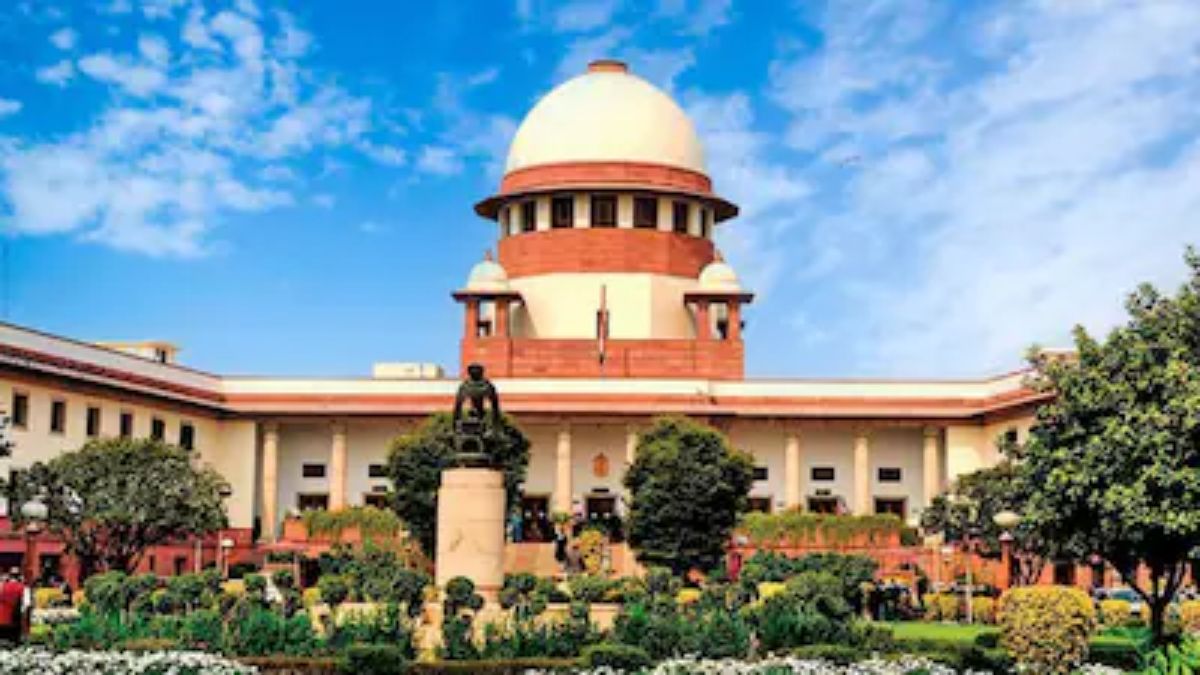
The Supreme Court on Monday directed the Centre to place before it, within two weeks, the rules framed under the Bharatiya Vayuyan Adhiniyam, 2024, while hearing a petition seeking safeguards against arbitrary airfare hikes and additional charges imposed by private airlines.
A Bench of Justices Vikram Nath and Sandeep Mehta asked the Centre to submit the rules in a sealed cover, irrespective of whether they have been tabled in Parliament. The matter has been posted for further hearing on August 3.
“Considering the submissions, we grant two weeks time to place before this court the rules which have been framed, irrespective of whether they have been placed before the Parliament or not, in sealed cover. List on 3rd August,” the Court ordered.
The direction came after the Centre informed the Bench that the rules had already been framed and were currently undergoing translation before being placed before Parliament.
The case arises from a petition filed by social activist S. Laxminarayanan, who has sought the creation of an independent aviation regulator to oversee the civil aviation sector and strengthen passenger protection.
The petition also seeks directions to the Centre and the Directorate General of Civil Aviation (DGCA) to frame binding rules on airfare pricing, regulate baggage and ancillary charges, cap surge pricing, and standardise cancellation, refund and passenger grievance redressal mechanisms.
Appearing for the petitioner, senior advocate Ravindra Srivastava submitted that until the new rules are notified, the existing regulatory framework continues to govern the sector.
The petition contends that the absence of a statutory authority empowered to regulate airfares and ancillary charges has enabled airlines to adopt opaque pricing practices, particularly during festivals, holidays and periods of peak demand. It also raises concerns over dynamic pricing, hidden charges, cancellation policies and inadequate passenger grievance redressal.
It further challenges the reduction in the free check-in baggage allowance for economy-class passengers from 25 kg to 15 kg by several private airlines. According to the petitioner, airlines have converted what was earlier an included service into an additional source of revenue without offering any corresponding benefit to passengers travelling without checked baggage.
The rules sought by the court have been framed under the Bharatiya Vayuyan Adhiniyam, 2024, which came into force in January 2025. The legislation replaced the Aircraft Act, 1934, with the objective of modernising India’s civil aviation framework and providing a comprehensive legal architecture for aircraft manufacturing, operations, maintenance and safety. However, the detailed subordinate legislation required to operationalise several provisions of the Act is yet to be notified.
The issue has been under the apex court’s consideration since last year. During an earlier hearing in January, the court expressed concern over sharp spikes in airfares during festivals and major events, describing such pricing as exploitative.
The concerns of price hikes gained prominence during the Maha Kumbh, when both bookings and airfares to Prayagraj witnessed steep increases as demand surged. According to an analysis by travel portal ixigo, one-way airfare on the Bhopal-Prayagraj route jumped 498% to Rs 17,796 from Rs 2,977 a year earlier. Airfares on the Delhi-Prayagraj route also rose by up to 21% during the period.
Similar spikes are witnessed during almost every festive season, with airfares typically increasing by 20-100% as demand peaks.
Under the existing regulatory framework, airfares in normal circumstances are market-driven and are neither fixed nor regulated by the government. Following the repeal of the Air Corporations Act in March 1994, tariff fixation was deregulated, allowing airlines to determine fares under Rule 135(1) of the Aircraft Rules, 1937, after taking into account factors such as operating costs, characteristics of service, reasonable profit and prevailing market tariffs.
As a result, ticket prices generally fluctuate based on market forces and demand-supply dynamics, with airlines free to adopt dynamic pricing models.
In May this year as well, the Supreme Court observed that airfares should be rationalised and asked the Centre to explore measures to provide relief to passengers, while hearing the same matter. Monday’s direction requiring the Centre to submit the draft rules marks the latest step in the court’s scrutiny of the government’s proposed regulatory framework for the aviation sector.


