




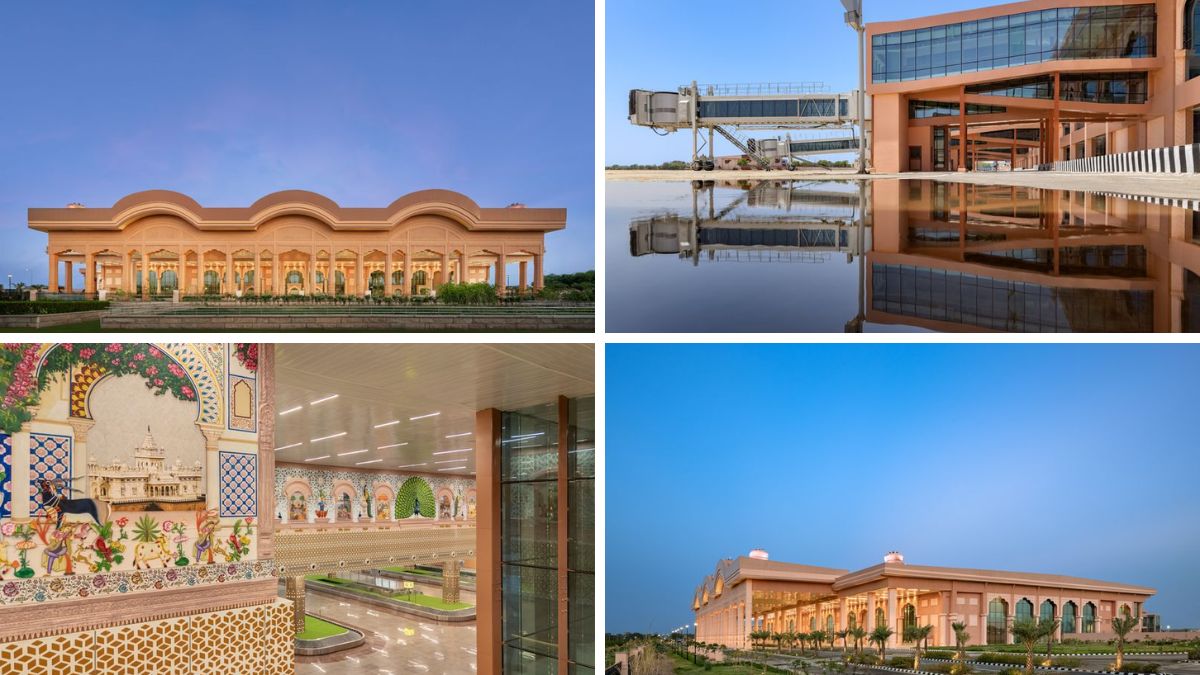
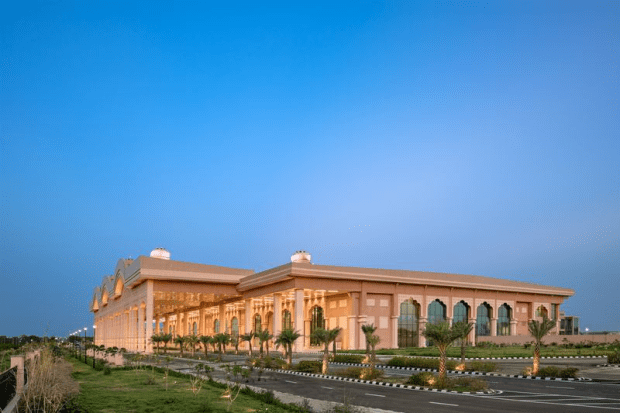
The newly inaugurated terminal at Jodhpur Airport reflects a broader shift in airport design, where new aviation infrastructure is increasingly being shaped by the identity of the cities they serve. Opened on July 4, the 2,52,000 sq. ft. terminal has been built to handle more than two million passengers annually, replacing an older facility that was designed for significantly lower traffic volumes.
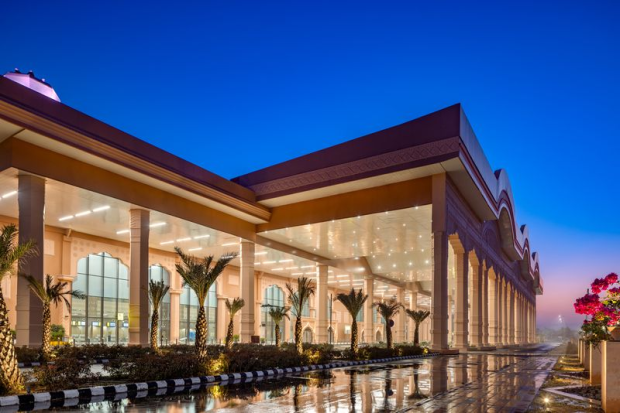
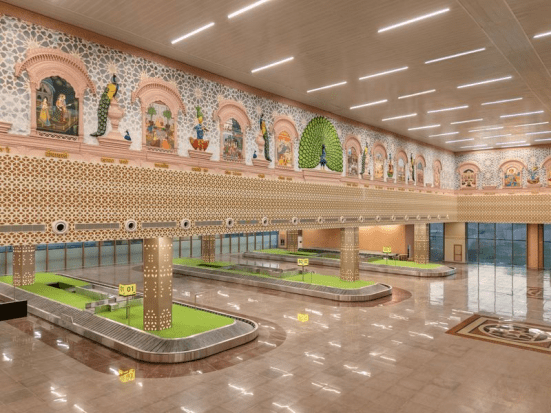
Beyond expanding capacity, the project aims to create a stronger sense of place by drawing deeply from Jodhpur’s rich architectural heritage. From its grand entrance gateway to the façade and interior artwork, the terminal incorporates elements inspired by the city’s forts, palaces, and traditional craftsmanship, all while meeting the demanding operational needs of a modern airport.

Moving beyond a standard airport design language
Speaking exclusively to FinancialExpress.com, Harsh Varshneya, Principal Architect at STHAPATI, responsible for the architectural design of the airport terminal, explained why the project deliberately moved away from the standardised design language commonly seen at airports.
“Airport terminals today are expected to meet rigorous operational and technical standards, but that does not mean they should lose their connection to place. For us, the objective was never to replicate historic architecture, but to understand the principles that define Jodhpur’s architectural identity and reinterpret them through a contemporary lens.”
According to Varshneya, traditional architectural elements such as arches, domes, jharokhas and carved columns were adapted using contemporary materials to achieve durability, faster construction and easier maintenance without losing their visual connection to the city’s heritage.
He added that airports are increasingly becoming a traveller’s first impression of a destination.
“I believe airports should become meaningful gateways to the cities they serve. The first architectural experience of a place should communicate something about its culture and identity.”
Terminal planned with long-term expansion in mind
The terminal has also been planned with long-term expansion in mind. It can handle up to 1,000 passengers during peak hours and features six aerobridges, upgraded apron facilities and improved passenger circulation systems. Arrivals and departures have been separated to minimise cross-flow, while check-in counters, baggage handling and security screening have been designed to improve operational efficiency.
Asked about the planning challenges involved in designing a terminal capable of accommodating future passenger growth, Varshneya said simplifying passenger movement remained central to the project.
“In an airport, every decision from the terminal layout to passenger processing has to simplify what is otherwise a highly complex operational environment.”
The planning framework also allows for future expansion as passenger volumes continue to grow, while service and operational areas have been designed to function independently from public spaces.

Jodhpur Airport terminal designed to accomodate Rajasthan’s desert climate
Sustainability formed another major component of the terminal’s design. The project incorporates passive cooling measures, efficient building systems, water conservation features, rainwater harvesting and energy-efficient HVAC systems. According to the project team, the terminal is expected to consume more than 50% less energy than comparable airport buildings and is targeting GRIHA certification.
Asked which design interventions made the biggest difference in responding to Jodhpur’s hot-arid climate, Varshneya said sustainability was embedded into the project from the earliest stages of planning rather than being introduced later.
“In a hot-arid region like Jodhpur, the first step was to reduce environmental loads at the design stage by incorporating passive design techniques before introducing active systems.
The building orientation, shading strategies, and carefully designed envelope work together to control solar heat gain while allowing balanced daylight into the terminal. A window-to-wall ratio of approximately 39.7% was optimised to maximise natural light without increasing cooling demand, while high-performance glazing and envelope systems improve thermal performance.
These strategies collectively contribute to a terminal that achieves approximately 50% lower energy consumption than comparable benchmarks. In my view, the biggest difference comes from considering sustainability at the design stage itself. Decisions related to planning, orientation, and the building envelope have a lasting impact, often reducing the need for more energy-intensive interventions later and allowing the building to respond more naturally to its climate.”
Apart from reducing energy demand, the terminal also incorporates water-efficient fixtures, wastewater recycling and rainwater harvesting systems, with treated water being reused for flushing and landscaping.
Airports becoming gateways to local identity
As India continues to expand its airport network, several newer terminals are moving beyond standardised infrastructure by incorporating local architectural styles, art and cultural references into their design. The Jodhpur project reflects that broader approach by using regional identity as part of the passenger experience while meeting the technical and operational requirements of a modern airport.
Asked whether Indian airports are increasingly evolving into cultural gateways rather than simply transport hubs, Varshneya said the trend is likely to gather momentum.
“Absolutely. As India’s aviation network expands, airports are increasingly becoming the traveller’s first encounter with a place. I believe they should convey something about the region’s culture and identity rather than adopt a universal expression.”
He said cultural identity is most meaningful when it is integrated into the planning, materials and architecture of a project rather than applied as decoration, adding that future airport terminals can remain globally efficient while staying rooted in the places they serve.


