




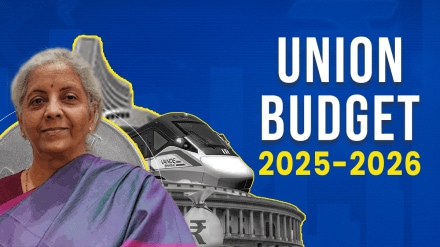
Economist and former IMF Executive Director Surjit S Bhalla has proposed that the Narendra Modi-led government take inspiration from the historic 1991 economic reforms by opening up the economy further. In his Indian Express article, he emphasised the need for lower import tariffs and increased foreign direct investment (FDI) to boost economic growth. According to Bhalla, the most effective policies are those that are unexpected and non-tinkering, much like the game-changing reforms introduced in 1991 by then-Finance Minister Manmohan Singh.
The 1991 Budget ushered in sweeping economic reforms that dismantled trade restrictions, devalued the rupee, and liberalised industries. These measures were necessary as India was on the verge of an economic crisis, with only 15 days’ worth of foreign exchange reserves left. Bhalla suggests that a similar bold approach is required in 2025 to propel the economy forward.
Job Growth and Misinformation
Bhalla argues that discussions on job growth in India are often distorted by political and ideological biases. He criticises international organizations like the World Bank, IMF, and ILO for allegedly aligning their data with specific narratives rather than objective reality.
He states that the Indian labour market has transformed significantly since 2011, yet many policymakers and experts fail to acknowledge these changes. Contrary to conventional wisdom, he claims that job growth has accelerated, reaching 12 million new jobs per year since 2011, compared to just 1 million per year during India’s fastest GDP growth phase (2004-2011). Since 2019, the growth in paid non-agricultural jobs has reached 16 million per year.
A key debate in employment statistics revolves around the definition of a “formal job.” Bhalla proposes a simple and clear criterion: a formal job should be defined as one where income tax is paid. By this measure, the number of taxpayers in India has surged from 18 million in 2011-12 to 68 million in 2022-23. For salaried taxpayers, the figure has grown from 9 million to 33 million, with an annual increase of 2.6 million since 2019-20.
Rise in Personal Income Tax Collections
The Ministry of Finance (MoF) data shows a remarkable increase in personal income tax (PIT) collections, from Rs 1.7 trillion in 2011 to Rs 10.5 trillion in 2022-23. For 2024-25, this figure is expected to surpass Rs 12 trillion, reflecting a 15 per cent annual growth rate. Bhalla attributes this rise to both increased employment and compliance.
Despite job growth, Bhalla notes that real wages for salaried workers have remained stagnant since 2011. Meanwhile, real wages for casual workers have grown at an annual rate of 2.2 per cent. This disparity highlights the financial strain on middle-class taxpayers, particularly those who cannot evade taxation due to salary deductions.
The phenomenon of “inflation tax” further exacerbates the burden. As tax brackets remain unchanged while nominal incomes rise due to inflation, taxpayers end up paying a disproportionately higher share of their earnings in taxes. Bhalla illustrates this with a comparison: a Rs 7.5 lakh salary in 2011-12 is equivalent to Rs 15 lakh today due to inflation, but tax liability has tripled due to higher tax rates.
Bold Tax Reform Needed
Given the economic strain on the middle class, Bhalla advocates for a non-tinkering tax cut in Budget 2025. He warns against a business-as-usual (BAU) approach, which prioritises reducing the fiscal deficit over providing relief to taxpayers. According to him, a tax cut would not only be a sound economic policy but also politically advantageous for the Modi government.
As India awaits the 2025 Budget, Bhalla’s recommendations highlight the need for bold and unexpected policy changes. The lessons from 1991 remain relevant today—liberalization, increased FDI, and tax reforms could be the catalysts for sustained economic growth. With 80 per cent of respondents in a recent poll expecting a BAU Budget, a surprise reform package could set the stage for India’s next economic leap.


