




By YS Chakravarti
The Union Budget for 2022-23 is capital expenditure-driven, with a slew of measures across sectors, leaving no stone unturned. Given the challenging circumstances in the face of the Covid-19 pandemic and its economic impact, the finance minister has chosen to opt for a bold, growth-oriented Budget that will have a multiplier effect and benefit the ‘aam aadmi’. While more direct employment measures were missing, the Budget has been a balancing act; well-manoeuvred to offer a roadmap for economic growth and citizen welfare.
The extension and widening the scope of ECLGS (Emergency Credit Line Guarantee Scheme) will significantly benefit SME-focused lenders, in addition to supporting MSMEs as the total guarantee amount under the scheme has also been increased to Rs 5 lakh crore from Rs 4.5 lakh crore earlier. The revamped CGTMSE (Credit Guarantee Fund Trust for Micro and Small Enterprises) will also aid the recovery of MSMEs (micro, small and medium enterprises) — the worst-hit sector — by facilitating an additional Rs 2 lakh crore to the segment.
The focus on capital expenditure, infrastructure spending and climate-conscious policies should propel credit growth higher by ensuring funding access to productive sectors, while reducing the carbon footprint and paving the way for more environment-friendly policies. The investment-led approach is crucial to support struggling sectors like cement, steel and construction, which in turn will also lead to increased movement of goods, momentum for the building materials industry and the real estate sector.
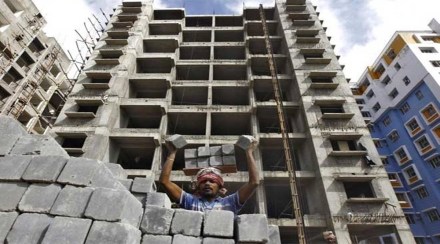
Allocation of Rs 48,000 crore to the PMAY will give a fillip to affordable housing and expand access of affordable home funding to more sections of the population. Measures such as fast-tracking land and construction-related approvals and processes, and digitisation of land records will also greatly benefit the housing and real estate ecosystem.
The Budget also announced setting up of a committee for urban sector policy and capacity building, with a focus on mass transit systems and public transport in urban areas. The government anticipates that nearly half of the population will be living in urban areas by 2047. The critical focus on urban development and planning, and facilitating development of tier-2, tier-3 cities is a timely move in the right direction to deal with the expected challenges of increased urbanisation and urban housing.
The battery swapping policy is a positive measure for the EV sector and will help facilitate economies of scale in battery production while also boosting lending to the clean energy segment. The inclusion of energy storage in the harmonised list of infrastructure will facilitate access to cheaper funding for EV battery makers.
Moreover, the announcements to formalise inter-operability standards, push EV penetration in public transport and creating special mobility zones will also spur demand for electric vehicles.
The government’s focus on rural development and social welfare is expected to support the rural economy and consumption, and which in turn is positive for the two-wheeler vehicle segment.
The finance minister announced that NARCL has commenced operations. This will aid reduction of stressed loans and enable write-back of provisions, which will help lenders strengthen their balance sheets. In addition, expected measures to improve resolution processes under IBC will also support lenders’ asset quality.
Further, the government’s push for digitisation and financial technology will assist the development of digital infrastructure and enable overall greater participation in digital lending.
Overall, increase in capital expenditure is seen leading to increased lending, which will have a spin-off effect on other aspects of the economy, including giving a boost to consumption. Ease of doing business seems to have taken centre stage in the Budget, as the government committed to long-term growth of over 8% for the next three years. The Indian economy is now well-placed for growth, and we are optimistic about credit uptake in the financial system.
The author is MD & CEO, Shriram City Union Finance


