




Hari Om Rai
If one looks at the Union Budget from the lens of past Budgets, then this one ticks all the right boxes.
While the reforms introduced in last year’s Budget are starting to make their way into transforming key industries, the government’s spending on infrastructure will provide the necessary push to the economy in a highly uncertain global macro environment. It signals the government’s intention to continue to be a supportive pillar to the economy by not compromising growth.
Multimodal connectivity with seamless digital interfaces will enable stakeholders to participate in the government’s long-term vision and drastically improve administrative efficiency.
The introduction of duty concessions in segments with import reliance and increasing customs duty in segments with a clear manufacturing roadmap shows the prudent approach of building the manufacturing industry. The thought of public-private partnership, focusing on agriculture and MSMEs for inclusive growth, would go a long way for the much-needed job creation.
However, the impact of this Budget would still be incremental. We are a country with 18% of people surviving on 3.14% of the global GDP. Whatever Budget planning we may do, it would always be a compromise on one thing or the other.
With the proliferation of the internet and social media, information is open, and people cannot be fooled anymore. One can feel a simmering discontent in the people struggling to fulfill their basic needs. In the last 75 years, we have just progressed backward. We were 3.9% of the global GDP in 1947; it now stands at a mere 3.14%. It is high time India thinks and acts radically.
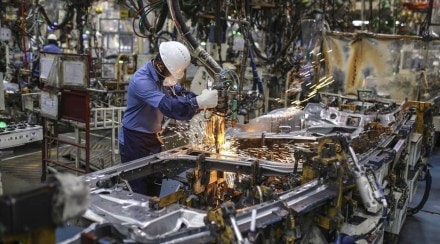
It is also the most opportune moment for us with the new geopolitical contexts and rising manufacturing costs in China. It is time for us to make our people sit on the asset side of the balance sheet by becoming the next global hub for manufacturing. We need to create at least a 100 Fortune 500 globally competitive firms capable of employing millions and making billions of dollars of exports surplus. A substantially large number of MSMEs can only prosper as an ecosystem of such giant firms. Just this one act would take our GDP to a fair 18% GDP of the world for the 18% people and make most Indians rich.
Once we create such a large manufacturing and services ecosystem employing millions and capable of creating an export surplus, it would automatically create demand for agricultural products, making the farmers wealthy. The wealthy farmers would then start demanding the manufactured goods and services, creating a virtuous cycle.
How can we make it happen? Apart from a clear vision and deep determination, public-private partnership is needed to fund the much-needed skills and create globally competitive economies of scale in most sectors. Fiscal policy is just one part; we need to use the monetary side to build large developmental financial institutions. India should use the credit multiplier and attract enough investments to fund the learning cycle to make India and Indians productive.
The writer is CMD, Lava International. Views expressed are personal.


