




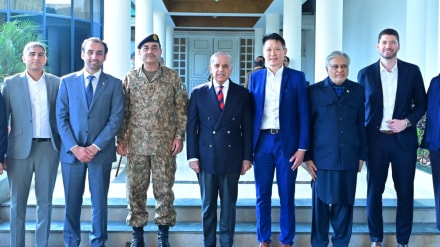
The Pakistani leadership including Army chief Gen Asim Munir met with the CEO of crypto firm Binance in Islamabad last week. The meeting took place just a day after Munir was named Chief of Defence Force. The goal, according to Pakistan’s finance ministry, is to build a “secure, transparent and innovation-driven digital asset ecosystem.” Yet this crypto push now raises serious doubts.
Binance Senior Leadership Visits Pakistan as Government Signals Strong Commitment to Digital Asset Regulation
Senior leadership from @binance, including Global CEO @_RichardTeng, visited Islamabad for high-level engagements with Pakistan’s top leadership.
The meeting was… pic.twitter.com/vAh2WoMhg7— Pakistan Crypto Council (@cryptocouncilpk) December 6, 2025
Crypto still officially banned for banks
Crypto remains formally banned for financial institutions in Pakistan; only private crypto trading is allowed. That makes the government’s embrace of Binance, a global crypto exchange with a controversial reputation, appear contradictory and risky.
The timing is eyebrow-raising. The push comes as Pakistan’s state-backed crypto regulator ramps up efforts and as the country forges deeper ties with US politics. Earlier this year, the government struck a deal with World Liberty Financial (WLF), a firm reportedly linked to the family of US president Donald Trump.
What are the promises from Binance?
During the meeting, Binance claimed it could help on multiple fronts including bank lending against crypto collateral, real-time reporting, and even channeling overseas remittances and new inflows. The exchange noted Pakistani users hold $5 billion on its platform, and suggested tokenised assets be counted toward Pakistan’s liquid money supply. On paper, this sounds promising.
Pakistan’s weak regulatory infrastructure and history of opaque capital flows, makes large-scale crypto adoption dangerous. With concerns around money laundering, tax evasion, and financial opacity looming large, the “crypto boom” could quickly turn into a governance nightmare.
At the center of this crypto narrative is Changpeng Zhao (CZ), Binance’s founder. CZ served a prison term in the US for anti-money-laundering violations, yet he was reportedly pardoned by Trump and soon after, tapped as “Strategic Advisor” to Pakistan’s crypto-regulatory body. Meanwhile, WLF is promoting a stablecoin reportedly developed with Binance’s help. The intertwined fates of a sanctioned crypto mogul, a US political family, and Pakistan’s top military and civilian leadership now fuel skepticism.
For a country struggling with a fragile economy, crypto offers a tempting workaround: faster remittances, a boost to foreign exchange flow, and a lifeline beyond traditional banking. For Binance, Pakistan represents a huge market. But the country’s economy still has to deal with transparency issues, weak oversight, and a track record of financial instability.


