




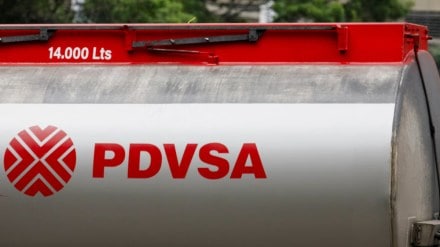
Venezuela’s state-run oil company PDVSA has started slowing down oil production as its storage tanks are almost full. The move comes after a US oil blockade stopped the country from exporting crude, leaving oil with nowhere to go. The halt in exports has added to the strain on the interim government, which is already under pressure amid warnings from the United States of possible further military action.
The situation in Caracas has worsened since the country slipped deeper into political turmoil. An interim government is now in place after President Nicolas Maduro and his wife were detained by US forces on Saturday. Venezuela’s oil exports, which bring in most of its income, have completely stopped. US sanctions on oil tankers and the seizure of two oil shipments last month have brought the OPEC nation’s oil trade to a grinding halt.
Venezuela Oil exports slow as US tightens embargo, even Chevron shipments halt
Oil shipments from Venezuela to the United States have come to a stop, including cargoes operated by Chevron. These shipments had continued earlier because Chevron had special permission from the US government. However, shipping data shows that even these deliveries stopped from Thursday.
Trump said on Saturday that a full oil embargo on Venezuela is now in place. He made the announcement while talking about the detention of President Nicolás Maduro and a US-backed plan for a change in government.
Venezuela’s state oil company PDVSA has started cutting back production. It is shutting some oil fields and groups of wells as oil piles up on land. The company is also running short of diluents, which are needed to mix with Venezuela’s heavy crude so it can be exported.
PDVSA has asked several joint ventures to reduce output. These include projects with China’s CNPC, Chevron, and other partners. One project that was earlier run with Russia’s Roszarubezhneft is now being operated only by PDVSA. Chevron on Sunday that that it is continuing its operations while following all applicable laws, but did not share further details.
What about Sinovensa oil project?
Workers at the Sinovensa oil project began preparing on Sunday to shut down up to 10 groups of wells, following a request from PDVSA. This step was taken because large amounts of extra-heavy crude have built up and there is a shortage of diluents needed to move the oil. A source told Reuters that the wells can be reconnected in future when conditions improve.
Sinovensa usually sends part of its oil to China as repayment for loans. But shipping data shows that two large oil tankers flying the Chinese flag, which were heading to Venezuela to collect crude, stopped their journey at the end of December.
At another oil project, Petromonagas, workers started cutting production late last week. This happened as supplies of diluents through pipelines were disrupted, according to a source.
Chevron has not reduced production yet, as it still has some storage space, especially at the Petropiar project. Oil tankers are also continuing to load there. However, Chevron’s ships have not left Venezuelan waters since Thursday. Storage space at Petroboscan is almost full, and this could force production cuts if the situation continues.
US pressure squeezes Venezuela’s oil giant as production cuts loom
PDVSA was not directly hit during US strikes over the weekend, but it is still finding it hard to keep its operations going under growing US pressure. Workers say the company is dealing with blocked shipments and is being forced to sell oil at lower prices. On top of this, key systems are yet to fully recover from a cyberattack in December.
These problems are pushing PDVSA to cut crude oil production. Any reduction could trigger wider trouble, affecting refineries and fuel supply within the country. This comes at a difficult time for the interim government, which depends heavily on oil income to stay in control and maintain stability at home.


