




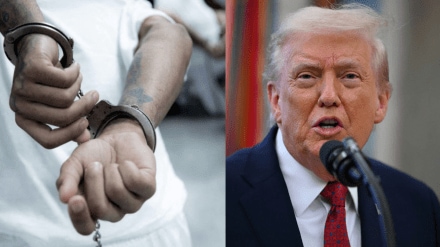
The Trump administration is preparing to expand immigration enforcement in 2026, with much more focus on workplace raids, backed by billions of dollars in new funding, even as political backlash builds ahead of 2026 midterm elections.
There was a restraint shown earlier toward industries heavily dependent on immigrant labour, raising new concerns about economic disruption, civil liberties and voter sentiment in a politically sensitive election cycle.
Massive funding
Immigration and Customs Enforcement (ICE) and US Border Patrol will receive $170 billion in additional funding through September 2029, this is a huge increase over their current combined annual budgets of about $19 billion.
The funding was approved after the Republican-controlled Congress passed a sweeping spending package in July. According to Reuters, administration officials say the money will be used to hire thousands of additional agents, open new detention centres, increase arrests from local jails, and partner with private companies to help track down people without legal immigration status.
From city sweeps to job sites
Trump has already surged immigration agents into major US cities, where officers have swept through neighbourhoods, clashed with residents and led to protests. While federal agents conducted some high-profile business raids this year, they largely avoided farms, factories and other economically critical workplaces known to employ undocumented immigrants.
That restraint now appears to be ending.
White House border czar Tom Homan told Reuters that enforcement actions would expand significantly as staffing and detention capacity grow. “I think you’re going to see the numbers explode greatly next year,” Homan said to Reuters. He confirmed that the administration’s plans “absolutely” include more enforcement actions at workplaces.
Political backlash grows ahead of midterms
The expanded deportation drive is showing clear signs of voter unease ahead of the 2026 midterm elections, which will determine control of Congress.
In Miami, one of the cities most affected by Trump’s crackdown due to its large immigrant population, voters elected their first Democratic mayor in nearly three decades last week.
The mayor-elect said the result was partly a reaction to the president’s immigration policies. Other local elections and polling also point to rising concern over aggressive enforcement tactics.
“People are beginning to see this not as an immigration question anymore as much as it is a violation of rights, a violation of due process and militarizing neighborhoods extraconstitutionally,” said Mike Madrid, a moderate Republican political strategist to Reuters. “There is no question that is a problem for the president and Republicans.”
Trump’s approval rating on immigration, long considered his strongest issue, has slipped sharply. It fell from 50% in March, before major city crackdowns began, to 41% by mid-December. Public unease has focused on images of masked federal agents, tear gas used in residential areas, and US citizens being detained during operations.
Arrest data shows widening net
Regardless of official messaging emphasising the removal of criminals, government data shows a broader enforcement net.
By late November, about 41% of the roughly 54,000 people arrested and detained by ICE had no criminal record beyond an alleged immigration violation, according to agency figures. In contrast, during the first weeks of January before Trump took office, only 6% of detainees fell into that category.
The administration has also taken action against legal immigrants. Agents have arrested spouses of US citizens during green card interviews, removed people from certain countries from naturalisation ceremonies moments before they were to become citizens, and revoked thousands of student visas.
Businesses brace for impact
The administration’s renewed focus on job sites could significantly affect US businesses, including many that traditionally lean Republican. Replacing workers arrested during workplace raids could drive higher labour costs. Earlier this year, the administration exempted key industries from enforcement on Trump’s orders, before quickly reversing course, Reuters reported.
Sarah Pierce, director of social policy at the centre-left group Third Way, said businesses have largely avoided confronting the administration so far but may be forced to respond if enforcement intensifies. “It will be interesting to see whether or not businesses finally stand up to this administration,” Pierce said to Reuters.
Early restraint gives way to pressure from hardliners
Early in Trump’s second term, ICE paused large-scale workplace raids in key sectors to avoid economic disruption. That pause was short-lived.
By mid-2025, enforcement resumed, with approvals required for major actions, effectively ending assurances to shielded industries. Business leaders warned against aggressive tactics after incidents such as a high-profile raid in Georgia explaining tensions between Trump’s promise to restore jobs and the labour needs of US industries.
Workplaces have since faced increased I-9 audits and legal exposure, even when employing authorised workers. Agriculture, construction and service sectors have reported worker departures and economic strain. Employers have begun seeking guidance on verifying employee eligibility and responding to ICE visits.
Hardliners push to target employers
Immigration hardliners argue that cracking down on employers is essential to reducing undocumented immigration. “Eventually you’re going to have to go after these employers,” said Jessica Vaughan, policy director at the Center for Immigration Studies to Reuters, which supports lower immigration levels.
“When that starts happening the employers will start cleaning up their acts on their own.” Trump returned to the White House promising record deportations, claiming that tougher enforcement was necessary after years of high immigration under his Democratic predecessor, Joe Biden. The strategy helped mobilise his base.


