




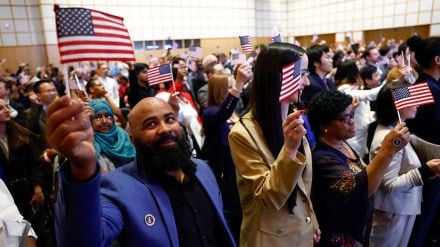
A federal judge in California on Wednesday blocked the Trump administration’s plan to end Temporary Protected Status (TPS) for about 60,000 immigrants from Honduras, Nepal, and Nicaragua, CBS reported. The judge called the decision “pre-ordained” and said it was not based on a fair review of the conditions in those countries.
Homeland Security Secretary Kristi Noem had announced in June and July that TPS protections for these three countries would end. She said that Honduras, Nepal, and Nicaragua had recovered from the disasters that originally triggered the US. to grant temporary legal refuge.
Judge blocks Trump administration’s TPS termination
TPS, created by Congress in 1990, allows immigrants from countries affected by war, natural disasters, or other emergencies to stay in the US legally and work temporarily.
Honduras and Nicaragua were granted TPS in the late 1990s after Hurricane Mitch, which killed thousands. Nepal received TPS in 2015 after a devastating earthquake. Many people under these programs have lived in the US for more than 20 years.
US District Court Judge Trina Thompson had previously paused the end of TPS in July, saying the Trump administration failed to consider ongoing problems in the three countries and may have been motivated by racial hostility. An appeals court temporarily allowed the termination, but on Wednesday, Thompson issued a final ruling that the effort to end TPS was illegal.
“The record specifically reflects that, before taking office, the Secretary made a pre-ordained decision to end TPS and influenced the conditions review process to facilitate TPS terminations for Honduras, Nicaragua, and Nepal,” Thompson wrote in a court statement cited by CBS. She called Noem’s decision “pretextual rather than based on an objective review” required by law.
Broader TPS efforts
The Trump administration has tried to end many TPS programs, saying the policy encourages illegal immigration and has been misused. It has targeted immigrants from countries including Afghanistan, Cameroon, Ethiopia, Haiti, Myanmar, Sudan, Syria, and Venezuela.
Ahilan Arulanantham, co-director of the UCLA Centre for Immigration Law and Policy, according to CBS, said the ruling restores legal protections for TPS holders and allows them to work safely in the US. “The court’s decision today restores TPS protections for thousands of long-term law-abiding TPS-holding residents from Immigration Law and Policy” he said.
Chief Justice Roberts on judicial independence
On the same day, Chief Justice John Roberts released his year-end letter emphasising the strength of the US Constitution and the importance of judicial independence. He cited threats such as violence, intimidation, disinformation, and refusal to follow lawful judgments as dangers to judges’ independence.
While the lower courts pushed back on some Trump administration actions, the Supreme Court has allowed several major moves, such as barring transgender people from military service and limiting federal spending.
The court has also handed Trump some defeats, like in his attempt to deploy the National Guard to US cities. In 2026, the high court will hear cases on birthright citizenship and Trump’s authority to impose tariffs unilaterally.


