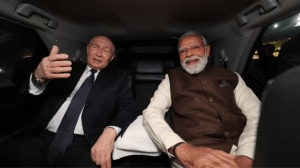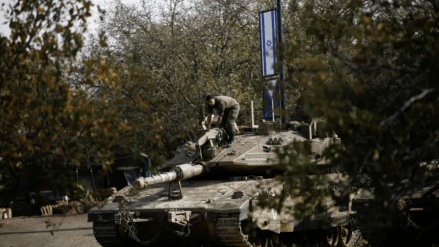
In response to Israel’s ongoing military advancements in the Golan Heights, Syria’s rebel government has mobilized forces, drawing support from its Russian allies. A significant diplomatic shift looms with Syria’s new Foreign Minister, Asad Hassan al-Shibani, planning his first official visit to Saudi Arabia. This development could mark a turning point in regional dynamics.
During Syria’s ongoing conflict, the HTS (Hayat Tahrir al-Sham) rebel faction had previously threatened to march on Jerusalem, Mecca, and Medina, after seizing Damascus. This rhetoric, while not yet realized, reflects the high stakes in Syria’s struggle for influence in the region.
Israel’s capture of the Golan Heights and its subsequent destruction of Syrian military infrastructure has effectively forced the rebel government to reconsider its strategy. With the Israeli Defence Forces (IDF) now just 67 kilometers from Damascus, Syria’s rebels find themselves in a precarious position—similar to the challenges faced by other Middle Eastern factions in Gaza and Lebanon.
While Israel had earlier claimed to have direct communications with the HTS, reports now suggest that the group may be planning a counteroffensive, aiming to drive Israel out of Syria with assistance from its Russian backers.
Syria’s New Foreign Minister: A Key Visit to Saudi Arabia
Syria’s new Foreign Minister, Asad Hassan al-Shibani, recently confirmed his visit to Saudi Arabia, an important diplomatic move in light of the region’s shifting alliances. In a statement on social media, al-Shibani expressed his honour in representing Syria during his first official visit and emphasized the goal of strengthening strategic relations between Syria and Saudi Arabia.
This visit is noteworthy because Saudi Arabia has historically had tense relations with Syria, particularly following the rise of the rebel factions. Despite this, Saudi Arabia, a key player in Middle Eastern geopolitics, has maintained ties with Russia and Iran, both of which have significant influence in Syria.
Syria’s Complex Relationship with Russia and Iran
Syria’s Assad government previously enjoyed strong relations with both Russia and Iran. However, following the uprising against President Assad, both Russian and Iranian forces were forced to scale back their presence as rebel factions gained ground. Even Russian soldiers stationed in Syria were recalled as part of Moscow’s recalibration of its involvement in the region.
In the midst of these tensions, Israel had been in direct contact with HTS, as confirmed by Israeli Prime Minister Benjamin Netanyahu. HTS leader Abu Mohammad al-Julani had also signalled a willingness to normalize relations with Israel, raising questions about the broader geopolitical shifts in Syria.
However, as Israel continues its territorial expansion, particularly in the Golan Heights, Syria may be turning to Saudi Arabia for support. Saudi Arabia has consistently opposed Israel’s occupation of the Golan Heights and could serve as a valuable ally for Syria in countering Israeli actions.
The Significance of al-Shibani’s Visit to Saudi Arabia
Saudi Arabia’s role in the Middle East remains pivotal. While efforts have been underway to normalize relations between Saudi Arabia and Israel, Riyadh has made it clear that it will not formalize diplomatic ties until Palestine is granted full independence.
Al-Shibani’s visit to Saudi Arabia may have multiple layers of significance. Given Saudi Arabia’s proximity to Russia, it’s possible that the Syrian Foreign Minister is seeking to leverage Saudi influence to mend ties with Russia. Despite the withdrawal of Russian troops from Syria in recent years, Russia could play a key role in limiting Israel’s military actions in the region.
Furthermore, there are speculations that Russia could take steps to de-escalate tensions by reclassifying the HTS. Similar to how Russia recently removed the Taliban from its list of terrorist organizations, it may be possible for Moscow to extend a diplomatic olive branch to the HTS, potentially altering the balance of power in Syria.