




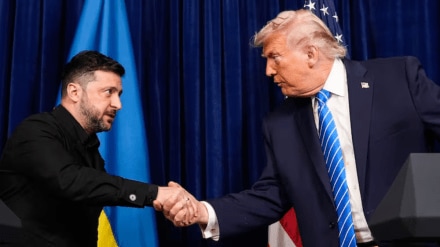
Against the backdrop of fresh Russian missile strikes and a phone call between Donald Trump and Vladimir Putin just hours earlier, Ukrainian President Volodymyr Zelensky arrived at Mar-a-Lago seeking momentum for peace. Though there was no breakthrough announced after more than three hours of talks, both leaders projected optimism. Here are the five key takeaways from a meeting that could shape the next phase of the war:
A revised peace plan is close but not final
Trump and Zelensky have discussed about a reworked 20-point peace framework, refined from an earlier 28-point draft that Kyiv felt pushed Ukraine too close to capitulation. Zelensky said the plan was “90% agreed”, claiming that this is a substantial progress. However, Trump avoided percentages but said that deal was within reach.
“We’re getting a lot closer, maybe very close,” Trump said, even as he warned the negotiations could still collapse in the coming weeks. Both sides agreed their teams would meet again soon to finalise outstanding details, with broader talks involving European leaders planned for January.
Security guarantees emerge as the clearest area of convergence
Security guarantees dominated the talks and appeared to be the strongest point of alignment. Zelensky described the guarantees discussed with Trump as “strong”, though not yet permanent. A draft outlines US-backed security assurances for 15 years, with the option to extend.
Zelensky pressed for longer-term commitments, “30, 40, or even 50 years,” he called it a historic opportunity. Trump said he would consider it, while stressing that Europe would need to shoulder much of the responsibility, with US backing rather than sole leadership.
Territory remains the hardest and most sensitive issue
Both leaders have their own concerns regarding territory, especially the eastern Donbas region, remain unresolved. Trump called it “a very tough issue”, hinting that early concessions might be pragmatic, “Some of that land has been taken… are you better off making a deal now?”
Zelensky came out firmly, saying Ukraine and Russia hold fundamentally different positions. However, he indicated limited flexibility, adding that any territorial settlement would require a ceasefire first, followed by a referendum or parliamentary approval conditions Moscow has so far rejected.
Trump’s tone on Russia raises eyebrows
The meeting followed what Trump described as an “excellent” phone call with Russian President Vladimir Putin, which the Kremlin later called “friendly and businesslike.” Trump went further, saying Putin had been “very generous in his feelings toward Ukraine succeeding.”
That framing has unsettled some of Ukraine’s supporters, who note a pattern of Trump engaging Putin before meeting Zelensky. This time, however, the sequence did not result in open tension between Washington and Kyiv. Instead, both leaders focused on diplomacy, even as Russian missiles continued to hit Ukrainian cities.
Europe is firmly pulled into the process
Following their face-to-face talks, Trump and Zelensky held a joint call with key European leaders, including Ursula von der Leyen and the heads of the UK, France, Germany, Poland and Finland. European leaders welcomed progress but stressed the need for “ironclad security guarantees from day one.”
The involvement of Europe shows Trump’s insistence that any lasting peace must be a shared responsibility. Though the US remains central to the negotiations, the next phase of talks is clearly designed to lock Europe into both the political and security architecture of any eventual dea


