




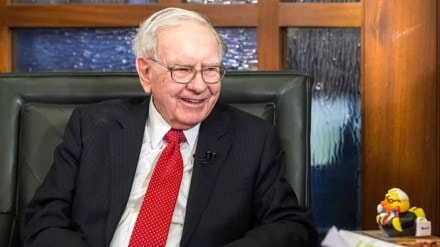
Berkshire Hathaway begins 2026 on somewhat uncharted waters following the exit of Warren Buffett as CEO after nearly 60 years. The ‘Oracle of Omaha’ is often dubbed the greatest investor the world has ever seen — growing the company from a struggling New England textile mill to a diversified global powerhouse valued at more than $1 trillion.
“I was born in 1930 healthy, reasonably intelligent, white, male and in America. Wow! Thank you, Lady Luck. My sisters had equal intelligence and better personalities than I but faced a much different outlook. Lady Luck continued to drop by during much of my life, but she has better things to do than work with those in their 90s. Luck has its limits,” he wrote in a November 2025 letter to shareholders.
His personal fortune of Berkshire stock is worth roughly $150 billion even after giving more than $60 billion away over the past 20 years. Berkshire for decades has routinely outpaced the S&P 500 as Buffett bought up insurance companies like Geico and National Indemnity, manufacturers like Iscar Metalworking, retail brands like Dairy Queen, major utilities and even one of the nation’s biggest railroads, BNSF. Along the way, Buffett bought and sold hundreds of billions of dollars of stocks and profited handsomely from his famously long-term bets on companies like American Express, Coca-Cola and Apple.
Here are 10 ‘rules’ that have defined his worldview and shaped the perception of millions who follow his words:
1. Rule No. 1: Never lose money. Rule No. 2: Never forget rule No. 1
The witty quip underlines a rather serious message against unnecessary risks. It underscores the entire investment approach followed by Buffett over the years — with capital preservation taking precedence over risky gains.
2. If the business does well, the stock eventually follows
Buffett has always stressed the need to focus on underlying company strength rather than short-term market noise. Many of his investments also highlight his belief that good fundamentals will drive long-term prices.
3. Be greedy when others are fearful. Be fearful when others are greedy
The slightly contrarian mantra comes from an October 2008 interview with PBS amid the financial crisis. It is a slight rephrasing of his 1986 Berkshire letter asking people to “be fearful when others are greedy and… greedy only when others are fearful”. Simply put, risk rises when optimism erases the margin of safety while opportunity appears when fear crushes prices below reality.
4. Price is what you pay. Value is what you get
Buffett used the quote in his 2008 Berkshire Hathaway shareholder letter amid widespread market declines.
“Long ago, Ben Graham taught me that ‘Price is what you pay; value is what you get.’ Whether we’re talking about socks or stocks, I like buying quality merchandise when it is marked down,” he reiterated.
5. When forced to choose, I will not trade even a night’s sleep for the chance of extra profits
Buffett had emphasised the need for emotional risk control in his 2016 Berkshire Hathaway shareholder letter — preferring peace of mind over aggressive bets that could lead to sleepless nights and overwhelming stress.
6. Someone’s sitting in the shade today because someone planted a tree a long time ago
The quote comes from a January 1991 interview that was later documented in Andrew Kilpatrick’s 1992 biography ‘Of Permanent Value: The Story of Warren Buffett’. The “tree/shade” metaphor is used to talk about compounding interest and returns — with early, small investments (the “seed” planted long ago) growing exponentially over time through reinvested gains, providing massive, effortless benefits (shade) for future generations without additional effort.
7. Cash combined with courage in times of crisis is priceless
The brisk message was included his New York Times op-ed ‘Buy American. I Am.’ amidst the 2008 financial crisis. It highlights the power granted by liquidity — to seize bargains when fear might paralyse others.
8. The stock market is a device for transferring money from the impatient to the patient
The quote is widely attributed to Buffett and believed to be a distillation of the philosophy emphasised in his Berkshire letters from the 1980s. It highlights how show term traders (or those who are impatient for quick gains) often buy high and sell low — handing gains to patient long-term holders who ignore volatility and focus on intrinsic business value over decades.
9. Do not save what is left after spending; instead spend what is left after saving
This has been a common phrase in many Buffett letters and interviews since the 1990s. It drives home his core mantra that it is necessary to prioritise savings and build wealth before making lavish lifestyle choices.


