




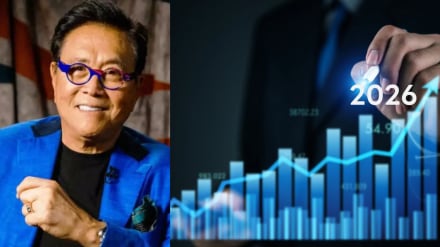
As the New Year 2026 gets underway, Rich Dad, Poor Dad author Robert Kiyosaki has shared a strong and direct message about what lies ahead. He believes 2026 will not be just another period of financial stress.
In his view, it could turn into the greatest financial opportunity of our lifetime. Kiyosaki says that most people fear change. He sees it as a doorway to growth. “Most people hear the word change and think danger. I hear opportunity.”
Why 2026 could change everything
According to Kiyosaki, more money will move between people and institutions in 2026 than ever before. He says this will not happen because the world is getting richer, but because the system that governs money is breaking down.
“More money will change hands in 2026 than in any year before it. Not because the world is getting richer, but because the rules of money are breaking down.”
For him, this breakdown is not a negative outcome. It is the process through which wealth shifts from one group to another. “That’s how wealth is transferred.”
Governments, debt, and the printing problem
Kiyosaki points to growing government debt as a major reason behind this shift. He says governments across the world are struggling to manage what they owe. “Governments are drowning in debt.” He explains that central banks have very limited options. Raising interest rates could break parts of the system, while stopping money printing could cause a collapse. As a result, he believes they will continue on the same path. “So they’ll do what they’ve always done, Print. Inflate. Devalue.” Kiyosaki stresses that this is not speculation. “This isn’t a prediction. It’s arithmetic.”
Where the money really goes
When money loses value, Kiyosaki says it does not simply vanish. Instead, it moves from one place to another. “And when money loses value, it doesn’t disappear. It moves.” He explains that this movement usually benefits people who understand the system. “From savers to investors. From employees to asset owners. From people who trust the system to people who understand it.” This shift, he says, is where the real opportunity lies. “That’s the opportunity.”
Kiyosaki believes most people will enter 2026 following familiar habits. They will continue saving cash, focusing only on wages, hoping prices fall, and trusting retirement systems. According to him, these choices may feel safe on the surface, but they can slowly reduce purchasing power. “They’ll feel ‘safe’ while getting poorer.”
Who stands to gain in 2026
Those who succeed, Kiyosaki says, will think differently. Instead of relying on systems that are losing value, they will place themselves in assets that cannot be printed or easily controlled. He says this is not about trends or hype, but about protection from monetary manipulation. “Not because these assets are trendy — but because they sit outside the reach of monetary manipulation.”
Kiyosaki warns that simply buying assets without understanding them can be risky. “Buying assets without education is gambling.”
He believes the real advantage in 2026 will come from understanding why money is moving, where fear creates discounts, how debt can work in one’s favour, how taxes reward asset owners, and how to generate cash flow in any market. According to him, this is the true role of financial education. “That’s what financial education does. It doesn’t predict the future. It prepares you for it.”
Kiyosaki shares a lesson he says his mentor taught him long ago. “My Rich Dad taught me this.” He recalls the warning clearly. “When money changes fast, the educated get rich. When money stays the same, everyone survives. When money changes slowly, people don’t notice. But when money changes fast and you’re uneducated — you’re finished.”
For Kiyosaki, 2026 should not be about fear or panic. “2026 isn’t about panic. It’s about positioning.” He says people do not need to be smarter than everyone else, perfectly time the market, or be fearless to succeed. What they truly need, he says, is financial education. “You need to be financially educated.”
Disclaimer: The content in this article is based on a viral social media discussion and is intended for informational and entertainment purposes only. The financial figures and strategies mentioned are personal to the user and have not been independently verified. This story does not constitute financial advice or an endorsement of any specific investment strategy. Readers are advised to consult a SEBI-registered investment advisor before making financial decisions.


