




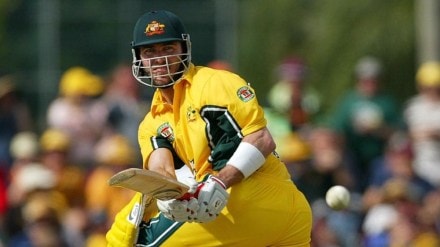
Damien Martyn lies in a Queensland hospital bed today, 54 years old, his body fighting meningitis in an induced coma. The cricket world holds its breath. Adam Gilchrist speaks for the family, thanking people for their prayers. Todd Greenberg at Cricket Australia says everyone is with him. But as we wait for good news, maybe we should talk about why we are all so invested in this man. Not just because he was a great player. But because he was the invisible hero of one of Australian cricket’s greatest days.
Man who disappeared from memory
March 23, 2003. Johannesburg. Ricky Ponting carved his name into history that day. His 140 not out became the stuff of legend. Kids copied that pull shot for years. Commentators still get misty-eyed about it. But here is what nobody remembers. At the other end, batting on a broken finger, with no painkillers, was Damien Martyn. He made 88 not out. He kept the scoreboard moving when Ponting was struggling. He made sure India never got back into the game. And then he vanished from the story.
A finger held together by Will
Martyn had snapped his right index finger in the Super Six stage. He sat out the semi-final. On the morning of the final, his hand was still wrecked. Ponting found him in the dressing room. The captain did not ask about medical reports or pain scales. He just said, “Look me in the eye and tell me you can play.” Martyn looked back and said, “I can play.” That was it. No injections. No painkillers. Just a man deciding that his pain mattered less than the team’s need.
Scoreboard does not show pain
Gilchrist and Hayden flew out of the blocks. Then they fell. Australia were 125 for 2 in the 20th over. The run rate had dropped. The game could have drifted. Martyn walked in with his broken finger and his damaged hand and he simply went to work. He reached fifty in 46 balls. At that same moment, Ponting was on 44 from 65 deliveries. Think about that. While the world remembers Ponting’s violence at the end, it was Martyn who first grabbed the game by the throat.
He did not show pain because pain would mean weakness. Weakness would give India hope. So he batted like nothing was wrong. “If I went out there and was tentative,” he said later, “it would give them an edge. I went out there saying I’m going to show intent.” Intent with a broken finger. Intent while every shot sent pain up his arm.
What the numbers hide
The partnership was 234 runs. Ponting finished with 140. Martyn’s 88 not out looks smaller on paper. But cricket is not played on paper. It is played in moments. In pain. In decisions. Martyn’s decision to bat without medication changed everything. His decision to attack despite his injury set the tone. When Ponting finally cut loose in the last ten overs, it was because Martyn had built the platform and kept the pressure off.
And then he took a catch in the field that made people gasn. Dinesh Mongia hit one thinking it was four. Martyn flew and grabbed it. The same broken hand.
Ghost in the machine
Australia had an invincible team. Steve Waugh built it. Ponting ran it. McGrath and Warne owned it. Gilchrist destroyed attacks. Hayden dominated. Langer gritted his way through. And in the middle of all these giants was Damien Martyn, the man who made batting look easy but made it look so easy that people stopped noticing. He averaged 46 in Tests and 40 in ODIs. He scored 13 Test centuries. He played 67 Tests over 14 years. He was recalled after six years in the wilderness and became essential.
Yet when we talk about that era, we name everyone else first. Martyn comes last, if at all. He was the silent partner. The man who did his job and went home. He did not seek spotlight. He did not need it. He needed to bat, and that was enough.
A whole sport holds its breath
Now he is fighting for his life and the cricket world has stopped. Players who faced him are sending messages. Fans who barely remember his innings are posting prayers. The same community that forgot his 88 now waits for news about his breathing. It is strange how sport works. You can be invisible in victory but become the centre of everything in crisis.
Maybe that is the real story of Damien Martyn.
He never needed to be the hero. He just needed to be there when his team needed him. In Johannesburg 2003, Australia needed him with a broken finger. Today, his family needs him to fight through this illness. The cricket world is watching now. Not because of what he did with a bat, but because of what he represents. The quiet professional. The man who played through pain without complaint. The player who made the greats look even greater.
We all hope he gets well soon. Not just because we want to tell him this story. But because cricket needs more men like him. The ones who do the work and ask for nothing. The ones who play with broken fingers and broken hearts and never let you see either.


