


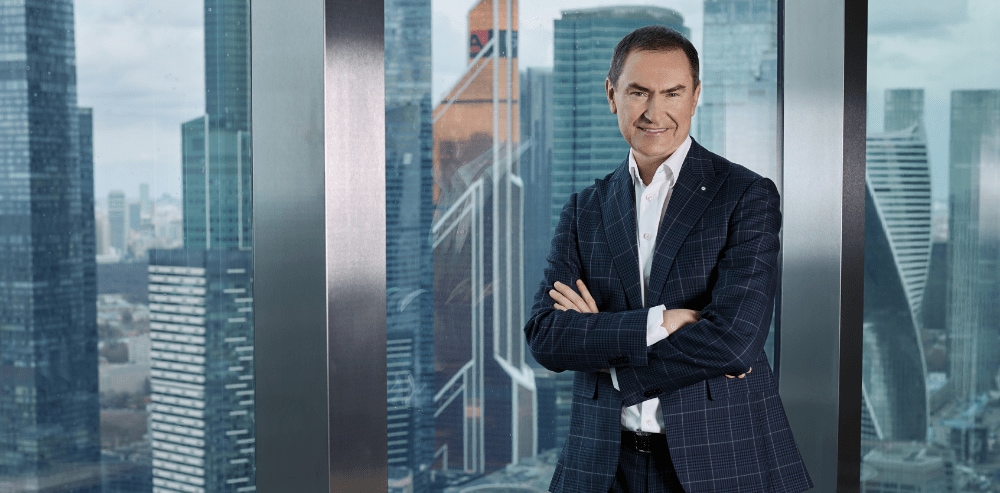
From February 16 to 20, India hosted the AI Impact Summit, a global flagship forum on artificial intelligence. Leading experts discussed the application of AI in healthcare, energy, education, agriculture, and also in addressing social challenges. In the lead-up to the forum, Alexander Vedyakhin, First Deputy Chairman of the Executive Board of Sberbank, discussed how technological cooperation between Russia and India is being built and why the future of global AI is being created through open cooperation.
Sber has long moved beyond the traditional bank model and today is one of the world leaders in the field of artificial intelligence. To what extent does the technological agenda bring Russia and India closer together?
For Sber, India has been much more than just an important partner for 15 years now. It is a country with phenomenal technological potential, a dynamic market, and a vision of digital sovereignty that resonates with our own. We are deeply convinced: the future of global technologies will be created through the cooperation of major players. The collaboration between Russia and India is a contribution to shaping a new architecture for the global technological ecosystem. It is in the sphere of technology, AI, and robotics that we see boundless opportunities for synergy today.
We actively exchange experiences with our Indian colleagues and regularly meet at international events at various levels. For example, last year, Abraham Ajith, Pro Vice-Chancellor and Dean of the Faculty of Artificial Intelligence at Sai University, spoke at AI Journey, our annual international conference on AI. He presented the results of a large-scale foresight study on key future technologies, conducted under the auspices of the International AI Alliance.
You mentioned that Sber has been present in India for 15 years, with offices in New Delhi and Mumbai, and in 2023 you opened a full-fledged IT hub in Bangalore. What is the reason for this focus on developing a local presence?
Bangalore is a global center for technological innovation, India’s “Silicon Valley”. Opening Sber’s hub here was a logical step within our global strategy. Today, the hub’s team consists of more than 300 IT specialists. These include backend and frontend developers, data scientists, and systems analysts. They are involved in developing the automated banking system built from scratch on Sber’s technology platform, adapting solutions to the specifics of Indian regulations, and conducting R&D in the fields of artificial intelligence, machine learning, and big data. In parallel, we are designing AI/ML models for data analysis, scoring, and fraud protection applicable to the Indian market. And of course, we are open to launching joint IT projects with Indian companies. The synergy of fundamental developments and high implementation speed is what strengthens technological sovereignty today.
Artificial intelligence is not only about finance and documents. Sber is known for its cultural projects using AI. Do you plan to share this experience with India?
Last year, we conducted several bold experiments and are now considering the possibility of international projects in this direction. India is a country with a rich, millennia-old culture, and collaboration here could be incredibly interesting.
We have already demonstrated that AI can “bring classics to life”. Our film “ClassicAI” is created by neural networks, where famous classic Russian writers – Alexander Pushkin, Mikhail Lermontov, Anton Chekhov – travel through modern Russia and see how the places they once celebrated have changed.
Earlier, in the summer of last year, the Mariinsky Theatre hosted the premiere of the world’s first opera completed with the participation of Sber’s neural networks – “Mandragora”. GigaChat wrote the libretto, SymFormer refined the musical component, and Kandinsky created the visual solutions. And, of course, all of this was under artistic control and with deep respect for the style of the era. We are ready to share this experience of applying innovative technologies in the cultural sphere with our partners from India.
Returning to the topic of high technologies, we must also touch upon another promising area for cooperation – robotics. Last year, we introduced to the global community GigaChat Robot (Grin), Sber’s first anthropomorphic robot, created on the basis of the GigaChat neural network. It resembles a human in structure, can handle objects in the real world, and navigate unfamiliar spaces. This is a new stage in the development of not only Russian, but also a major contribution to global robotics. Essentially, we are moving from AI “living” inside smart speakers and applications to physical artificial intelligence – Physical AI – which helps humans solve not only intellectual but also real physical tasks. And here, there is enormous potential for cooperation with Indian partners.
Besides development itself, in Russia Sber helps other companies and even regions implement AI solutions into their daily operations. How relevant could this expertise be in India?
Today, we help our b2b partners integrate AI solutions into their business processes to take over routine tasks and help them cope with complex situations. For example, the Russian holding company PhosAgro switched to an import-substituted manufacturing execution system (MES) with Sber’s GigaChat neural network for business built-in. This solution helps the company reduce costs, and helps employees make decisions faster, prepare reports, and improve work efficiency.
In India, we started implementing AI solutions to optimize business processes within our own operations. Employees of Sber’s Indian branch actively use the GigaChat AI assistant for both operational tasks and specialized processes.
The most telling case is the implementation of an AI-agent system for verifying export documentation at the end of last year. Previously, this procedure could take months. Today, AI agents based on GigaChat recognize and analyze documents provided by clients, verify data, provide feedback, and pre-fill all necessary forms. A person only needs to check the result and certify it with a digital signature. The time has been reduced to a few days, and quality has increased manifold. This helps accelerate trade and increases the interest of Indian entrepreneurs in working with the Russian market.
In Russia, since 2023, we have also been running a program for the AI transformation of Russian regions – it aims to introduce neural network technologies into the economy and public administration. Today, 90% of Russian regions use Sber’s solutions incorporating AI. Regional projects are being implemented in medicine, agriculture, education, public services, and other areas. We see how, with our participation, the competencies of regional authorities in AI transformation are growing, which means the quality of projects using generative AI is increasing. As a result, the interaction between citizens and government bodies improves – it becomes faster, more convenient, and more personalized.
For instance, in the Moscow region, an AI solution based on the GigaChat neural network helps answer basic citizen questions about the operation of public transport. The service can handle up to 36,000 inquiries per year.
Today, we have implemented over 100 projects based on our neural network in Russia, and each of them has a proven economic effect. We are ready to share all these implementation practices and cases with our Indian colleagues and help implement similar programs in Indian cities. We don’t just believe in open cooperation – we are building it.