




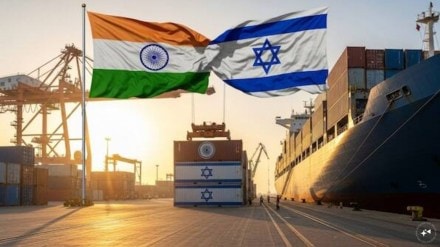
A team of officials from Israel would be visiting India in January for discussions before the launch of the official rounds of negotiations on their proposed free trade agreement, officials said.
“The issues related to structuring of the negotiations are expected to dominate the discussions,” they said. India and Israel signed the Terms of Reference (ToR) of their free trade agreement on November 20 to grow their bilateral trade ten-fold in the next decade.
Both sides have already signed a Bilateral Investment Treaty (BIT). And collectively FTA and BIT will open the doors for greater market access, flow of capital, investments and trade.
Expanding Beyond Diamonds
In 2024-25 India-Israel trade stood at $ 3.62 billion with India’s exports at $ 2.14 billion and imports at $ 1.48 billion.
The officials also said that the second round of negotiations with the Russia-dominated Eurasian Economic Union will be held in February. The first round of talks on the FTA were held in November.
Structuring the Framework
The Terms of Reference of India-EAEU FTA were signed on 20 August 2025. They outline an 18-month work plan aimed at diversifying markets for Indian businesses, including MSMEs, farmers and fishermen. The services and investment tracks will also be examined as the negotiations advance.
Both sides are targeting $ 100 billion in goods trade by 2030 from around $ 70 billion at present. The EAEU also includes Armenia, Belarus, Kazakhstan, and Kyrgyzstan, though trade with Russia is 99% of the total India-EU trade.
Trade between India and Russia was marginal till the conflict in Ukraine in 2022 bumped it up substantially. Due to turmoil in world energy markets, India turned to Russia as a supplier of crude. This increased imports, leading to the deficit growing to $ 58.9 billion in 2024-25 from $ 6.61 billion in 2021-22.
Russia has already speeded up clearance for Indian marine exports and further relaxation is in doing. To bridge the deficit India is seeking faster approvals for its exporters of other products and removal of non tariff barriers. Exporters also face regulatory overlap between different EAEU members which the trade negotiations will focus on addressing.


