




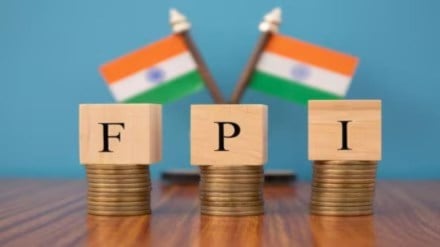
Foreign investors began withdrawing from government securities in December, ending five straight months of inflows. The expectation of no more rate cuts, elevated global yields, and a declining rupee are the factors which contributed to the outflows, said market participants. A clarity on the trade deal and a stable rupee will only revive foreign inflows into government securities going ahead, they said.
Foreign portfolio investors (FPIs) sold Rs 9,920 crore in government securities under the fully accessible route (FAR) as on December 17. For comparison, they bought bonds worth Rs 4,569 crore in November and Rs 13,397 crore in October. So far in the financial year, FPIs remain net buyers. The FPI holding in government securities stood at Rs 3.11 lakh crore as on December 17.
Yield Trap
“Global bond yields have risen on sustained inflation worries, fiscal concerns, and hawkish signals from major central banks. In India, markets largely believe the December RBI MPC cut may mark the end of the current easing cycle. Together, these factors have triggered substantial foreign outflows,” said Sameer Karyatt, executive director & head of trading at DBS Bank.
In the near-term, market participants expect volatile FPI inflows, driven by rupee movements and global rate decisions. “Until the rupee stabilises, I expect continued outflows rather than inflows from foreign investors,” said Soumyajit Niyogi, director – India Ratings & Research.
Agreed to that, Madhavankutty G, chief economist at Canara Bank, said that the currency risk significantly deters foreign investment. “Investors see diminished returns due to higher costs for repatriating dollars amid rupee depreciation, reducing their interest. Instead, they shift funds to more attractive markets.”
Currency Risk
The currency has been under pressure for a while now on account of the absence of a trade deal and persistent outflows. Over the past month, the currency has fallen almost 2%. So far in FY26, the rupee has declined 6.5%, the worst in three years, making it the worst-performing Asian currency. The rupee closed at 90.37 on Thursday.
Madhavankutty added that, however, Indian bonds’ potential inclusion in the Bloomberg Global Aggregate Index could attract inflows if it happens. He expects inflows around $ 25 billion from index inclusion.


