




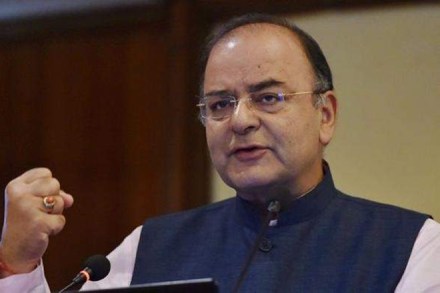
After global rating firm Moody’s upgraded India’s ratings, Finance Minister Arun Jaitley called it a “belated recognition” of the steps taken in last few years. Saying that India continues to follow the path of fiscal prudence that has brought the country to this achievement, Arun Jaitley said, “Our track record for the last three years speaks for itself. “The Finance Minister gave credit to “smooth transition of the GST regime” for the upgrade on Moody’s rating, saying other structural changes like Insolvency and Bankruptcy Code also played an important role in making India’s case stronger. ”
“It is encouraging that there is international recognition and this recognition firms our determination to follow the path that we have embarked upon,” Arun Jaitley said, adding that these reforms have placed India on the path of high trajectory growth.
Moody’s upgraded its ratings on India’s sovereign bonds for the first time in nearly 14 years on Friday, saying continued progress on economic and institutional reform will boost the country’s growth potential. The agency said it was lifting India’s rating to Baa2 from Baa3 and changed its rating outlook to stable from positive as risks to India’s credit profile were broadly balanced.
“Moody’s have rightly recognised the structural reforms undertaken – GST, sound monetary policy framework, addressing PSB recapitalization issue, measures taken to bring formalization & digitalization in the economy,” the Finance Minister said.
What’s interesting to note here is that, in January 2004, when Moody’s had upgraded country’s rating last time, it was the Atal Bihari Vajpayee government which was in power. Then, Moody’s said it was “reduction in external vulnerability, rising foreign investment, and vibrant economic growth” which led to an upgrade to Baa3.
Moody’s said the recently-introduced goods and services tax (GST), a landmark reform that turned India’s 29 states into a single customs union for the first time, will boost productivity by removing barriers to inter-state trade. “In the meantime, while India’s high debt burden remains a constraint on the country’s credit profile, Moody’s believes that the reforms put in place have reduced the risk of a sharp increase in debt, even in potential downside scenarios,” the rating agency said in a statement.
Moody’s said it expects India’s real GDP growth to moderate to 6.7 percent in the fiscal year ending in March 2018 from 7.1 percent a year earlier. The agency also raised India’s local currency senior unsecured debt rating to Baa2 from Baa3 and its short-term local currency rating to P-2 from P-3.


