




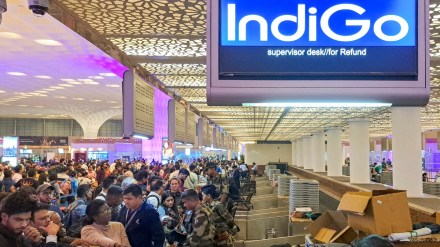
IndiGo has long sold itself as India’s great aviation success story—a low-cost miracle powered by scale, efficiency, and relentless expansion. But that image has collapsed over the past few days of utter chaos—something entirely of the airline’s own making. It seems IndiGo has mistaken market dominance for moral immunity. The arrogance of its leadership sits uneasily with a company that exists only because millions of ordinary Indians choose to fly with it. Arrogance breeds carelessness, evident from the way IndiGo did nothing on complying with the new Flight Duty Time Limitations (FDTL), which were notified in May 2024. It’s obvious the airline deliberately took it easy in the belief that it was large enough and influential enough to get away with it. The arrogance now deserves consequences. Captain GR Gopinath, founder of Air Deccan, is absolutely justified in demanding that the CEO should resign—a mere apology isn’t enough. Hopefully, the board comprising some of India’s most distinguished names are listening.
IndiGo today commands a scale unmatched in Indian aviation history. On many routes, it is not just the biggest airline—it is effectively the only one that matters. But IndiGo’s leadership appears to have confused dominance with entitlement. And entitlement can prove to be lethal, often through a consumer backlash. IndiGo’s board would be wise to realise that the company needs introspection, not defiance. It needs to restore customer respect, not double down on indifference. And it needs leadership that understands scale is not a licence for scorn.
Perils of Entitlement
Monopolies do not fail dramatically. The rot begins when they cut service and lose respect, slowly. That journey is visible in IndiGo’s evolution—perfunctory customer care, routine overbooking, robotic responses to disruption, and now an unmistakable tone from the top that suggests the airline believes it is too big to be challenged, questioned, or embarrassed. Aviation is not just about engineering precision; it is about trust. And trust is easily lost when a corporation appears contemptuous of the very public that made its rise possible. The IndiGo management’s conduct reflects an attitude that has become all too familiar in monopolies everywhere: Where will you go? That question may be unspoken, but it hangs in the air whenever passengers are stranded, mistreated, or stonewalled by customer care systems that seem designed to exhaust rather than assist.
Beyond IndiGo
It’s also time for the aviation regulator and the civil aviation ministry to do some introspection. The Directorate General of Civil Aviation should have monitored and checked whether IndiGo was taking sufficient and adequate steps to become compliant with the new FDTL rules. It failed to do so. Instead, it bent over backwards to allow IndiGo yet another exemption from the crew safety rules. And took another easy option: putting a cap on air fares. That brings into focus the arbitrary and slipshod approach taken by successive governments. India desperately needs more airlines but government policy makes survival nearly impossible. From Kingfisher and Jet Airways to Go First and SpiceJet, the story is the same: heavy losses, mounting debt, and eventual shutdown. Different owners, same ending. Even IndiGo is vulnerable to fuel spikes, regulatory shocks, and currency swings. Six structural flaws haunt Indian aviation: among the world’s highest taxes on jet fuel, soaring airport charges, brutally price-sensitive consumers, weak balance sheets, unpredictable regulation, and a currency mismatch where costs are in dollars but revenues in rupees. Until policy changes, India will keep manufacturing airline failures.


