




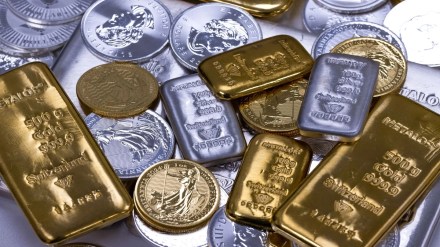
In 2025, gold and silver had their best performance in decades. Gold increased by 68%, while silver rose by over 137%, with the New Year’s Eve still a few days away.
Are gold and silver the big investment ideas for 2026? Will the bull run in gold and silver continue in 2026? Nobody knows, and as always, we will not predict. But taking an informed decision helps.
Whether the rally will continue in 2026 and whether it is better to buy gold over silver or the other way around are not the right questions to be asked. Ask how much gold and silver I should hold in my investment portfolio. We will tell you later.
On December 22, gold trades around $4,400 and Silver at $69, both precious metals at record highs. Let’s see the outlook for gold and silver in 2026 through the lens of financial institutions and industry experts.
What Could Move Gold Next: Key 2026 Triggers
For 2026, the World Gold Council gives a cautious outlook — Gold prices may rise if economic growth slows and interest rates decrease. In case of a serious economic downturn with increased global risks, gold is likely to perform even better.
However, if policies from the Trump administration lead to economic growth and decreased geopolitical risks, this could result in higher interest rates and a stronger US dollar, causing gold prices to decline.
Meanwhile, Goldman Sachs has raised its year-end 2026 gold price projection to $4,900 per ounce, citing strong demand from central banks and ETF investors.
Also, Deutsche Bank, in its Commodities Precious Special report, has turned decisively bullish on precious metals, raising its 2026 gold forecast to $4,450 an ounce.
Keep an eye on what central banks are doing with gold: adding more, holding, or starting to sell a portion of their holdings. History shows that central banks know much before what retail investors come to know later.
Global central banks have been consistent buyers of gold since late 2022. For the last 3 years — 2022, 2023 and 2024 — central banks have bought over 1,000 tonnes of gold in each year.
Other than central banks, which are largely hoarding gold in physical form, global investors are using Gold ETFs as a means to park funds.
Also, the world’s largest consumer of gold, the China factor, cannot be underplayed. China and emerging economies hold a lot of control in driving prices in either direction.
Key Drivers: Trump tariffs, US dollar index, China factor, US Fed aggressive rate cut stance, Central banks, Global gold funds, among others.
What Could Move Silver Next: Key 2026 Triggers
Performance speaks. After generating more than double the returns of gold in 2025, ‘Silver is the new gold‘ is its new designation. But will this golden rally in silver continue in 2026? That again, only time will tell, but here are some pointers.
Silver prices in 2026 will be influenced by the same factors as in 2025, including Trump’s tariff policies, potential US Federal Reserve rate cuts, geopolitical uncertainties, and supply constraints amid rising demand.
The consensus that is emerging is that the gold price in 2026 is expected to experience mostly sideways movement with moderate gains. Silver may continue to see an upside. What is important is the change in the underlying factors that are driving prices higher; the day they are gone, expect a sharp correction.
Both gold and Silver prices have shot up considerably and, like any other asset, are prone to dips and corrections.
It is better to have exposure in both gold and silver, aligning them to one’s long-term goals. How much? Most planners recommend not more than 10-15% of one’s portfolio into them, preferably via gold or silver ETFs.
Disclaimer: The purpose of this article is only to share data points and thought-provoking opinions. It is NOT a recommendation. If you wish to consider an investment, you are strongly advised to consult your advisor. This article is strictly for educational purposes only.


