




The deets
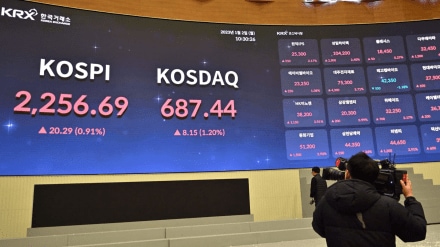
South Korea just pulled off something extraordinary. The Kospi index surged 76% in 2025, crushing the S&P 500’s 17% gain and the MSCI Asia Pacific’s 25% rise.
It’s the best performance among major equity markets and Korea’s strongest showing in a quarter century.
Wall Street analysts at Citigroup, JPMorgan, and Nomura are forecasting at least another 20% climb in 2026. But here’s the million-dollar question: Has this impressive rally been matched by real reforms on the ground, or is Asia’s fourth-biggest economy heading for a reality check?
The story
Let’s rewind to June 4, 2025. President Lee Jae Myung took office with Korea in crisis mode. His predecessor, Yoon Suk Yeol, had been impeached and removed after a disastrous attempt to impose martial law the previous December.
The nation was in turmoil. Lee’s first job? Restore calm and refocus attention on pro-investor policies.
Fast forward to December 3, 2025, exactly one year after Yoon’s martial law debacle. A torrent of positive press celebrated Lee’s success in stabilizing the nation.
Political stability had returned. And the Kospi? It had rocketed from around 2,700 to over 4,000, closing in on Lee’s moonshot target of 5,000.


So what drove this spectacular run? A perfect storm of three forces.
First, the AI trade went wild, but not in the way you’d expect. Sure, memory chip giants Samsung and SK Hynix surged 125% and 270% respectively as tech giants scrambled for high-performance chips. But the real winners were the proxy plays.
Power transformer maker Hyosung Heavy Industries and nuclear power provider Doosan Enerbility both rocketed over 320%.
Why? AI data centers need massive electricity, and there’s no quick carbon-free alternative. These infrastructure players became indispensable.
The momentum spilled over to related firms. SK Square, SK Hynix’s parent company, jumped more than 330%. Korea Circuit, which counts Broadcom as its customer, did the same.
Second, the defense boom. President Trump’s reshaping of traditional security alliances sparked new defense spending across Europe and Asia.
Korean contractors, known for delivering weapons faster and cheaper, became the suppliers of choice.
Hanwha Aerospace, maker of the K9 self-propelled howitzer, saw shares jump nearly 200%.
Shipbuilder Hanwha Ocean surged 204%.
With Korean companies making inroads in Europe, analysts expect more NATO partnerships ahead.
Third, K-beauty’s cultural export boom. APR Corp, the Medicube maker specializing in at-home beauty devices, leapfrogged traditional giants Amorepacific and LG H&H in market value less than two years after its IPO.
Its stock soared 362%, topping gains in the MSCI Korea Index.
As one fund manager put it, APR isn’t just executing better, it’s playing a different game entirely, selling outcomes and experiences through social channels rather than just skincare through traditional retail.
Meanwhile, corporate governance reforms that investors estimate drove 40-50% of returns were finally taking hold.
Lee came to power promising to eliminate the notorious “Korea discount” where world-class companies traded at bargain prices.
The reforms were real: mandatory consideration of all shareholders, cumulative voting rights, and voting caps on audit committee elections.
But here’s the catch
Strip away the celebration, and Asia’s fourth-biggest economy has what you might call an economic gravity problem. There’s a danger of oversimplifying Seoul’s bull run.
While chipmakers, defense contractors, and K-beauty thrived, others crashed. Game developers were notably left behind.
Krafton lost one-fifth of its market value while Com2uS shed more than one-third, unable to compete with Chinese rivals.
Electric vehicle supply chain companies tanked even harder. Enchem plunged 50%. SK Innovation, one of Korea’s three main battery suppliers, ended the year in the red as Chinese competitors widened their technological lead.
More troubling: it’s unclear that Lee’s government will succeed in ending the three-year low-growth trap facing the country.
South Korea’s 51 million people are experiencing, on average, stagnant real wage growth. Sky-high household debt remains a major drag on consumer confidence.
So is uncertainty about where Trump will take his trade war in 2026.
What about the common person struggling with surging costs of property, childcare, and education?
There’s a perception that post-Yoon, the political establishment is too preoccupied with score-settling to take legislative steps to raise South Korea’s financial game.
The South Korean Won has been among Asia’s worst-performing major currencies this year, increasing inflation risks and making it hard for Bank of Korea Governor Rhee Chang-yong to cut rates when the economy needs support.
Lee is positioning Korea as an AI leader, with plans to triple AI-related investments to 10 trillion won ($7 billion) in 2026. But such bets take years to deliver real results.
Worries are mounting that South Korea is putting too many chips in the AI boom basket. If AI is indeed a bubble, the Korea discount could worsen.
And here’s the kicker: for 20 years, Korean governments have talked about increasing currency-trading hours, scrapping outdated regulations, reducing chaebol dominance, and creating economic oxygen for startups.
The pressure is on for Lee to put these reforms on the scoreboard.
The bottom line
South Korea’s 2025 run was extraordinary. Political stability returned after the crisis.
The AI trade, defense boom, and K-beauty explosion delivered spectacular gains. Corporate governance reforms showed genuine promise.
But 2026 is the real test. Seoul is working up a strategy to convince MSCI to upgrade Korea to developed nation status.
Lee has talked a big game about pushing the Kospi to 5,000. But political stability is one thing. Bold moves to raise living standards and end the Korea discount once and for all are quite another.
It’s early days for the Lee administration. Global capital is rushing into Kospi stocks, betting he’ll morph Korea Inc. into a global investment mecca.
As 2026 begins, though, there’s not a moment to waste to convince investors that this time Korea really does mean business.
Sonia Boolchandani is a seasoned financial writer She has written for prominent firms like Vested Finance, and Finology, where she has crafted content that simplifies complex financial concepts for diverse audiences.
Disclosure: The writer and her his dependents do not hold the stocks discussed in this article. The website managers, its employee(s), and contributors/writers/authors of articles have or may have an outstanding buy or sell position or holding in the securities, options on securities or other related investments of issuers and/or companies discussed therein. The content of the articles and the interpretation of data are solely the personal views of the contributors/ writers/authors. Investors must make their own investment decisions based on their specific objectives, resources and only after consulting such independent advisors as may be necessary.


