




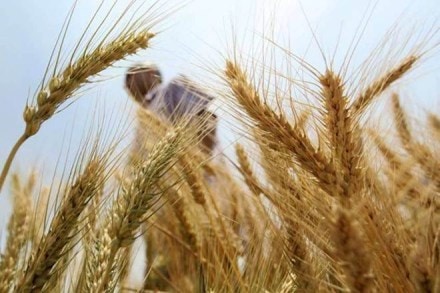
The Punjab government has said that farmers won’t face any problems due to the coupon system introduced for rabi wheat grain sales. While each coupon allows a farmer to sell only 50 quintal of rabi wheat per day to the procurement agencies, each farmer can get multiple coupons, so there is no capping of the daily sale quantity, the government clarified.
Procurement agencies have been asked to issue multiple coupons. “There was some confusion and it has been clarified to all purchase centres which have issued multiple coupons,” said K.A.P Sinha, Punjab’s food secretary. Already 2.7 million coupons have been distributed and against each coupon a farmer is entitled to sell 50 quintal on a scheduled date and the entire grains will be purchased, he said.
Punjab, the highest contributor of wheat to the central Pool, targets to procure 13.5 million tonne out of an expected marketable surplus of 13.7 million tonne. The state’s wheat production is seen at 18.2 million tonne this year. However, the actual procurement may drop considering an expected fall in arrivals since farmers may like to keep with them more than normal quantity, experts said.
Since health of the farmers is very crucial and social distancing has to be maintained, the coupons allow farmers to sell at multiple centres or arrive at their own convenience, if the selling quantity is high. As every purchase centre has certain daily buying capacity due to enforcement of social distancing, the number of procurement centres has been doubled to around 3,700 from last year’s 1,820 by creating space in yards of rice mills and other institutions, officials said.
“This year is a big challenge and we have been guiding all state agencies involved in procurement to keep the health aspect of the farmers on top priority for which many states have plans to distribute masks to the farmers at the purchase centres. The procurement process will be gradual and slow everywhere and may take up to mid-June, but the target will be achieved,” a senior food ministry official said.
The Centre targets to buy record 40-41 million tonne of wheat in 2019-20 crop year (July-June), out of which Punjab, Madhya Pradesh, Haryana and Uttar Pradesh will contribute about 90%. The textile ministry last week had expressed concerns over likely shortage of jute bags for wheat procurement as Covid-19 lockdown has affected the working of jute mills in West Bengal. It relaxed norms for more use of plastic bags.
Sinha said out of about 5 lakh bales of jute bags requirement for wheat procurement in Punjab, already nearly 4 lakh bales are available and the remaining quantity will be procured in a month once the jute mills start their factories. Industry sources said that about 50,000 bales of jute bags were dispatched from West Bengal on Wednesday and another 20,000 bales of jute bags would be out from mills this week.
Apart from jute bags, lack of storage space was a major issue in Punjab until lockdown. However, it has eased considerably following daily despatch of over 1 lakh tonne of grains from Punjab to other states by the Food Corporation of India (FCI). “Earlier, we used to write to FCI to evacuate the grains for creating space for new crops. But, the sudden demand from the consuming states have created more storage space in the state,” Sinha said. Still, a sizable quantity of the grain will have to be kept in open under the so called ‘covered area plinth’ (CAP) storage.
Due to allocation of 110 lakh tonne of rice and 11 lakh tonne of wheat for free of costs distribution through rations shops under the Prime Minister Garib Kalyan Anna Yojana and the constant movements of the grains from producing to consuming states by the FCI, the Central Pool stock of rice as on April 1 has fallen from its previous month level, first time in six years. The FCI has 305.4 lakh tonne of rice and 258.6 lakh tonne of wheat as on April 1. The agency is yet to release the paddy stock position.


