




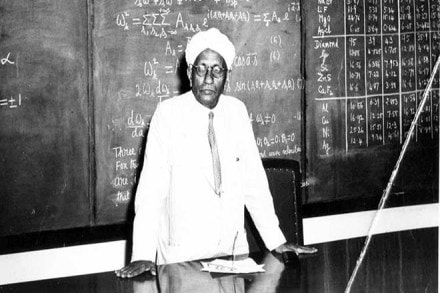
Every year on February 28, India celebrates National Science Day to remember famous scientist Sir Chandrasekhara Venkata Raman, better known as CV Raman. He is best known for the discovery of the Raman Effect on this day back in 1928.
For this groundbreaking discovery, Sir CV Raman was awarded with the Nobel Prize in Physics in the year 1930. National Science Day was celebrated for the very first time on February 28 of 1987 to pay tribute to the great Indian scientist.
For the last three decades, 28 February is celebrated as a commemoration of CV Raman’s unparalleled contribution to science as well as the Indian scientific community.
What is the Raman Effect?
The Raman effect is the inelastic scrambling of a photon by molecules which are energised to higher rotational energy or vibrational levels. This effect is also known as the Raman scattering. This phenomenon also forms the foundation of Raman spectroscopy which is utilised by physicists and chemists to know more information about materials.
The significance of National Science Day
The sole message of National Science Day is to spread the message that Science and Technology should be applied in everyday life. On this day, scientists and science enthusiasts come together as programmes are held to bring the scientific community closer. Educational institutes also hold science fairs and science researchers get a chance to share their latest work.
READ ALSO | Remembering Chandra Shekhar Azad: 10 facts about the fearless freedom fighter
Theme of National Science Day 2019:
The theme for the National Science Day 2019 is ‘Science for people and people for science’ while in 2018 it was “Science and Technology for a sustainable future.”
Who was CV Raman?
Born on November 7, 1888, CV Raman was a physicist of Tamil origin who made a ground-breaking discovery in the spectrum of light scattering. He received a Nobel Prize for Physics and the nation honoured him with the Bharat Ratna, its highest civilian award, in 1954.
CV Raman was a great thinker as well.
An advocate of mother tongues, Raman had once said, “We must teach science in the mother tongue. Otherwise, science will become a highbrow activity. It will not be an activity in which all people can participate.”
He also did not put much stock on money a nation had instead he said, “The true wealth of a nation consists not in the stored- up gold but in the intellectual and physical strength of its people.”
Raman was also heavily inspired by nature. “Science is a fusion of man’s aesthetic and intellectual functions devoted to the representations of nature. It is therefore the highest form of creative art,” he had famously said.
“Ask the right questions, and nature will open the doors to her secrets,” this quote by Raman remains the most prominent one.


