




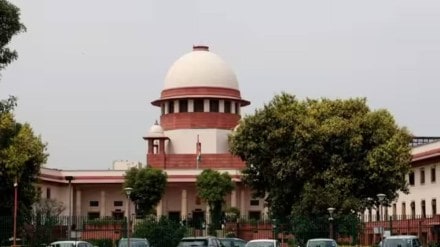
SC on Mineral Rights: The Supreme Court on Thursday held that royalty payable on minerals is not a tax, overturning its 1989 decision. The court said that states have the legislative competence to impose taxes on mines and minerals-bearing lands. The Supreme Court ruled by a majority 8:1 verdict, that the Constitution’s provisions prohibit Parliament from taxing mineral rights.
Leading the Bench, Chief Justice of India D Y Chandrachud said that Justice B V Nagarathna had delivered the dissenting verdict. The highly controversial questions of whether the royalty paid on minerals is a tax under the Mines and Minerals (Development and Regulation) Act, 1957, and whether the states or only the Centre is authorised to levy such an exaction on mineral-bearing land in their jurisdiction were being heard by the Bench.
The Supreme Court stated in its ruling that the 1989 decision of the seven-judge Constitution Bench, which concluded that a royalty on minerals is a tax, was wrong. Entry 50 of the List II of the Constitution prohibits Parliament from taxing mineral rights, according to CJI Chandrachud, who read out the decision. Besides the CJI and Justice Nagarathna, the other members of the bench are justices Hrishikesh Roy, Abhay S Oka, JB Pardiwala, Manoj Misra, Ujjal Bhuyan, Satish Chandra Sharma and Augustine George Masih.
Entry 54 of the Union List (List I) states that the Centre has primary jurisdiction for regulation of mines and mineral development in accordance with laws established by Parliament, including the MMDRA. This ruling was made by a seven-judge bench in 1989. Under the MMDRA, states can only collect royalties; they are not allowed to levy any additional taxes on mining or mineral development.
The court had further said, “We are of the opinion that royalty is a tax, and as such a cess on royalty being a tax on royalty, is beyond the competence of the State Legislature because s. 9 of the Central Act covers the field.”
Notably, the statement ‘royalty is a tax’ set off a chain of events that, 25 years later, resulted in the present bench case involving nine judges.
(with inputs from PTI)


