




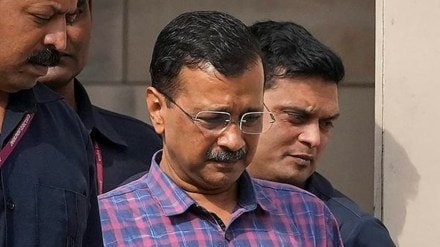
The Delhi High Court on Monday allowed Chief Minister Arvind Kejriwal to petition a trial court for bail in the CBI corruption case involving the purported excise policy fraud, noting the change in the case’s circumstances.
The charge sheet for the case had not been filed in the trial court when Kejriwal submitted his bail application, the high court observed. Nevertheless, the AAP leader would be better off approaching the trial court for his bail now that the CBI has submitted its charge sheet to the special magistrate, the court stated.
In a separate judgement, the high court also dismissed Kejriwal’s plea challenging his arrest by the CBI in the case. The high court had on July 17 reserved its order on his plea challenging his arrest by the CBI.
Hearing the bail plea, Justice Neena Bansal Krishna said though there is no quarrel about the proposition that the district courts and the high court have concurrent jurisdiction but at the same time it has been held time and again by the Supreme Court that the party must first approach the court of first instance.
“In the present case, it is more in the benefit of the petitioner (Kejriwal), considering the complexity and the web of the facts and the material on record, to comprehensively determine the role of the petitioner in this alleged conspiracy to determine if he is entitled to bail. It may also be noted that when the bail application was filed before this court, the charge sheet had not been filed. However, in the changed circumstances, when the charge sheet has already been filed before the special judge, it would be in the benefit of the petitioner to first approach the court of sessions judge,” the high court said.
Kejriwal was allowed to petition the special judge for relief once the bail plea was resolved. On July 29, the high court postponed making a decision about Kejriwal’s bail request until after hearing the central agencies and the AAP leader’s legal arguments.
The charge sheet was filed in the trial court on July 29 by the CBI prosecutor, who also requested that the special judge give the bail plea some thought. He had argued that the trial court had access to numerous records pertaining to both the petitioner and the other co-accused in this conspiracy, and that it might not be feasible to present the complete circumstances of this bail plea before the high court in the first place.
The CBI had stated that Kejriwal was the “sutradhaar” of the excise fraud and that there was evidence linking him to the crime while opposing the bail request.
Kejriwal’s attorney had argued that the arrest by the CBI was an insurance arrest meant to prevent him from being released from custody. He had stressed that the AAP chief was detained by the investigative agency on the basis of assumptions and conjecture, and that there was no concrete proof against him. In response to the CBI’s request to go to trial court, the CM’s attorney argued that the law acknowledged the trial court’s and the high court’s concurrent jurisdiction to review the bail request.
He had stated that nothing prevented the high court from considering the bail application in the first place and that Kejriwal was prepared to give up his first opportunity to climb the ladder and bear the penalties of not being able to present his case in front of the trial court.
On June 26, Kejriwal was taken into custody by the CBI from Tihar Jail, where he was being held in connection with a money laundering case that the Enforcement Directorate (ED) had brought. The trial court in the money laundering case on June 20 granted bail to the chief minister, who was taken into custody by the ED on March 21. The top court, however, delayed the trial court’s order.
In the money laundering case, the Supreme Court granted him temporary bail on July 12. The excise policy was discontinued in 2022 as a result of the lieutenant governor of Delhi requesting that the CBI look into claims of corruption and irregularities in the creation and implementation of the excise policy.
The CBI and the ED claim that improper actions were taken when changing the excise policy and giving licence holders excessive benefits.
(with inputs from PTI)


